
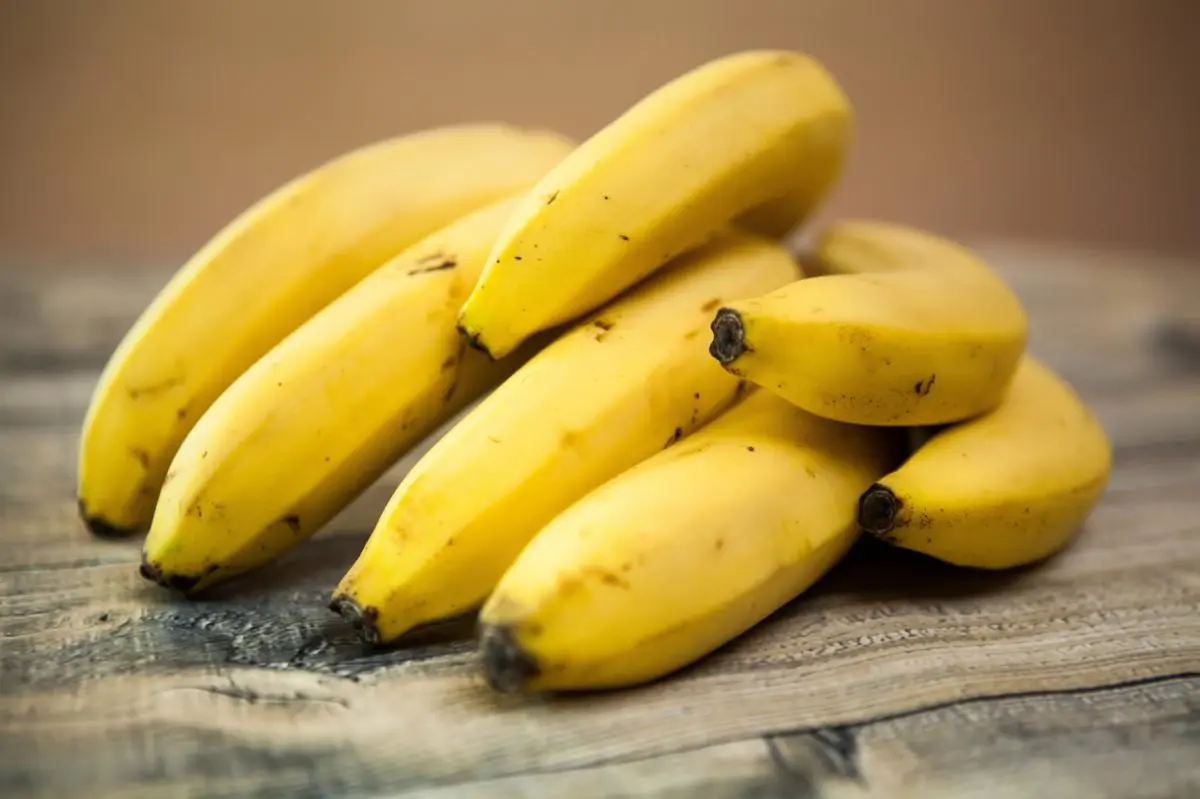
Choosing the sweetest bananas depends not on the color of the peel, but on the condition of the stem that connects the fruit to the bunch. A short, thick, and well-developed stem indicates that the fruit has completed its natural ripening cycle on the plantation, accumulating the maximum amount of nutrients, according to El Español.
Why It’s Important to Pay Attention to the Stem
Experts advise avoiding fruits with stems that are too long or too thin, as this is often a sign of premature harvesting. Such bananas are artificially ripened in ethylene-treated chambers, which makes their flavor less rich and more astringent. In addition to the shape, it’s worth assessing the freshness of the stem itself: it should be firm and green, while dry, blackened, or damaged tips indicate improper storage conditions or the onset of spoilage.
Scientific studies confirm that the banana ripening process is uneven, and the characteristics of individual segments of the fruit—from the stem to the tip—can vary significantly in terms of sugar content and enzymatic activity, according to PMC.
Myths About “Chemical” Ripening
The widespread belief that the color of the stem or the presence of dark spots on the peel indicates the use of chemicals is false. Ethylene is a natural gas produced by bananas themselves, and its use on an industrial scale merely helps synchronize the ripening of the fruit before sale, according to USA TODAY.
Dark spots on the peel, often called “sugar spots,” are merely an indicator of a high degree of ripeness, not a sign of chemical treatment. The condition of the stem, in turn, depends on the humidity level during storage: low humidity leads to dehydration and darkening of the stem, which does not affect the quality of the fruit itself.
Quality and Cultivation Characteristics
The quality of bananas also depends on how long they remain on the plant. For example, Canary Island bananas take about six months to ripen—twice as long as their American counterparts—which gives them a richer flavor and higher sugar content, according to Hello Canary Islands.
“Many people wonder how many calories a banana has, but in reality, there aren’t as many as we might think. The fat content in a banana is practically zero, and it contains no cholesterol,” notes Luis Serra, a professor of preventive medicine and public health at the University of Las Palmas de Gran Canaria.