
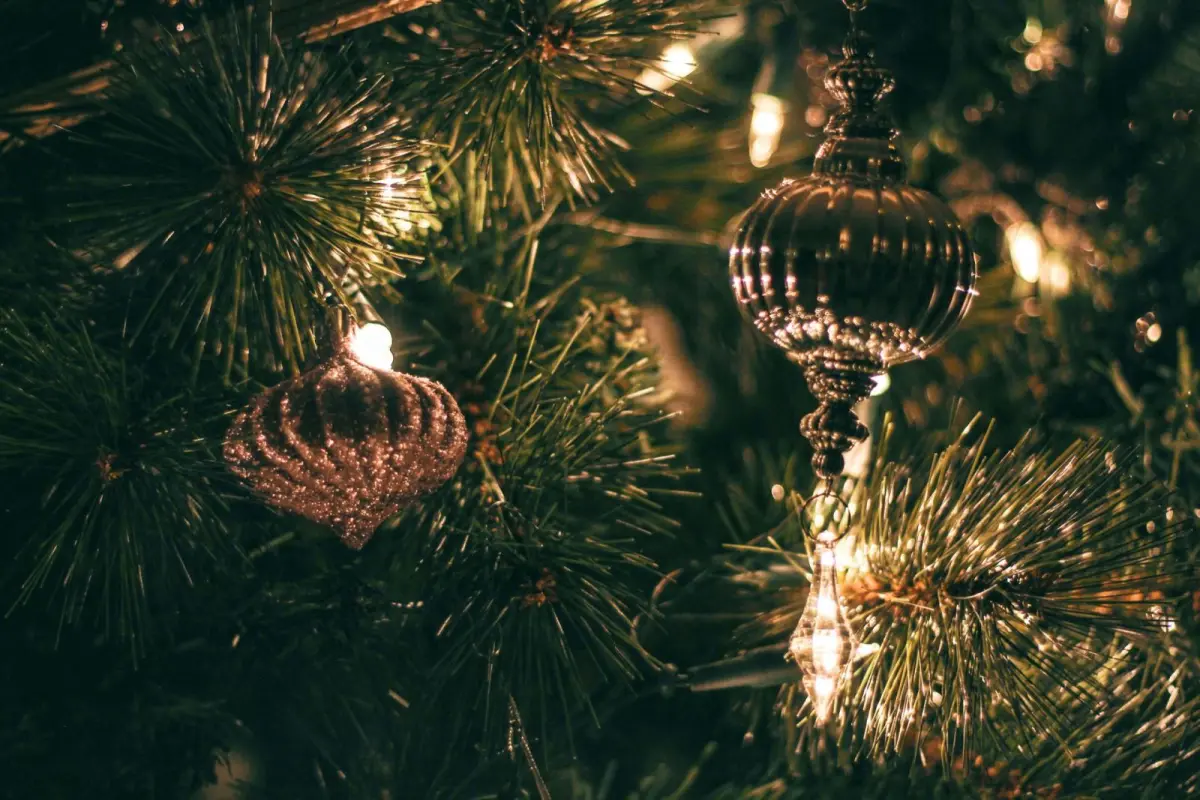
A Christmas tree decorated long before Christmas Eve may stop bringing joy even before the holidays. The reason lies in hedonic adaptation: when a person is repeatedly exposed to the same source of pleasure, the emotions it evokes gradually fade until the twinkling lights become just another familiar backdrop. This is reported by Interia.
A team of scientists from the University of Massachusetts Amherst studied this mechanism. In five experiments, participants listened to the same music, viewed the same images and movies, or ate the same snack several times. With each repetition, the level of pleasure decreased noticeably.
At the same time, the researchers discovered a loophole: those who were able to notice new, small details in familiar things derived pleasure for much longer. Christmas tree ornaments themselves were not studied in these experiments, but the results explain why a tree put up as early as November quickly ceases to impress.
Nostalgia affects the brain differently. Years of research by Professor Konstantinos Sedikides and Dr. Tim Wildschut of the University of Southampton show that this emotion, rooted in personal memories, enhances feelings of closeness, meaning, and security. That’s why old toys from childhood and decorating the Christmas tree together strengthen family bonds better than flawless decorations.
Psychologically speaking, there is no “perfect” time to put up a Christmas tree. It’s best to go with your own mood and postpone decorating if it feels like a chore driven by social media trends, or if a live fir tree would have to sit for weeks in a warm, dry living room.
Tradition does not forbid it
The custom of putting up a Christmas tree on December 24 stems from folk beliefs, not church regulations. Canon law does not specify a day when you can decorate your home, nor does it forbid doing so during Advent. However, the traditional date had a practical purpose: a tree brought into the home on Christmas Eve would remain fresh throughout the holidays, whereas in a warm room, it would lose moisture and shed its needles within a few weeks.
With proper care, a cut tree can last three to four weeks, and sometimes even five. Curtis Vandershaaf, a forestry specialist at Mississippi State University, advises trimming the cut end by 1–3 cm before setting up the tree and immediately placing the trunk in warm water, make sure there is always enough water in the stand, and keep the tree at least one meter away from heat sources. Additives such as sugar, aspirin, or vodka, he says, do not prolong freshness, according to The Conversation.
The choice of species also matters. The common spruce quickly sheds its prickly needles, whereas the Caucasian fir, currently the most popular in Poland and Europe, retains its soft needles for a very long time. About 80% of Polish households buy a live Christmas tree, notes Łukasiewicz of the Poznań Institute of Technology.