
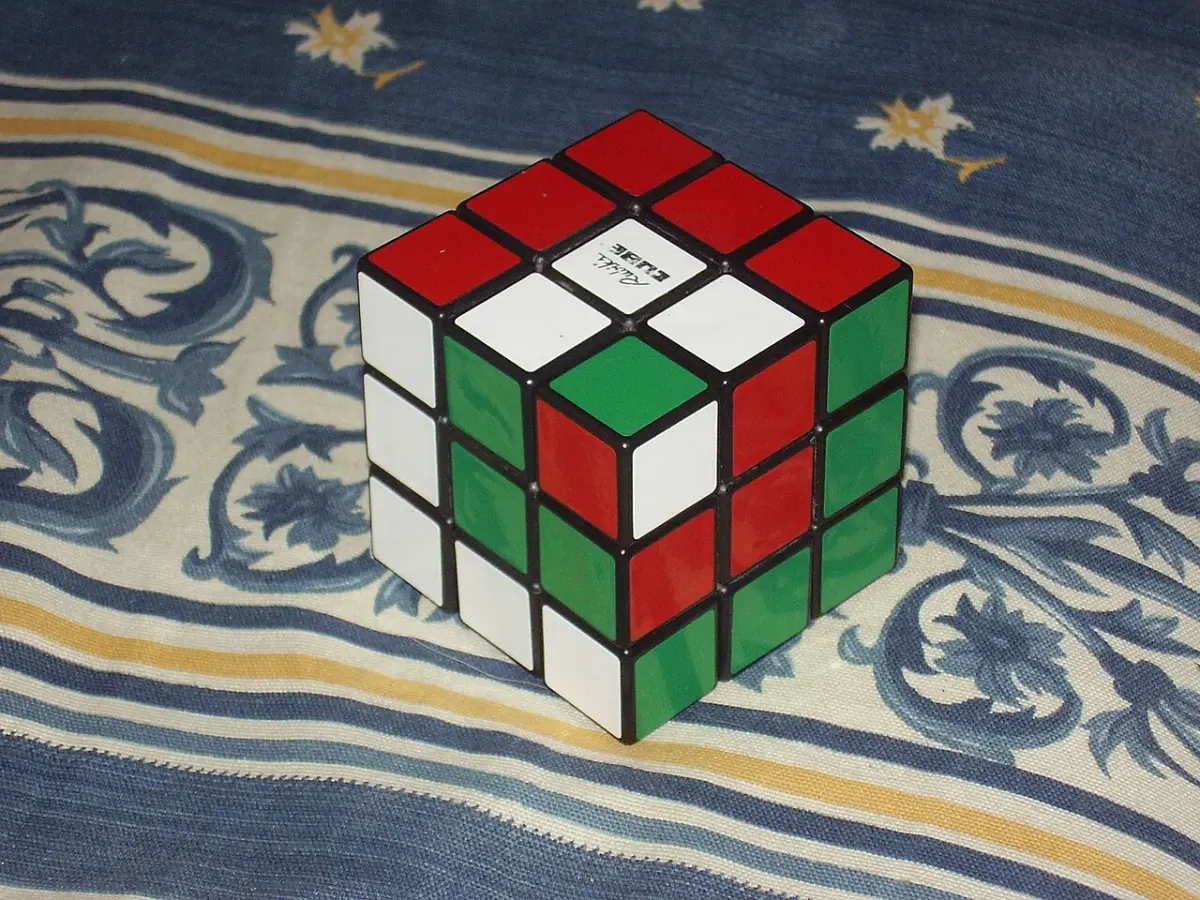
Hungary has resumed production of the Rubik's Cube more than 40 years after production ceased in the country. A fully automated production line has been launched in the city of Jászberény, which is expected to produce one million puzzles per year, according to G4Media.
The inventor, 82-year-old Ernő Rubik, attended the grand opening on Tuesday. He emphasized the puzzle’s special connection to his homeland: “Hungary is the home of the Rubik’s Cube. The Rubik’s Cube was born here,” Rubik said.
On the new production line, robotic arms assemble the cubes and test their functionality and durability. The inventor described this level of automation as “very different” from the early days, when the puzzles were assembled by hand.
Who Will Manufacture the Puzzle
The production line was inaugurated on November 10 at the Jász-Plasztik Kft. factory, the official supplier of Canadian toy manufacturer Spin Master, which has owned the Rubik’s brand since 2021. The first cube rolled off the assembly line just a few minutes after the launch. It will be sold at a charity auction, and the proceeds will be donated to the local St. Elizabeth Hospital. The company, which employs more than 3,000 people, hired an additional 27 workers for the new project, according to Trademagazin.
Lajos Kasa, co-owner and technical director of Jász-Plasztik, is convinced that this is not just the start of an investment project, because “the Rubik’s Cube has come home.” Spin Master Vice President Stephen Radevich noted that relocating production brings the company closer to its key markets.
Addressing the inventor during the ceremony, Radevich emphasized the scale of his vision: “Ernő, your invention is more than just a toy. It’s a global social phenomenon,” said the Spin Master representative.
From 5,000 to half a billion
Rubik created the puzzle in 1974 while teaching design in Budapest. The first 5,000 units, called the “Magic Cube,” went on sale in the capital in 1977. In socialist Hungary, the inventor faced a shortage of materials, so the license was first transferred to a British company and later to an American one, and production moved abroad.
Rubik acknowledges that the country would not have been able to meet the demand at the time: “We weren’t ready for that volume of production… We can’t meet the demand of the global market,” the inventor recalls.
Since then, more than half a billion cubes have been sold worldwide, 200 million of them between 1980 and 1983 alone. International speed-cubing competitions have brought a new wave of popularity to the puzzle: the current record, 2.51 seconds, was set last month in China by nine-year-old Xuan Yi Gen.