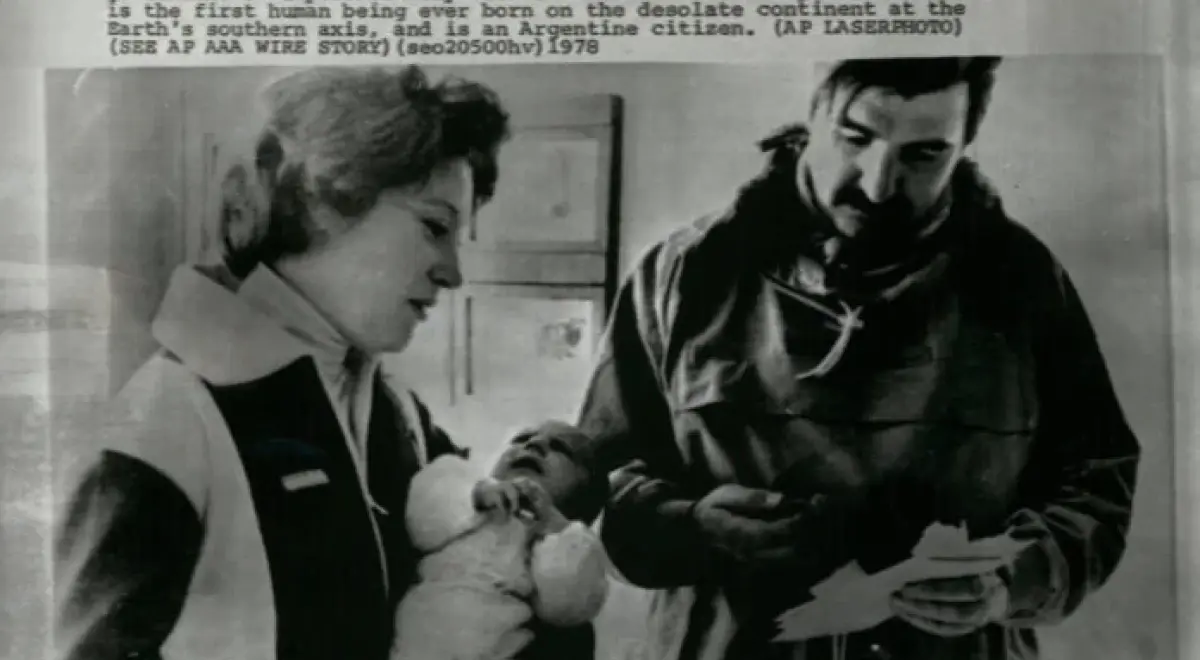
The first person born in Antarctica was the Argentine Emilio Marcos de Palma. He was born on January 7, 1978, at the Argentine “Esperanza” base. A total of eleven children have been born on the icy continent, and all of them have unwittingly found themselves at the center of a geopolitical game, according to “Kommentarii.”
The boy’s father, military officer Jorge Emilio Palma, was stationed at the base, while his mother was specially transported to the mainland to give birth. The baby was born without complications, weighing 3.4 kg. This event was recorded in the Guinness Book of World Records.
Subsequently, ten more children were born at Argentine and Chilean stations. The first girl was Marisa de las Nieves Delgado, who was also born at Esperanza in 1978. They all acquired citizenship through their parents, since Antarctica does not belong to any country. After 1985, births on the continent effectively ceased: modern research stations do not accept pregnant women for safety and ethical reasons.
Infants as a Tool in a Territorial Dispute
The births of these children were part of a state strategy. To strengthen its sovereignty, the Argentine government expanded the base in 1978 and began sending children and pregnant women there to live year-round. Emilio’s mother was brought to the base when she was seven months pregnant. This took place despite the fact that Argentina had signed the Antarctic Treaty, which prohibits territorial claims, according to The Globe and Mail.
“Argentina respects the Antarctic Treaty. But we are one of the countries that believe Antarctica could be divided in the future,” said Captain Fernando Isla, commander of the Esperanza base.
In early 1978, the Fortín Sargento Cabral settlement was established at the base, initially home to seven families who rotated annually. The settlement features a school, a church, a post office, and a civil registry office. According to the Argentine Ministry of Foreign Affairs, seven more Argentines were born at the base after Emilio, making Argentina the country with the largest number of people born in Antarctica, the Argentine Ministry of Foreign Affairs reports.
The First Antarctic-Born Resident on His Status
Emilio Palma himself receives letters from presidents and invitations to meetings of the Antarctic Treaty parties, but he does not attend them. He takes his unique status in stride. The family did not stay at the base for long: due to the absence of infections in the sterile environment, the infant could not develop antibodies. The boy’s birth was registered in Tierra del Fuego, since there was no registration office at the base at that time, according to the blog Antártida Argentina.
“I’m not a unique case—seven more were born after me—but no one can take away the fact that I was the first,” says Palma.