
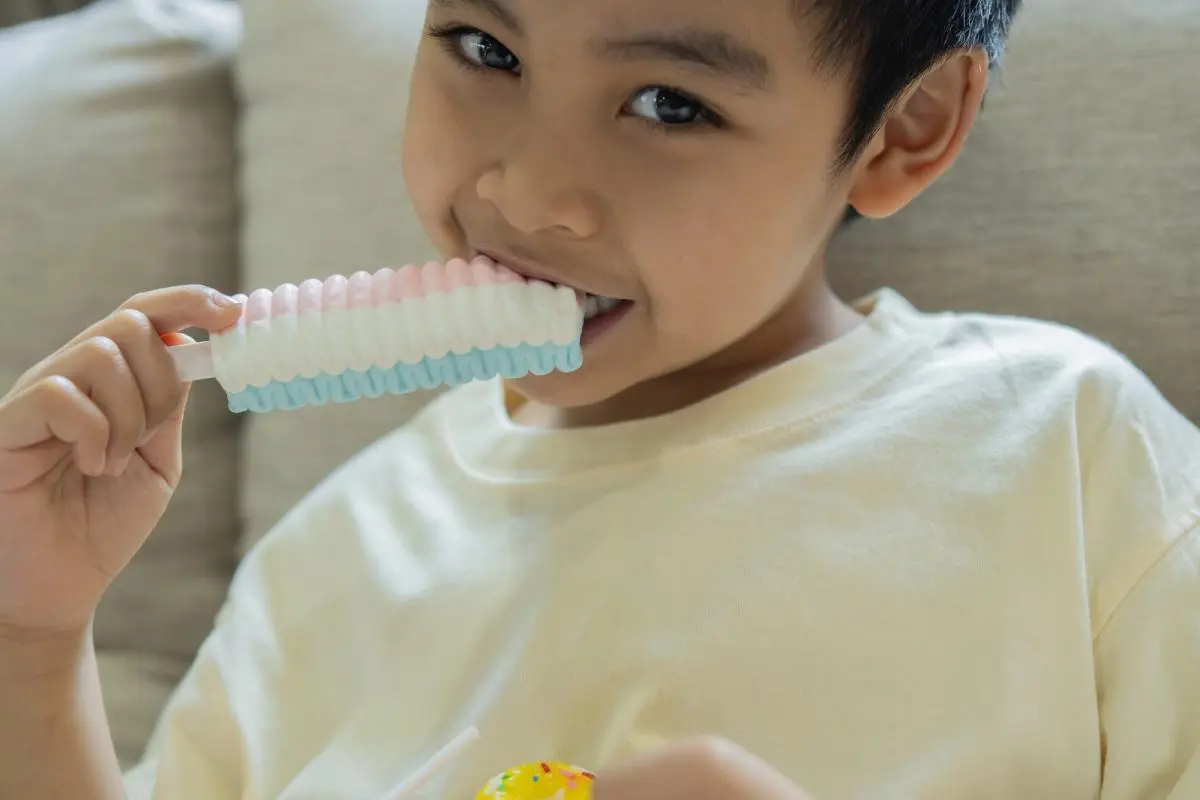
Children who fail the famous “marshmallow test” may not be demonstrating a lack of willpower, but rather habits learned at home. If adults don’t always keep their word and circumstances are unpredictable, it’s simply irrational for a child to expect a greater reward, according to The Times of India.
The experiment was conducted by psychologist Walter Mischel of Stanford University in the 1960s and 1970s. Preschoolers were offered the choice of eating one marshmallow right away or waiting for an adult to return and receiving two. Subsequently, researchers linked the ability to wait with better academic performance and behavior, and the test became a popular lesson on patience and future achievements.
However, in 2013, Celeste Kidd, Holly Palmeri, and Richard Aslin showed that children’s decisions depend on the reliability of their environment. Before the test, some of the children were exposed to an adult who kept their promise, while others were exposed to one who broke it. The former waited significantly longer: the children weren’t just suppressing their impulses, but were assessing whether the wait was worth the effort.
Family income matters more than self-control
In 2018, Tyler Watts of New York University and his colleagues replicated the test on a sample of nearly 1,000 children from various regions of the U.S. and with different socioeconomic backgrounds. Children from wealthier families waited for the second marshmallow in 70% of cases, while those from poorer families did so in only 45% of cases, according to NPR.
The key factor was comparing children with similar backgrounds, upbringings, and early cognitive abilities.
“If one of them is able to delay gratification a little longer than the other, does that matter for the rest of their lives? And our results suggest that it doesn’t really,” Watts notes.
According to the researcher, the test reflects the influence of family, cognitive, and social factors rather than predicting future success. At the same time, he emphasizes that the ability to delay gratification remains important; it’s just not worth worrying too much about teaching it to four-year-olds.
A 2020 analysis by Laura Michaelson and Yuko Munakata also found that some of the links between early self-control and later behavior are better explained by social support than by self-control.
Trust as the Foundation of Self-Control
Psychologists advise parents not to train children to wait longer just to prove their willpower, but rather to create a sense of security: take turns playing, put together simple puzzles, keep their word, and explain why plans have changed. It’s also best not to compare siblings or label a child as impatient because of a single setback.
Michel himself held a similar view, believing that self-regulation can be learned at any age, according to the American Psychological Association.
“Step one: If you want your children to have self-control, you need to model it. If you make promises, you have to keep them. You can’t expect children to delay gratification if you break the promises you’ve made to them,” Michel emphasized.