
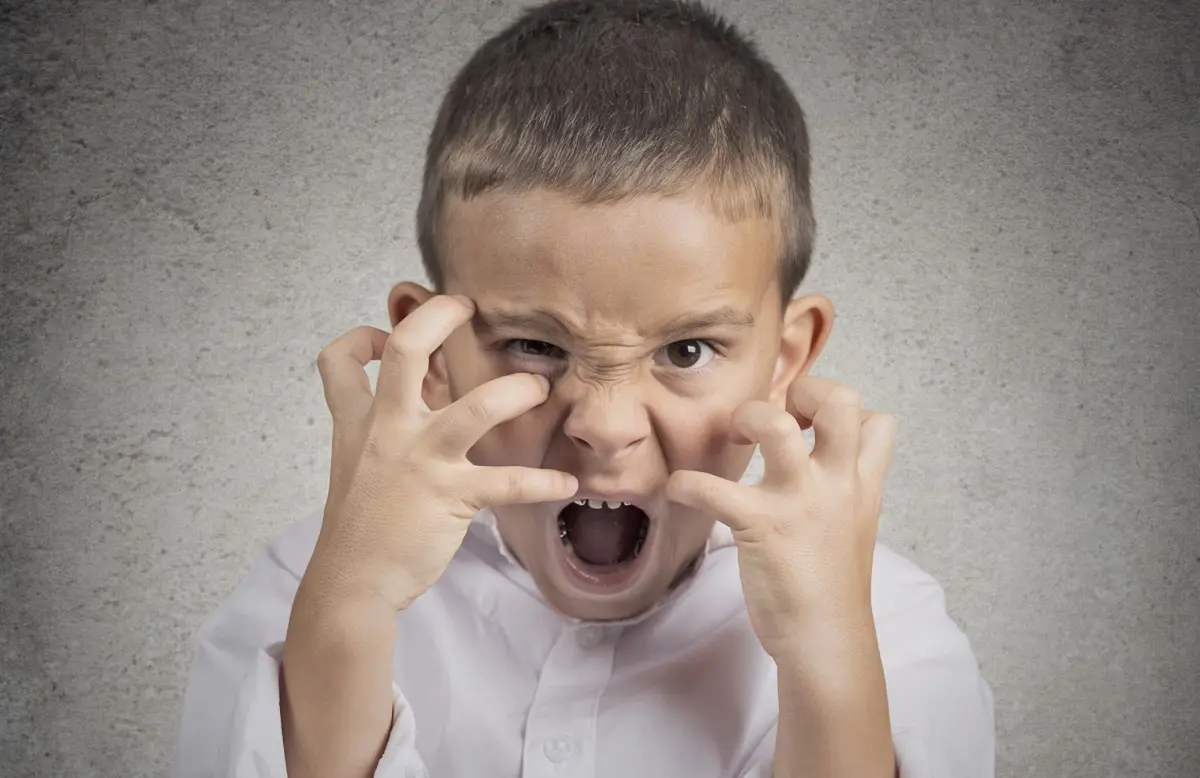
A child has the right to feel anger, and the role of adults is not to suppress this emotion, but to teach children how to express their anger without harming others. This advice was offered by psychotherapist and Doctor of Social Sciences Teresa Jadczak-Shumilo in a podcast with Odeta Moro as part of the “Stop Aggression. Focus on Skills,” organized by the Drabina Rozwoju Foundation, according to Strona Zdrowia.
According to Jadczak-Shumilo, emotions are an important signal: they tell us what is valuable to us, what we need, and when someone is crossing our boundaries. If you give a child space to experience their emotions and help them name what they’re feeling, they’ll understand themselves better and cope more easily with difficult situations.
From Tension to Choice
Yadchak-Shumilo practices the Somatic Experiencing method, developed by Peter Levine. It’s based on observations of animals: an antelope fleeing a predator focuses solely on the threat, but once it’s safe, it stops, trembles, and begins to look around. In humans, intense arousal similarly narrows one’s focus to what seems dangerous, while a calm survey of the surroundings helps one notice that the situation has changed.
The psychotherapist warns that intense stress limits reactions in relationships: in such a state, the easiest responses are to attack, retreat, or freeze. When the stress subsides, a person may still feel fear, but at the same time be able to listen to the other person and seek a solution.
“This is what emotional regulation is all about—we regain the ability to choose how to react, even when the emotion is still present,” emphasizes Teresa Jadczak-Shumilo.
Compassion Instead of Strictness
American child psychologist Becky Kennedy, who holds a Ph.D. from Columbia University, shares a similar view. She is convinced that children who are treated with compassion—rather than scolded for overreacting—grow up to be resilient adults. According to the expert, criticism during a tantrum only intensifies the outburst: “If I add my criticism, my dismissal, the feeling only gets worse. It’s so counterproductive,” Kennedy noted, as reported by CNBC.
The psychologist advises calmly acknowledging the child’s frustration, telling them that their sadness is understandable and genuine, and that they will be able to cope with it. Psychotherapist Amy Morin adds that parents can explain: it’s normal to feel upset, but behaving in a certain way is unacceptable. Alternatives might include deep breathing or naming their emotions.
“A parent’s voice becomes a child’s inner voice,” Kennedy warns. Children who were criticized for their emotions are more likely, as adults, to respond to setbacks with self-criticism rather than analyzing their mistakes and looking for a solution.