
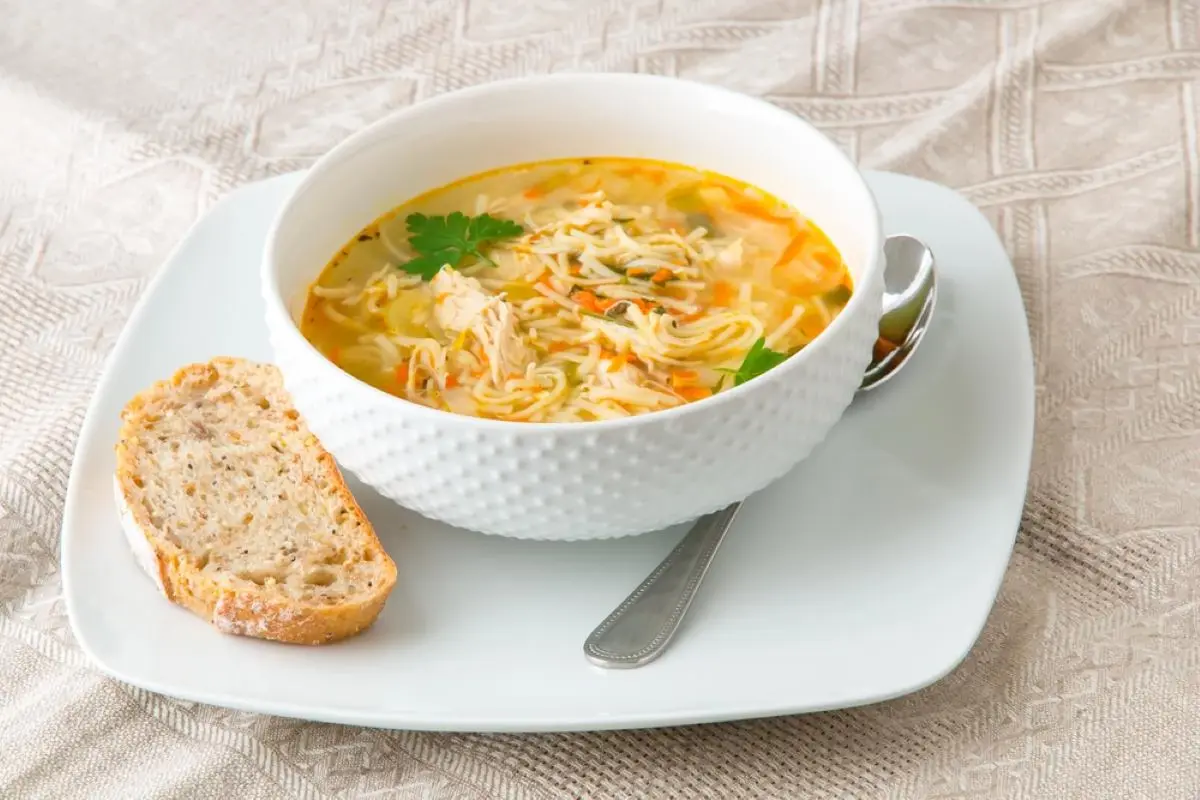
Chicken bone broth, which is traditionally prepared when one has a cold, does more than just provide psychological comfort: according to a number of scientific studies, it has actual biochemical mechanisms that alleviate respiratory symptoms. At the same time, no single food can instantly destroy a seasonal virus, according to 750g.
A key study is that of pulmonologist Stephen Rennard of the University of Nebraska Medical Center, published in the journal *Chest*. He studied neutrophils—white blood cells that flood the nasal mucosa during a viral infection. Their excessive influx causes swelling, throat irritation, and an excess of thick mucus. Laboratory tests showed that the broth significantly inhibits the migration of neutrophils to inflamed tissue. The strongest effect was not from plain bone broth, but from a traditional recipe containing onions, leeks, carrots, celery, and parsley.
As far back as 1978, a team at Mount Sinai Hospital in Miami compared the effects of cold water, hot water, and hot broth on the movement of nasal mucus. It turned out that broth, along with its aromatic steam, accelerates the removal of secretions and pathogens from the sinuses much more effectively than hot water alone.
What Works Inside the Bowl
During prolonged cooking, cysteine is released into the broth. This amino acid is structurally similar to N-acetylcysteine, a well-known medication used to thin mucus. Collagen breaks down into gelatin, along with glycine and proline, which help maintain the integrity of the mucous membranes. Sodium, potassium, and magnesium make the broth an effective way to restore fluid and electrolyte balance during a fever. However, it is no substitute for seeing a doctor if the fever does not subside or if breathing difficulties arise.
Grandma’s Recipe Under the Microscope
Rennard became interested in a 1993 experiment. It was based on a “grandmother’s soup” recipe that his wife, Barbara, had been making for years whenever someone in their family of ten caught a cold. For comparison, the researchers also tested store-bought soups, and many of them showed a similar effect. Plain chicken broth did not inhibit neutrophils in the early stages of cooking, according to the University of Nebraska Medical Center.
The researchers were unable to pinpoint the exact ingredient responsible for the effect.
“All the vegetables and the soup showed activity. I think it’s the combination,” Renard emphasizes.
According to him, the active substances likely dissolve in water, which is why the researcher does not recommend carrot puree as a substitute for soup. In addition, soup can help restore fluid balance and nutrition, and the feeling of comfort may provide a placebo effect.