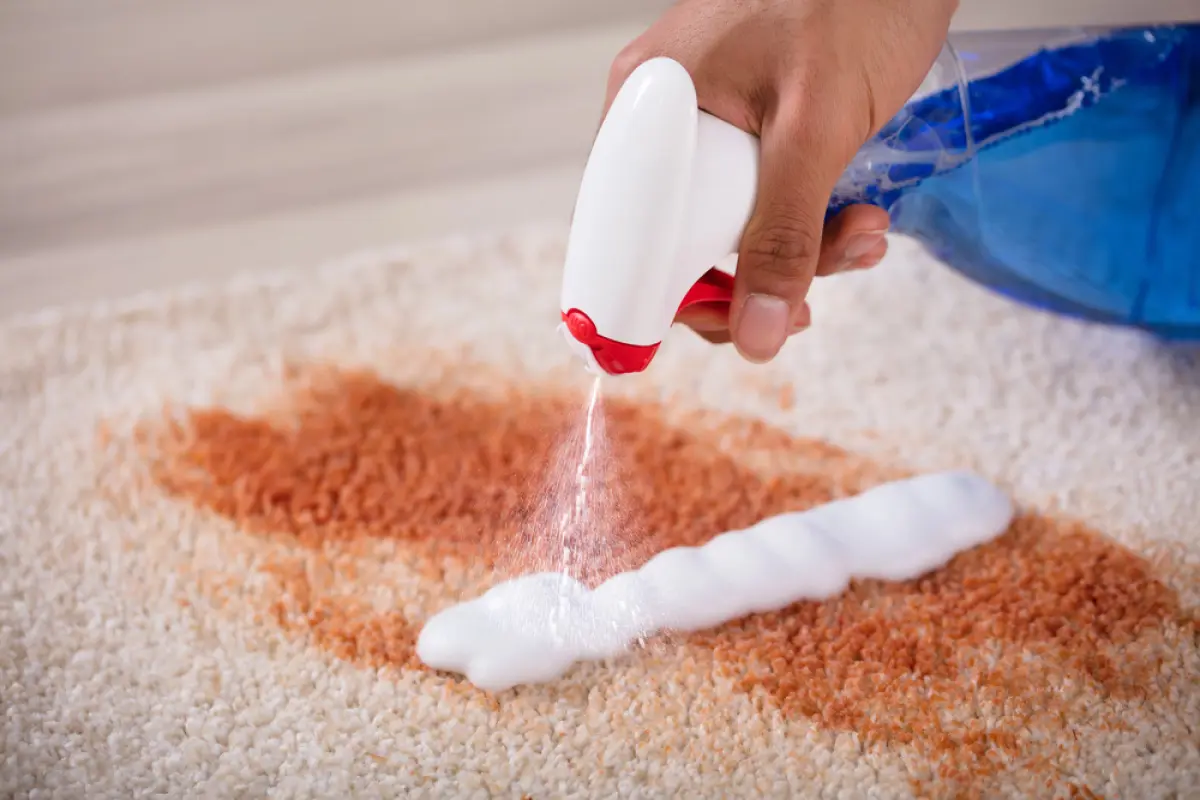
Regular table vinegar helps remove fresh coffee and soda stains from carpets. This tip comes from Utah State University Extension in its guide “Quick Kitchen Tips,” created with financial support from the U.S. Department of Agriculture’s SNAP food assistance program, according to El Cronista.
You’ll need two clean paper towels for this. Dampen the first one with vinegar and gently blot the stain to absorb excess liquid—but do not rub. Dampen the second napkin with vinegar as well, and gently wipe the area with it and cold water until the stain disappears.
The authors of the guide specifically note the temperature: the water should be only cold; hot water must not be used. The same document also mentions another use: one glass of vinegar mixed with five glasses of water makes a cleaner for windows, eyeglasses, and surfaces. However, this mixture does not kill bacteria, so a disinfectant is needed for contaminated surfaces.
Vinegar’s effectiveness is due to its chemical properties. White vinegar for cleaning contains 4% to 7% acetic acid, which dissolves dirt and residue. Many stains are slightly acidic in nature, so they dissolve well in the presence of another acid.
Wool, Synthetics, and Red Wine
The University of Georgia offers more detailed instructions on caring for synthetic-fiber and wool carpets. It is recommended to wipe up spilled beverages immediately and blot the area with cool water to dilute the stain and prevent it from spreading. Next, using a white cloth, apply a solution of one teaspoon of neutral detergent mixed with one glass of warm water, followed by a mixture of one-third of a glass of white vinegar and two-thirds of a glass of water, and then thoroughly remove any remaining moisture, according to UGA Extension.
If the stain remains, lightly spray the area with an all-purpose household cleaner and scrub it with a toothbrush or your fingers. Then place a layer of absorbent cloth about 1.3 cm thick over the spot, weigh it down with books, and leave it for 4–8 hours. For wine stains, start by using club soda.
For stubborn red wine stains, the guide recommends a special mixture of oxalic acid, white vinegar, glycerin, and butyl alcohol. Apply it for only a few minutes, and be sure to wear rubber gloves. Before performing any of these procedures, experts urge you to ensure the fabric’s safety.
“Always test each cleaning solution on an inconspicuous area first to check colorfastness,” the guide’s authors warn.
Some materials require special care. Alcohol damages acetate, triacetate, modacrylic, and acrylic fibers, and vinegar used on cotton must be diluted in a ratio of two parts water to one part vinegar. Upholstered furniture should be treated in the same way, but without vigorous rubbing or soaking, so as not to damage the backing and padding.
What Vinegar Can’t Do
After cooking, cleaning is the second most popular use for vinegar, primarily white distilled vinegar. According to U.S. FDA requirements, vinegar must contain at least 4% acetic acid, and in common varieties, this figure reaches 8%. However, the product’s ability to maintain household hygiene is limited, warns The Nutrition Source at the Harvard School of Public Health.
“Although 5% acetic acid in vinegar is sufficient to kill some household pathogens, it does not kill all of them (such as Salmonella), and vinegar is not recommended as a substitute for commercial disinfectants,” Harvard experts emphasize.
At the same time, white distilled vinegar remains an inexpensive, non-toxic “green” product. It is particularly effective at removing mineral deposits and soap scum from sinks, drains, and shower stalls.
Humankind has been using vinegar since at least 5000 B.C.: in Babylon, it was used for cooking, as medicine, and as a preservative. The name itself comes from the French “vin aigre,” meaning “sour wine.”