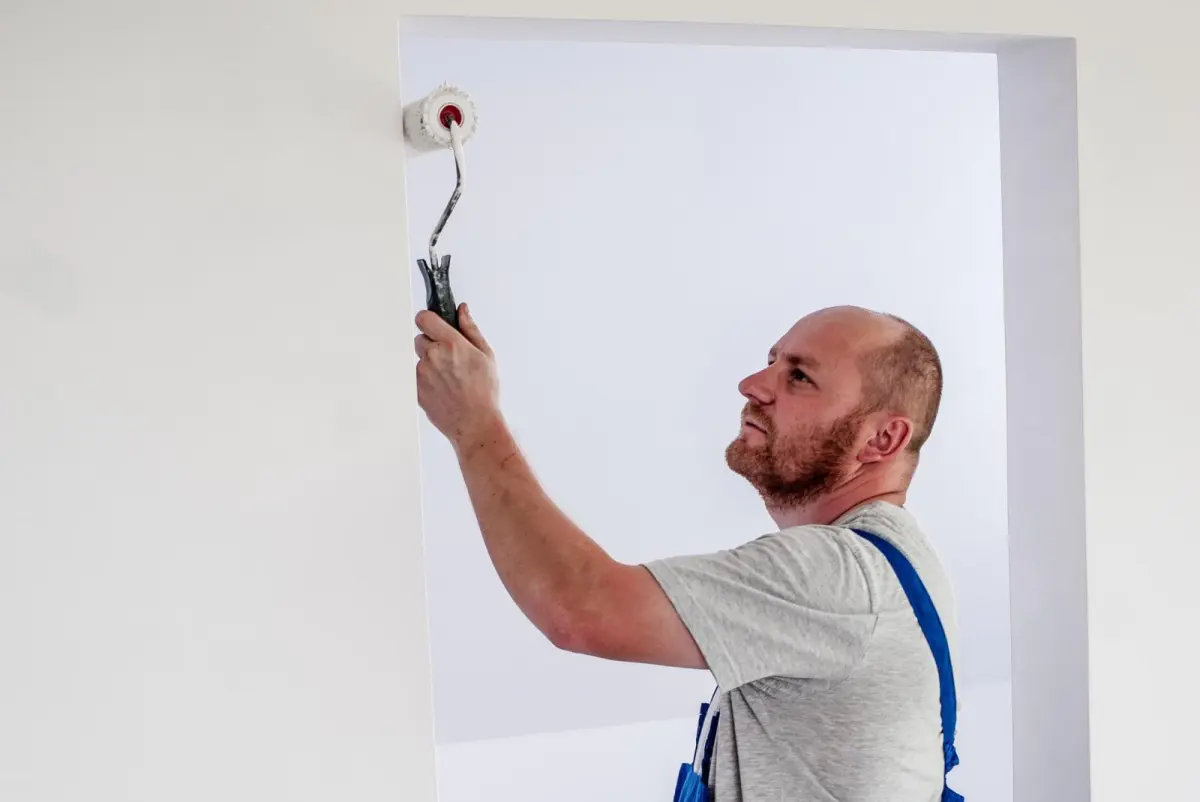
You can paint over a water stain on a wall or ceiling, but first you need to find and fix the leak that caused it and let the surface dry completely. Otherwise, the stain will show through the fresh coat of paint. This advice comes from professional painters Vince Scaduto and Gary Barton, owners of the contracting companies CertaPro Painters, according to The Spruce.
Stains can be caused by both internal leaks—such as a faulty pipe or radiator—and external ones: a crack in the wall, a leak near a chimney or window, or clogged gutters. They recommend thoroughly ventilating the affected area, treating it with a mold remover, and calling a professional if necessary.
Next, the experts advise carefully inspecting the drywall, scraping off any flaking pieces of the old finish, and spackling the damage. Only then should you move on to the next step.
“Stains can be stubborn and show through fresh paint, so it’s important for homeowners to use a primer that effectively blocks potential seepage. Be sure to apply the primer so that it extends beyond the edges of the water stain,” Barton emphasizes.
Scaduto recommends an oil- or shellac-based primer. You can paint only after the primer coat has completely dried. Sometimes, several coats of paint are needed for a reliable result. If the surrounding paint is old and faded, it’s best to repaint the entire area so that no noticeable patch remains.
Laboratory studies also support the choice of solvent-based primers. According to a report by the California Air Resources Board, such coatings block stains significantly better than water-based ones. A water-based primer merely “seals” the stain within a film, and it is only completely hidden after applying the topcoat. Water stains are among the types of stains that water-based primers struggle with the most, according to PCI Magazine.
Why Stains Return
Barton emphasizes that homeowners most often forget to fix the actual source of the leak. “Surprisingly, this is often overlooked,” he notes. Two other common causes are insufficient drying and mold. Residual moisture seeps through the new paint, and untreated mold spreads within the wall or ceiling, forming new stains within a few weeks or months.
The U.S. Environmental Protection Agency warns that paint applied to a mold-covered surface is likely to peel. To prevent mold from growing, wet areas should be dried within 24–48 hours. If the affected area exceeds approximately 10 square feet (about 0.9 square meters), the EPA advises contacting professionals.
Homeaglow cleaning expert Sarah Aparicio recommends removing the stain first and then painting the ceiling. Fresh stains can be removed with a 1:1 solution of white vinegar and water. For old, yellowed stains, bleach diluted with water in a 1:3 ratio will work, but you should wear safety goggles, gloves, and a mask when using it, according to Southern Living.
“Most ceiling paints don’t allow the surface to breathe, so any leaks or moisture underneath will simply remain and worsen, eventually leading to a bigger problem,” warns Aparicio.