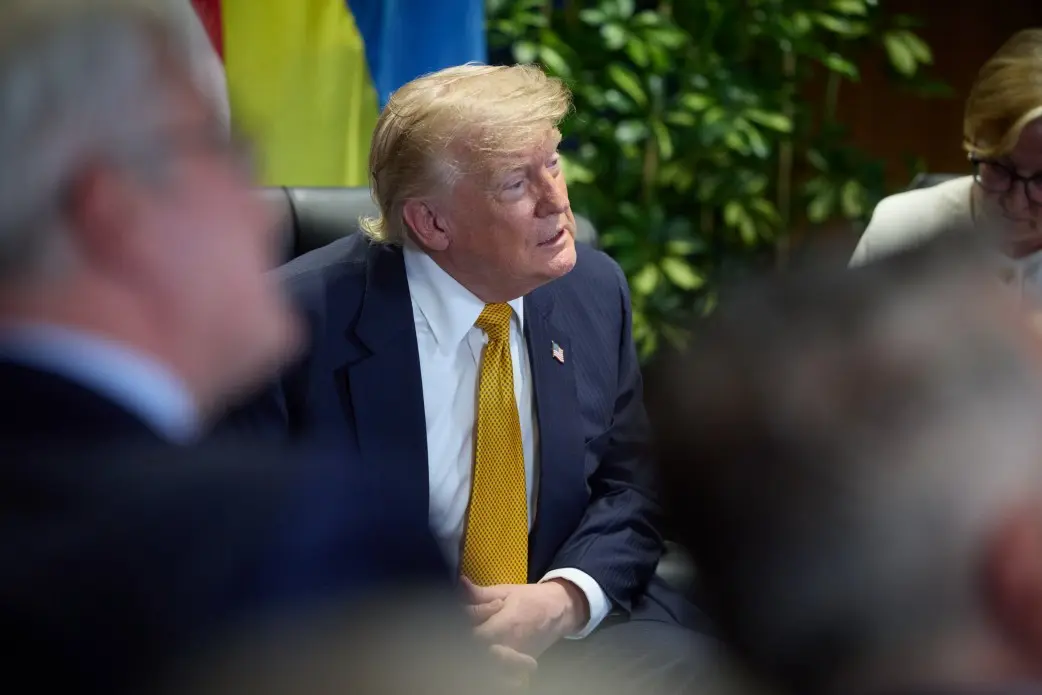
U.S. President Donald Trump suffered one of the worst defeats of his political career: in the midterm elections, the Republicans lost control of both houses of Congress. As of 7:40 a.m. Central European Time, the Democrats had won 25 additional seats in the House of Representatives and now hold 220 seats—two more than the 218 needed for a majority. In the Senate, they took seven seats from the Republicans, including in Texas, Ohio, Kansas, and Maine, according to Euronews.
High prices significantly influenced voters’ choices: about two-thirds of those polled on Election Day believe that Trump’s tariffs harmed the economy. The president promised to accept the results but will block the Democrats’ agenda with a veto. He posted a photo of a red cap with the word “VETO” embroidered on it.
“I don’t take this as a blow to me,” Trump said.
The incumbent president’s party traditionally loses in midterm elections. According to Britannica, over the course of 22 campaigns from 1934 to 2018, it lost an average of 28 seats in the House of Representatives and four in the Senate.
Funds for Ukraine May Not Materialize
The new Congress will begin its work in January. At that time, Democrats will head Senate committees and decide which of Trump’s nominees to confirm. Many of them are eager to approve new funding for Ukraine; however, over the past two years, the White House has canceled funds that had already been approved, holding them back until the end of the fiscal year, when they expired.
“In practice, this means that a Democratic Congress can codify funding for Ukraine or for development aid into law, but the president may choose not to spend it,” warns Nevada Joan Lee, a political analyst at the European Council on Foreign Relations (ECFR). She advises European governments to count only on funds that have actually been received: “Europeans should view allocated funds as an intention, not a commitment.”
For example, in August 2025, the administration canceled $4.9 billion in foreign aid in this manner, and on September 25, 2026, announced another cancellation of $810 million. The U.S. Government Accountability Office and leaders of both parties have called these actions unlawful; however, legal challenges will likely be heard only after the fiscal year ends, by which time the funds will no longer be available, writes the ECFR.
Tariffs Remain, Markets Stay Calm
A Democratic victory will most likely not eliminate the threat of tariffs for Europe. After the Supreme Court struck down Trump’s emergency tariffs in February, the administration reclassified them under Section 301 of the Trade Act, which allows the president to act without a congressional vote.
“Like foreign policy, trade is another area where the president can act unilaterally, without Congress,” notes James Smith, an economist at the Dutch bank ING. He does not rule out the imposition of new tariffs against Europe.
Investors reacted mostly calmly. The euro rose 0.4% to $1.1232, while gold rose 2% to $4,011 per ounce. S&P 500 futures fell 0.3%, and the yield on 10-year U.S. Treasury bonds dropped to 4.94%.
Ed Yardeni, president of Yardeni Research, warns that this time around, a divided government may not provide the markets with their usual stability. He is concerned about the need to raise the debt ceiling: a prolonged standoff over it could drive up borrowing costs. Ebury analyst Diego Barneuvo expects the debt ceiling to become a constraint for the government as early as 2027.