
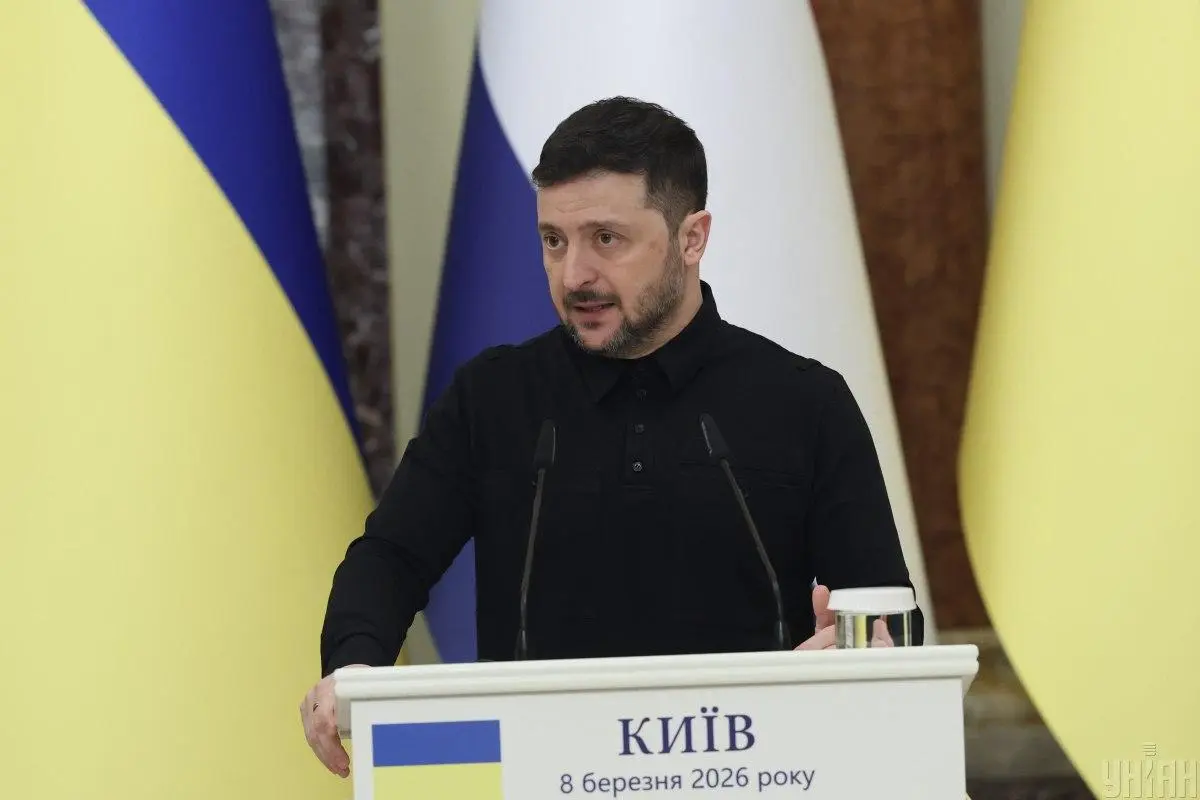
President Volodymyr Zelenskyy stated that he cannot interfere in the work of anti-corruption agencies in order to stop the pressure being exerted on them. He made these remarks in an interview with the BBC that aired on November 26, according to the Kyiv Independent.
The statement came after the National Anti-Corruption Bureau of Ukraine (NABU) and the Specialized Anti-Corruption Prosecutor’s Office (SAPO) reported a smear campaign against them that began following investigations into high-ranking law enforcement officials. Several former and current officials targeted by anti-corruption investigators claim that these proceedings are intended to put pressure on Kyiv in negotiations with the U.S. and Russia and force it to agree to an unfavorable deal with Moscow. Similar narratives are also being spread by large, anonymous Telegram channels.
One of the main sources of pressure on NABU and SAP staff is said to be the Security Service of Ukraine (SBU), which is considered loyal to the Office of the President. SAP Head Oleksandr Klymenko stated in an interview with “Ukrainska Pravda” that the Office of the President could stop the “coordinated media attack” on anti-corruption agencies “in two minutes,” since it is a matter of political will.
When asked about possible pressure from the SBU on NABU, Zelenskyy replied that journalists could investigate the situation themselves. According to him, questions have already been raised regarding the actions of some security service officials, while others have been dismissed.
Explaining the limits of his authority, the president cited the status of the bureau and the prosecutor’s office. He “tries to support” NABU and the SAPO, “but not to the extent of breaking the law, since these are independent institutions,” Zelenskyy emphasized.
Anti-corruption agencies have been in the spotlight ever since the summer of 2025, when Zelenskyy’s team attempted to strip them of their independence, sparking protests across the country. At the time, the SBU portrayed its actions as countering Russian influence within the bureau. Since then, NABU and the SAPO have released several high-profile investigations involving top officials and the president’s allies.
Raids and Law 12414: How the Standoff Began
On July 21, 2025, the SBU, the State Bureau of Investigations (DBR), and the Office of the Prosecutor General conducted at least 70 searches targeting at least 15 NABU employees. According to the bureau, the investigative actions took place without court orders. For the most part, they were justified by the alleged involvement of certain individuals in traffic accidents, while some employees were suspected of having ties to an aggressor state. During one of the searches, physical force was used against a detective. At the same time, the Security Service of Ukraine (SBU) launched an unscheduled audit of state secrets protection, which, according to the bureau’s assessment, could have granted the SBU access to data on current and planned operations by NABU and the Specialized Anti-Corruption Prosecutor’s Office (SAPO), NABU reported.
On July 22, the Verkhovna Rada passed Bill No. 12414 with 263 votes in favor, including amendments that expanded the powers of the Prosecutor General: he gained the ability to transfer NABU cases to other agencies, issue direct instructions to SAPO prosecutors, and became the sole authority empowered to notify high-ranking officials of their status as suspects. Zelenskyy signed the law that same day. Thousands of people took to the streets in Kyiv, Odesa, Lviv, and other cities. These were the first mass anti-government demonstrations since the start of the full-scale invasion. European Commissioner for Enlargement Marta Kos called the vote “a serious step backward,” according to Human Rights Watch.