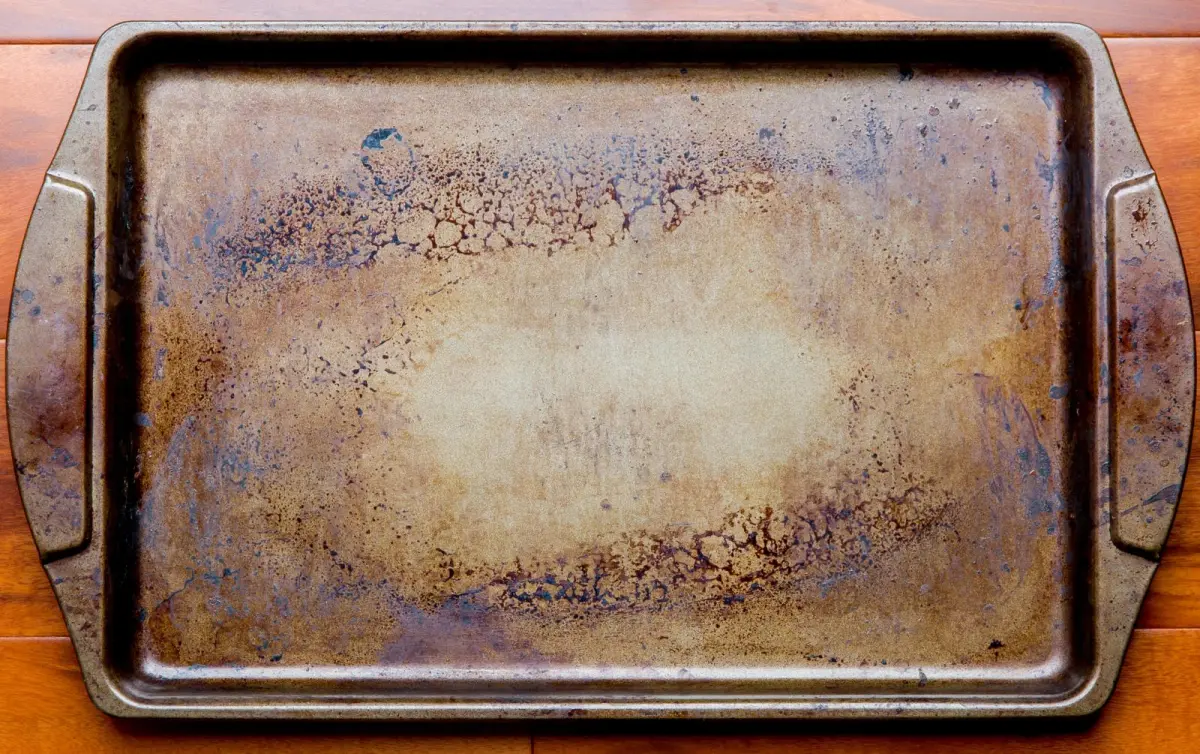
Old grease that builds up on baking sheets over the years can go rancid, spoil the taste of your food, and be harmful to your health. A baking soda paste can help remove it; leave it on the surface for 15–20 minutes, then rinse it off. These tips come from experts in baking and kitchenware, according to Southern Living.
Washing baking sheets regularly isn’t just about keeping your kitchen looking neat. Jennifer Behar, a baker and founder of Jennifer’s Homemade in Miami, emphasizes food safety.
“Old oil can go rancid, make food taste bad, and is generally harmful to you. A clean surface is important for both food safety and taste,” Behar notes.
Missy Stefanik, senior product manager at GoodCook Bakeware, adds that baked-on residue makes the surface uneven. Hot spots appear on the baking sheet, so food can burn or bake unevenly.
For a deep clean, experts recommend mixing half a glass of baking soda with 2–3 tablespoons of hydrogen peroxide until it reaches the consistency of toothpaste. Apply the mixture evenly to a dry baking sheet, let it sit for 15–20 minutes to soften the residue, then scrub with an abrasive sponge, rinse with warm water, and wipe dry. Instead of hydrogen peroxide, you can use white vinegar or dish soap.
The dishwasher isn’t your best friend
According to Stefanik, aluminum baking sheets should not be washed in the dishwasher. Cookware with a nonstick coating can withstand the dishwasher, but the detergents gradually break down the coating, and the pan will need to be replaced sooner. Metal scouring pads and abrasive cleaners are also unsuitable for these pans.
“For optimal results and a longer lifespan, it’s best to wash the pans by hand with warm soapy water and dry them with a towel,” advises Stefanik.
Behar recommends washing the baking sheet with dish soap after every use and performing a deep clean once every few months. She avoids oven cleaners because of their overly harsh chemicals and lines the baking sheet with parchment paper to keep it from getting too dirty.
The chef isn’t afraid of scratches
Roger Citrin, a chef-instructor at the Institute of Culinary Education, offers a different approach. He first soaks the burnt-on sugar in water in the sink, and for tough spots, he uses a metal scrubber and Bar Keeper’s Friend abrasive powder, working with gloves on. He considers The Pink Stuff paste—made from baking soda, quartz, and soap—a gentler alternative, according to Mental Floss.
Sitrin chooses simple, uncoated aluminum restaurant trays that can withstand intense scrubbing. He isn’t bothered by signs of wear.
“Do they get a little scratched up? Yes, but that’s normal. I don’t mind if they develop a patina, if they turn a little brown and take on a well-worn look. That’s perfectly normal. The more you use them, the more character they develop,” Citrin is convinced.