
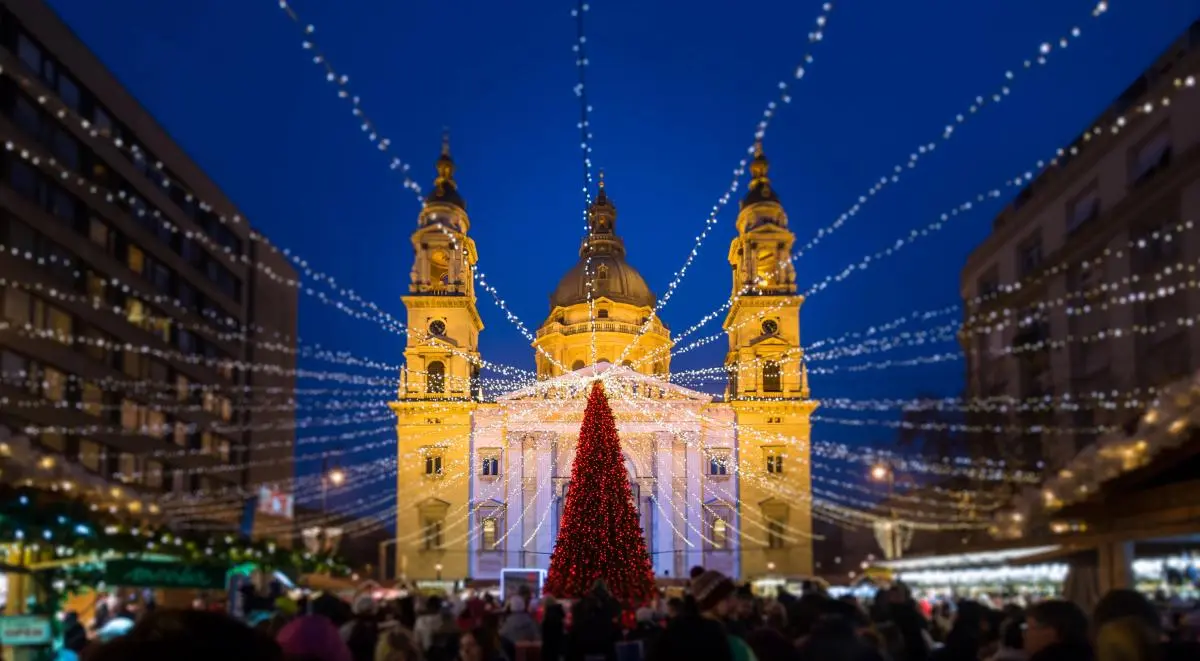
A neighborhood that turns into a living Advent calendar, Christmas markets, and a dip in historic thermal baths: this is how a local resident sees Budapest in winter, and she’s shared her own seasonal itinerary around the city. She recommends spending gloomy December days in the baths, which are fed by thermal springs, according to The Guardian.
In her neighborhood on the Buda side of the Danube, the holiday season begins on the first day of December. At the OTI estate in Albertfalva, a 1930s neighborhood on the border of District XI (Újbuda), neighbors take turns decorating their windows with the day’s date and garlands. Sometimes they treat passersby to chocolate, hot cocoa, or mulled wine right in their front gardens.
The most famous markets are held near St. Stephen’s Basilica and on Veresmarty Square. The author loves to stroll through them, but she spends her money at smaller, more authentic neighborhood markets, such as the one near the Fehérvári úti market. She buys kürtőskalács, a traditional Hungarian pastry coated in fragrant sugar, at a small shop on Váci utca near the Central Market: there, it costs significantly less than at the fair.
The market that attracts hundreds of thousands of tourists
The market near St. Stephen’s Basilica has been named Europe’s best Christmas market four times by European Best Destinations. In previous years, around 800,000 tourists came to Budapest specifically for the markets, according to Hungary Today.
For local artisans, the holiday season is crucial: it accounts for up to 50% of their revenue. According to Viktoria Nemeth, an analyst at the Oeconomus Foundation, retail sales in Hungary could rise by 7.7% during the holiday season.
“The economic impact of Christmas markets should not be underestimated, and their importance for tourism is also growing,” Nemeth emphasizes.
A Bathhouse Under a Turkish Dome
The author’s favorite spot is the Rudas Baths. On Tuesday mornings, the Turkish section is open exclusively to women, where you can relax in the mineral water beneath a 16th-century dome. On Fridays and Saturdays, Rudas is open late into the night, and from the hot tub on the roof, you can see the lights over the Danube.
The Rudas Baths are one of three preserved Ottoman-style bathhouses in the city, alongside Király and Veli Bej. Gabriella Saich, spa manager at the Corinthia Budapest hotel, describes the scope of Budapest’s bathing culture in an interview with Corinthia.
“Thanks to more than 100 thermal springs that supply over 50 bathhouses and thermal spas with 70 million liters of thermal water every day, Budapest is unique among the world’s capitals,” notes Saich.
The temperature of this water ranges from 21 to 78 degrees Celsius, so the spa manager advises limiting bathing time to the recommended duration.