
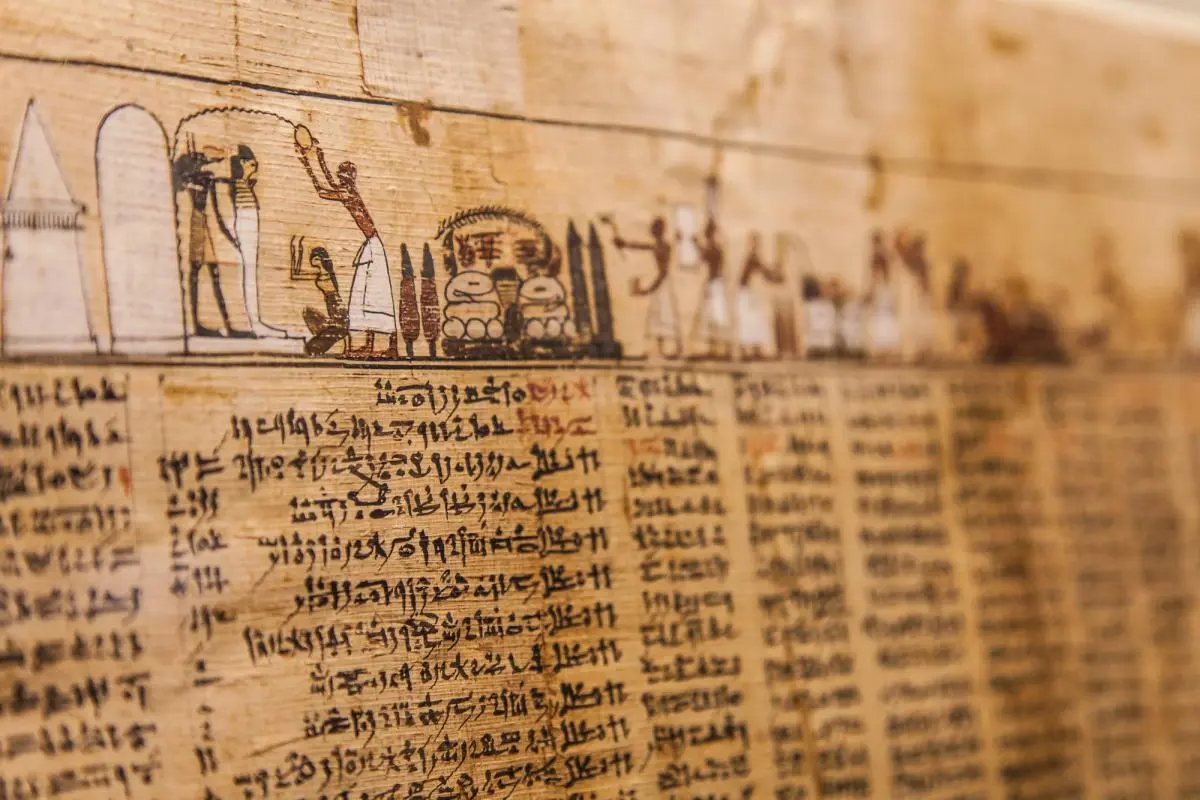
The ancient Egyptian papyrus of Edwin Smith, compiled around 1600 B.C., describes surgical techniques that surpass the knowledge Hippocrates documented nearly a thousand years later. The document contains 48 clinical cases, prompting a reevaluation of the history of scientific medicine, according to Science et Vie.
Each case in the text is devoted to a specific part of the body or organ. The author analyzes the symptoms and proposes an appropriate treatment. Egyptian doctors knew how to stop bleeding, fight infections, close wounds, and treat fractures. Some passages reproduce the physician’s notes about his own patients, much like in a modern clinical journal.
Most medical texts of that era combined prescriptions with invocations to healing gods. This papyrus, however, relies almost exclusively on observations. The eight magical formulas on its reverse side were, according to researchers, added later by a scribe. The text breaks off mid-sentence, so the preserved document is likely an incomplete copy of an even older original from the Old Kingdom.
Authorship is hypothetically attributed to Imhotep, the architect of Djoser’s step pyramid and a renowned physician who was deified after his death. There is no direct evidence of this. The papyrus was purchased in Luxor in 1862 by the American Edwin Smith, and the first complete translation, after ten years of work, was published by Egyptologist James Henry Breasted in 1930.
Three Verdicts of the Ancient Physician
After examining a patient, the papyrus classifies injuries into three categories: “an ailment I can treat,” “an ailment I will struggle with,” and “an ailment for which nothing can be done.” New York physician David Mininberg, who served as a consultant for an exhibition on ancient Egyptian medicine at the Metropolitan Museum of Art, considers this classification surprisingly modern, according to HealthDay.
“And the third category, in my opinion, is the most striking: do not treat. That is, instead of resorting to heroic measures at the end of life with no chance of success, he simply provides supportive care,” Mininberg emphasizes.
As an example, the publication cites a cheek wound. On the first day, it was dressed with fresh meat, and then a bandage with oil and honey was applied daily. According to Mininberg, meat contains enzymes that cleanse the wound and reduce inflammation, while honey has antibacterial properties. The Egyptians did not know about bacteria, but they arrived at effective solutions through trial and error.
“If you think about it, it’s not all that different from modern drug testing,” the doctor believes.