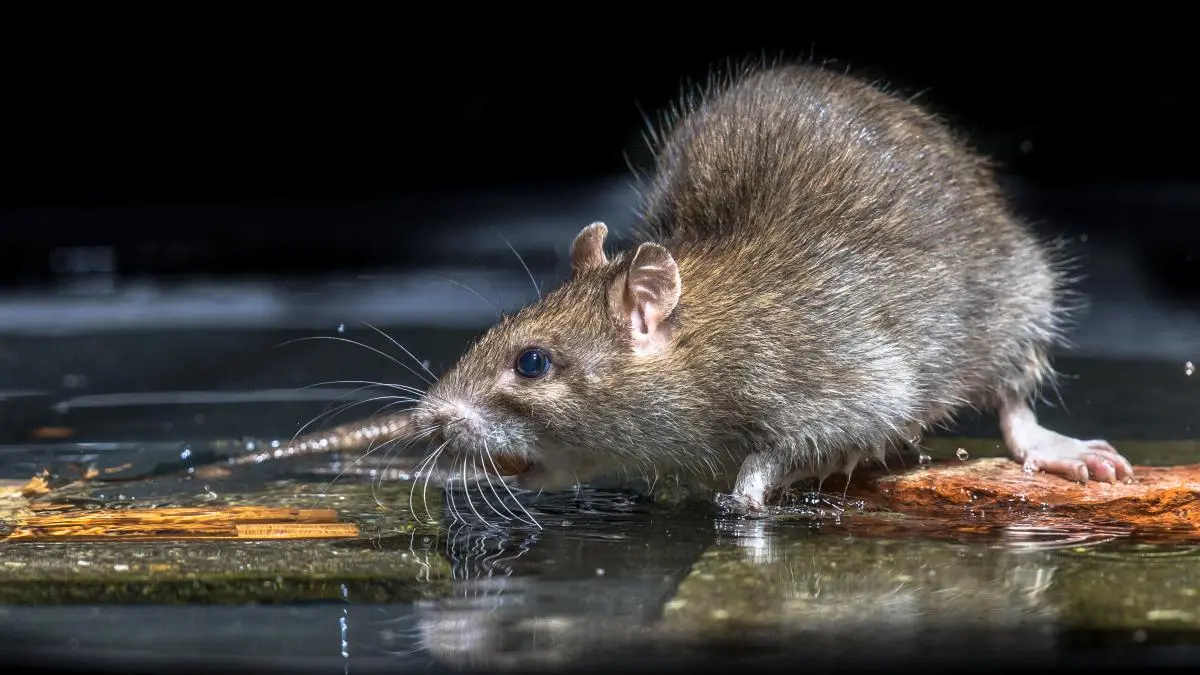
Scientists have captured an Ethiopian water rat (Nilopegamys plumbeus) in the Yayu Biosphere Reserve in southwestern Ethiopia; the species had been considered extinct for nearly a century. The German Nature Conservation Union (NABU), which is participating in the project, announced the discovery on Monday, according to Index.
The species was previously known from only a single specimen, described in 1928. Mengistu Vale of the Ethiopian Biodiversity Institute (EBI) caught the new specimen in a trap in mid-October during a biodiversity survey. He called it an “extraordinary find.” The rodent, about 15 centimeters long, has broad hind feet adapted for swimming and thick, water-repellent fur: dark on top and white on the underside.
The extinct species lived near a village
An Ethiopian-Czech team, which included specialists from the Institute of Vertebrate Biology at the Czech Academy of Sciences, participated in the study. The animal was found in a transition zone within the reserve, between the protected area and agricultural land. This is far from where the species was first recorded, according to the Czech Academy of Sciences.
“The discovery of this animal at a considerable distance from its original range in Gojjam, in northwestern Ethiopia, demonstrates how important it is to better understand its range, environmental requirements, and conservation needs,” — emphasizes Mengistu Vale.
Subsequently, the researchers captured two more individuals. After comparing them to the 1928 description, they are confident that this is the same species, and genetic testing is underway for final confirmation. The rodent was caught in a trap baited with ordinary peanut butter, according to National Geographic.
“The most interesting thing is that this didn’t happen in the center of the reserve, but actually near farmland not far from the village. It was a stream where people were washing clothes right there,” notes Alena Fornuskova, a mammalogist at the Institute of Vertebrate Biology.
Independent experts remain cautious in their assessments. “If this is confirmed, it will be extraordinary news,” says Thomas Jarla, a mammalogist at the University of Siena. According to him, the species is so distinctive that an expert’s visual assessment could very well be correct.
The species remains endangered
Although the animal has not been seen for nearly a century, the International Union for Conservation of Nature still classifies it as critically endangered. The habitat in the north, where the species was first discovered, has been almost entirely converted into pastures.
Scientists plan to study this rare rodent in greater detail. “Further research will focus on clarifying its taxonomic classification, genetics, ecology, and any potential diseases that this rediscovered mammal may carry,” — says Malahat Dianat of the Institute of Vertebrate Biology.