
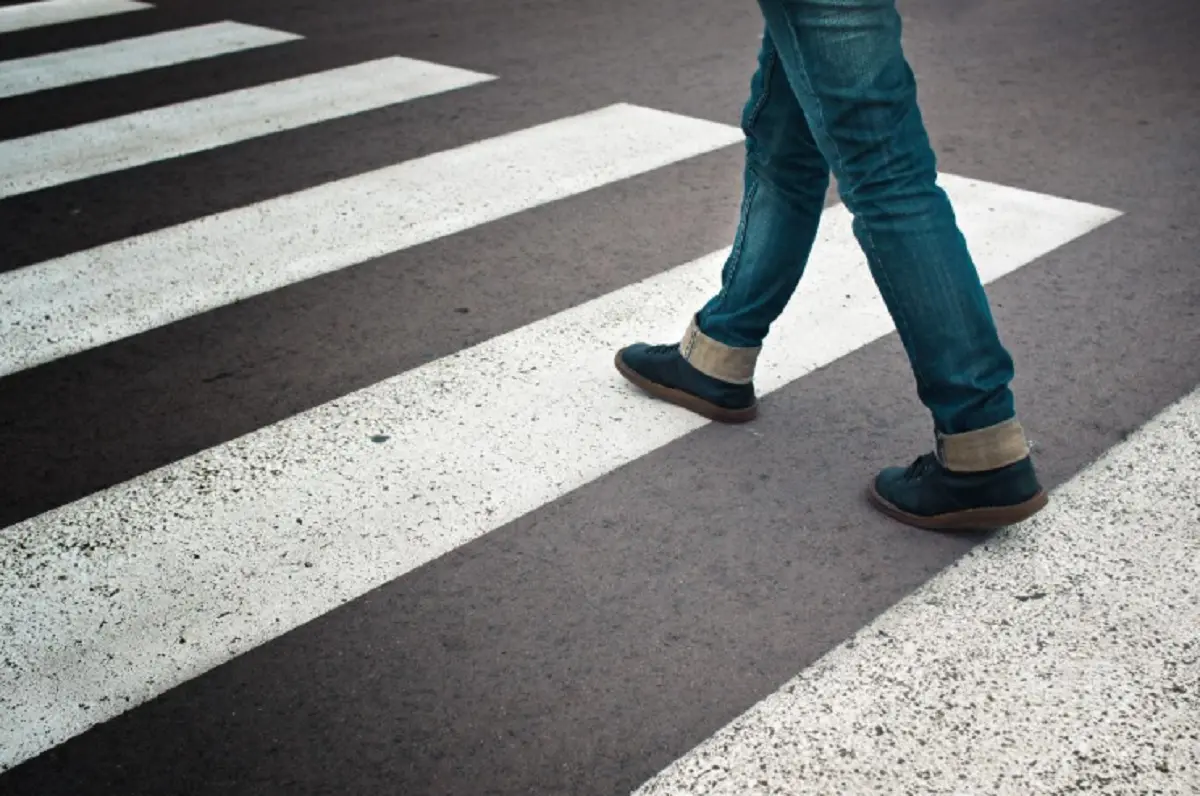
The habit of waving to a driver who has stopped at a crosswalk is, above all, a sign of conscientiousness. Such people consider it important to follow the rules and acknowledge the consideration of others. This assessment comes from a clinical psychologist at the University of Arkansas, as cited by Hello Magazine, according to Dívány.
Formally speaking, gratitude is unnecessary here: traffic laws require drivers to yield to pedestrians at marked crosswalks. However, in the same situation, some people take this action for granted, while others feel the need to express their gratitude. According to the expert, this gesture is also linked to kindness. This trait is more pronounced in those who value good relationships, avoid conflict, and willingly show respect for others.
Conscientious people are usually attentive to details and try to be considerate of others. Therefore, even though they understand that the driver is simply obeying the law, they use this gesture to show that they do not take the driver’s consideration for granted.
At the same time, the psychologist cautions against categorizing people into rigid types. The widely recognized “Big Five” model describes personality through five basic traits: openness to experience, conscientiousness, extraversion, agreeableness, and neuroticism. All of these traits are present in every person, just to varying degrees. A single everyday gesture does not provide grounds for far-reaching conclusions about character.
Gratitude as a Sign of Emotional Health
Spanish-speaking psychologists interpret this gesture more broadly. In addition to good manners, it reflects a conscious attitude toward living together in society and is an indicator of emotional health and connection to one’s surroundings, writes La 100.
Psychologist Robert Emmons, co-director of the gratitude research project at the Greater Good Science Center, describes this behavior as viewing life “through grateful eyes.” In his view, this means acknowledging our interdependence with others and understanding that life is not a debt owed to us, but a gift.
Psychologists emphasize that empathy is the foundation of gratitude. In a stressful traffic situation, it allows us to recognize that another driver may also be in a hurry, tired, or nervous, yet still yields the right of way.
Such a reaction shows that a person isn’t driving on “autopilot” and is aware of those around them.
“Those who say thank you, let pedestrians cross, or yield the right of way to another driver are true revolutionaries: they refuse to live in isolation,” note the psychologists cited by the publication.
The “zebra crossing” turns 75
The “zebra crossing” itself will celebrate its anniversary in a few days: on October 31, 1951, the first official crosswalk with black-and-white stripes went into use in Slough, UK, west of London. Within the first year, pedestrian fatalities in the UK dropped by 11%, Wired reports.
Prior to this, crosswalks were marked only by metal studs embedded in the road surface. Pedestrians could see them clearly, but drivers would feel them under their tires only when it was already too late to brake. The British Transport Research Laboratory tested the visibility of various options on 1:24-scale road models and, starting in 1949, tested them at thousands of locations. Wide black-and-white stripes provided the best visual effect.
The name is attributed to politician Jim Callaghan, the future prime minister, although he himself said he did not remember this. Later, the Ministry of Transport expanded the “animal” series: introducing “pelican” crossings with traffic lights, “puffin” crossings with sensors, “toucan” crossings for pedestrians and cyclists, and “pegasus” crossings with a button at rider height.
The advantage of striped markings remains relevant to this day: a driver can see an old crosswalk, marked only by two transverse lines, from about 30 meters away. At a speed of about 50 km/h, that leaves just two seconds to react. The Beatles brought the “zebra crossing” worldwide fame with the cover of their 1969 album *Abbey Road*. Since then, the crosswalk near the studio of the same name has become a pilgrimage site for tourists.