
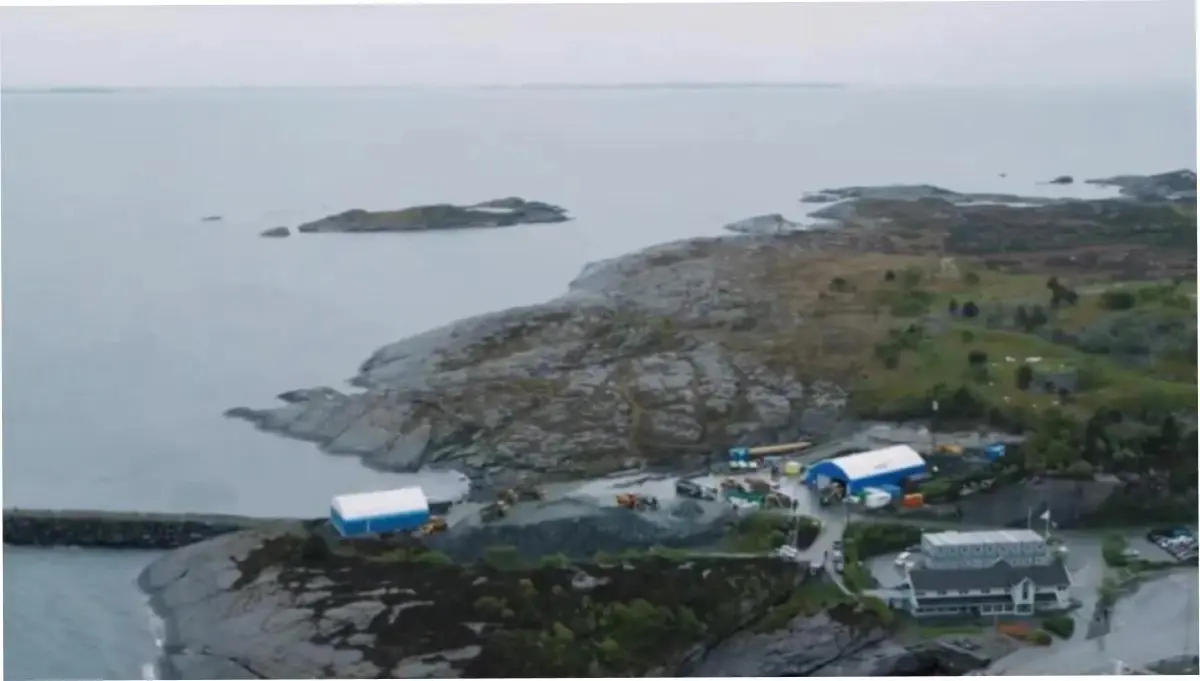
Norway is building the E39 Rogfast, the world’s longest and deepest undersea road tunnel. It will be 27 kilometers long, and at its lowest point, it will descend 392 meters below sea level. The tunnel will connect Nør-Yren and Gaugalan on the country’s west coast. Construction is scheduled to be completed in 2033, and the project is estimated to cost approximately 25 billion Norwegian kroner, according to Mediafax.
The tunnel will be part of the E39 highway, which stretches 1,100 kilometers from Trondheim to Kristiansand. Currently, drivers take about 21 hours to complete the journey and must transfer to ferries several times. The depth is due to the terrain: the fjords in this area reach 400 meters.
Due to the tunnel’s length and a 7% gradient—which increases the risk of engine overheating—fire is considered the main threat. Therefore, emergency exits leading to a parallel, isolated tunnel will be installed every 250 meters instead of the standard 330. To prevent drivers from getting bored by the monotony, an art project will be implemented in the tunnel, and dynamic lighting will be installed.
Saltwater at a depth of 300 meters
Construction began back in January 2018, but was halted at the end of 2019 due to projected cost overruns, and the contracts were canceled. Work resumed in late 2021. Rogfast will replace ferry crossings and cut the travel time between Bergen and Stavanger by about 40 minutes, according to CNN.
The deepest, northern section, 9 kilometers long, is being built by Skanska. Project manager Anne Brit Moen spoke about the challenges builders have already faced.
“The main challenge so far has been finding sufficiently effective grouting methods to seal the rock. We are now 300 meters below sea level, and there have already been significant saltwater leaks in the tunnel system,” Moen noted.
The tunnel is being excavated simultaneously from both ends. The crews must meet in the middle with a margin of error of no more than 5 centimeters.
Who Will Pay for the Record?
The government will cover 40% of the cost; the remainder will be recouped through tolls. It is expected that after the tunnel opens, about 6,000 cars will pass through it daily, and the average toll will be approximately 30 pounds sterling. The island of Kvitsoy, home to just 500 people, will have its first permanent connection to the mainland, according to New Civil Engineer.
Oddvar Kaarmo, project manager at the Norwegian Public Roads Administration, notes that the port of Mortavika is vulnerable to bad weather, and in winter, ferries are sometimes forced to use a different harbor. “Once the tunnel is completed, we won’t have to rely on good weather to keep the roads open,” Kaarmo emphasized.