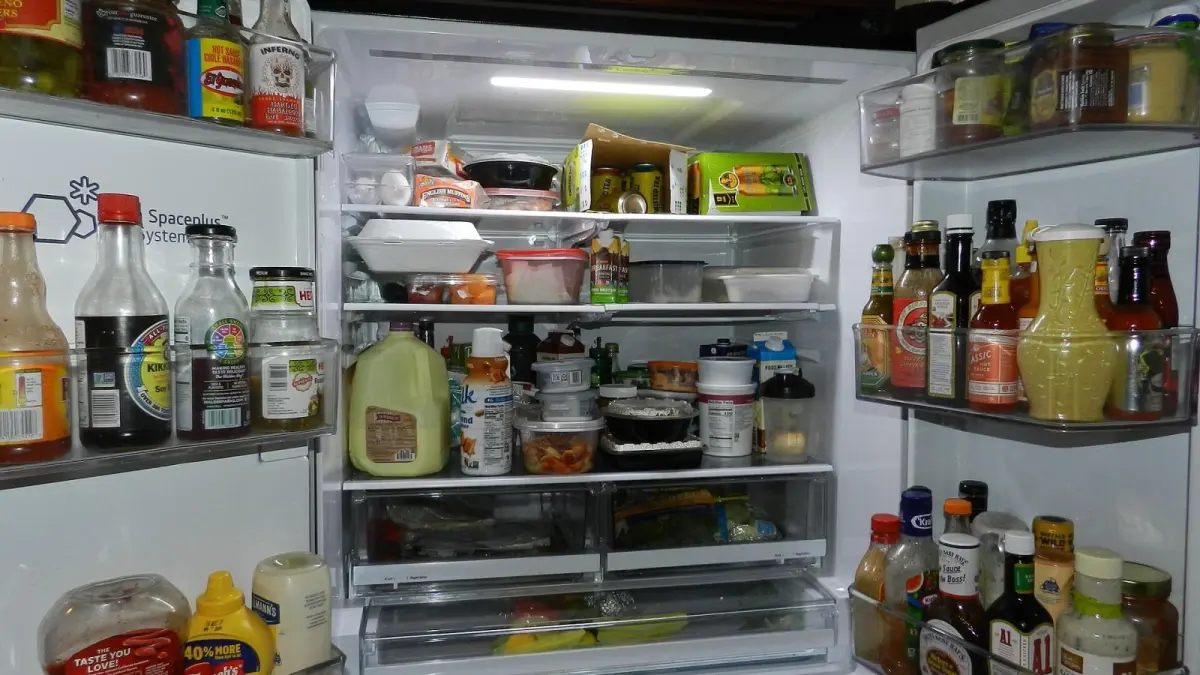
The small hole at the bottom of the refrigerator’s back wall, roughly above the vegetable drawer, is neither a defect nor a ventilation hole—it is a condensate drain. The manuals from Bosch and Liebherr recommend cleaning it with a damp cotton swab, since a clogged drain prevents water from draining, causing it to accumulate at the bottom of the refrigerator, according to Kertészkedj.hu.
In most household refrigerators, the cooling element is located behind the back wall, which is why that area is the coldest inside. Moisture from the air condenses there, just as it does on cold glass. According to Liebherr, droplets or a thin layer of frost here are completely normal.
The water runs down the sloped wall to an opening, then flows through a tube to the outside and drips into a drip pan above the compressor. The heat from the compressor gradually evaporates the moisture, so the drip pan usually doesn’t need to be emptied. More condensation forms if you open the door frequently or for long periods, or if you place hot food inside.
Odors, Puddles, and Ice
The drain can become clogged with crumbs, vegetable scraps, spilled juice, and mold. Typical signs of a problem include water under the drawers or at the bottom of the refrigerator compartment, a musty odor that quickly returns after cleaning, and ice or thick frost on the lower part of the back wall.
Bosch recommends removing the pull-out bins, cleaning the drain hole with a cloth and a damp cotton swab, and wiping up any water with a soft sponge. Liebherr adds that you should empty the refrigerator and unplug it before cleaning. Use only pH-neutral cleaning agents—no abrasives, acids, or chlorine. Do not force a toothpick or knife into the opening, as this can damage the drain channel and tube.
If a thick layer of ice has already formed on the wall, you must first defrost the refrigerator. Water may appear at the bottom even if the drain is working properly: this can happen if the appliance is not level, the door has been left open for a long time, or the gasket has come loose.
Manufacturers do not specify an exact cleaning schedule. The Hungarian Food Safety Authority (Nébih) recommends cleaning the refrigerator once a month and keeping the drain clean during defrosting. The optimal internal temperature is between 0 and 5 °C.
When a toothpick doesn’t help
In side-by-side refrigerators, the drain hole is often located on the back wall of the freezer compartment. Ice buildup under the bottom basket indicates a clog there. GE Appliances recommends melting the ice and flushing the drain with a solution of 1 teaspoon of baking soda per 2 glasses of hot water using a kitchen syringe. As a preventive measure, this procedure should be repeated once or twice a year, according to GE Appliances.
Ron Shimek, president of the service company Mr. Appliance, cites a blocked drain as one of the most common causes of water in the refrigerator. He advises first pouring warm—but not boiling—soapy water into the drain. If that doesn’t help, the drain is most likely clogged with something solid: food, grease, or dirt.
“A problem like a clogged drain that can’t be fixed with warm water will require repair by a service professional,” Schimek warns in a comment for Homes and Gardens.