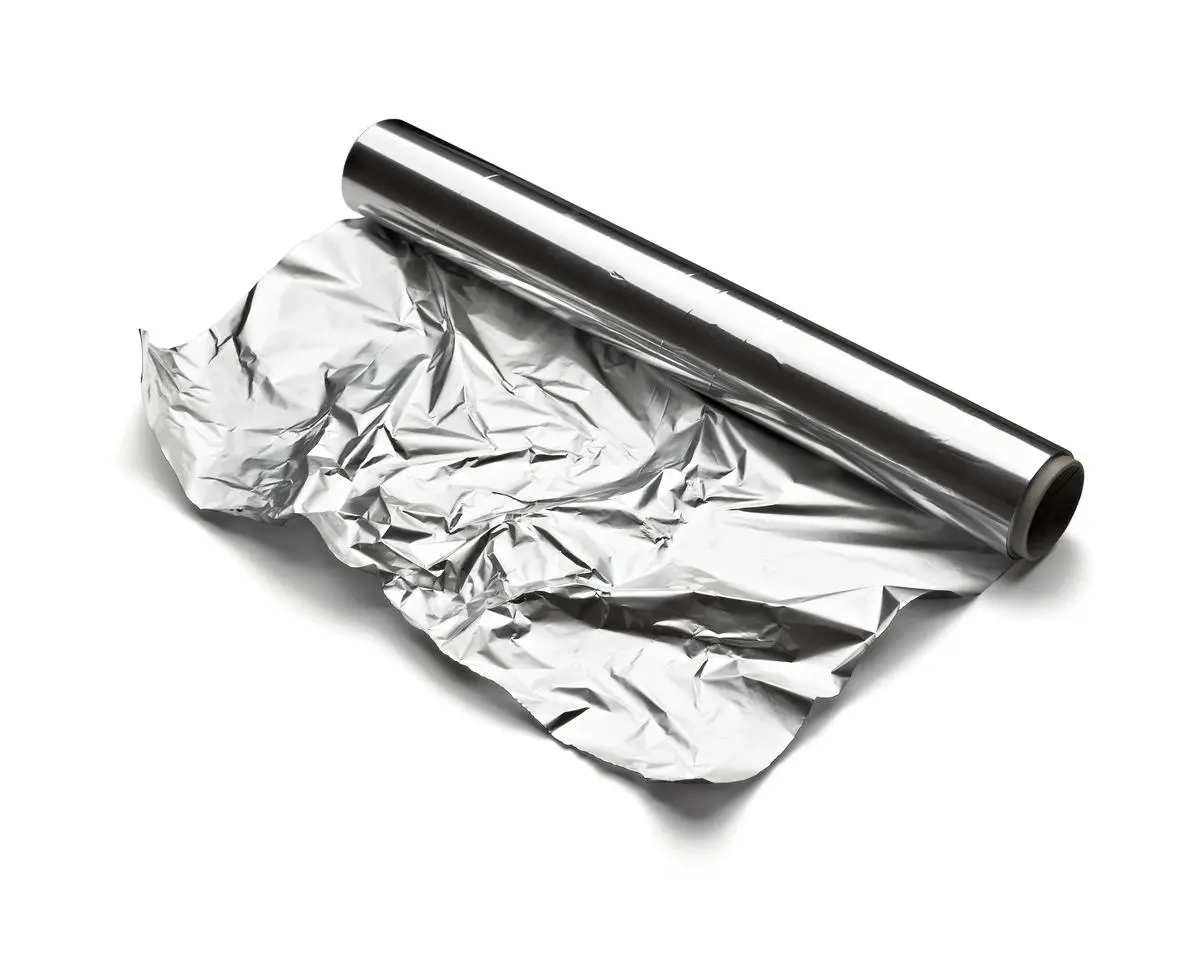
The shiny and matte sides of aluminum foil are formed during production and serve no specific purpose in the kitchen. Regular aluminum foil can be placed in food with either side facing up: both surfaces are made of the same material and conduct heat equally well, according to LoveDeco.
The difference arises during the final stages of rolling. The thinner the aluminum becomes, the easier it is to tear, so manufacturers pass two metal strips folded together through the rollers. The outer surfaces come into contact with polished steel cylinders and take on a mirror-like shine. The inner surfaces come into contact with each other, so they scatter light and have a matte appearance. At the end of the process, the strips are separated, and each retains one shiny side and one matte side.
The European Aluminum Foil Manufacturers Association specifies that the foil’s thickness ranges from 0.006 to 0.2 mm. Double rolling is used specifically for the thinnest products, and the side that was on the inside during the process becomes the matte side, as noted on the EAFA website.
When the side does matter
Food safety experts interviewed by Real Simple also see no practical difference between the surfaces. The only exceptions are special coated products.
“Honestly, it really doesn’t matter which side of the foil faces the food. Confusion sometimes arises with specialty foils, such as nonstick foil. In that case, the nonstick side should face the food so it comes off more easily,” emphasizes Vanessa Balagot, a food safety specialist at Source86, according to Real Simple.
Celeste Costa, a marketer for the Wyda foil brand, advises turning the shiny side out when covering meat with a “tent” to let it rest after baking. In her opinion, this allows the surface to reflect heat and prevent overcooking. Tim Bektle, a culinary instructor at Broken Yolk Cafe, disagrees.
“Studies have been conducted on whether the shiny side reflects or retains heat during cooking, but the difference is negligible and has no effect on the food,” Beckett insists.
What Not to Do with Foil
It’s much more important to use the material correctly. Aluminum foil is not recommended for prolonged contact with acidic or very salty foods, such as tomatoes, lemon, or vinegar: when heated, aluminum can leach into the food. Glass or ceramic dishes are better suited for such foods. The European Association also advises lightly greasing the foil with oil to prevent holes and discoloration.
You should also avoid putting aluminum foil in the microwave. The metal can spark and create electric arcs, especially if the foil is crumpled or lies too close to the walls of the microwave.