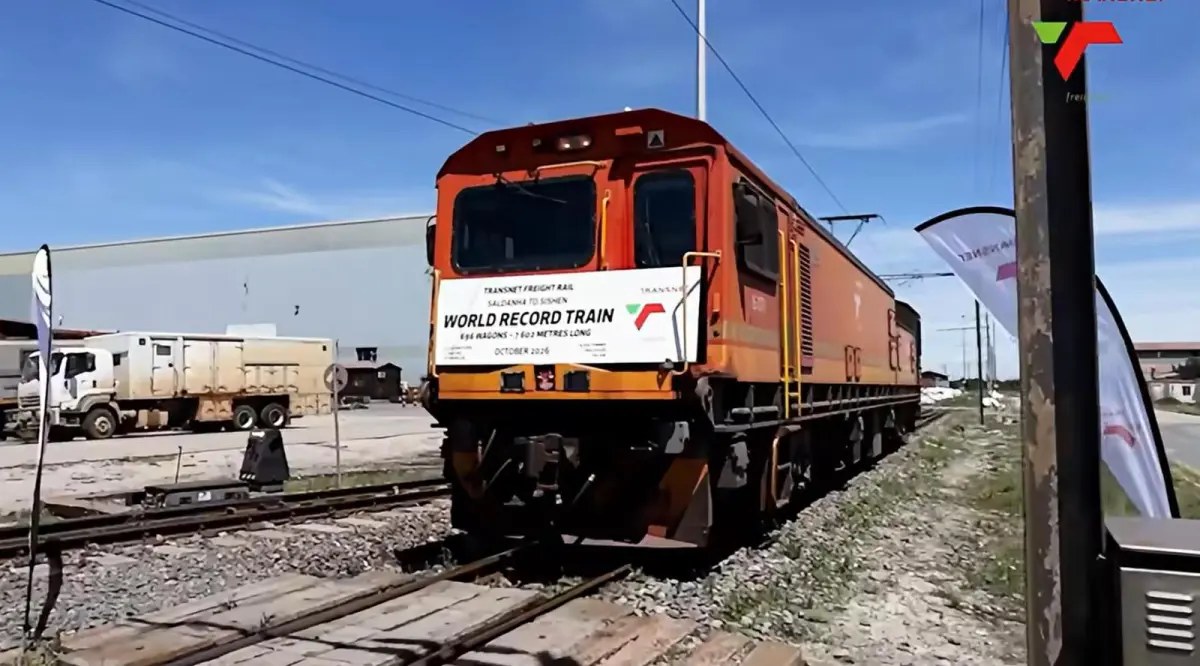
South African operator Transnet Freight Rail set a new world record by running a 7.6-kilometer-long freight train. The train, consisting of 696 empty cars, covered an 861-kilometer route between the port of Saldanha and the mining region of the Northern Cape Province, according to Libertatea.
To control such a massive formation, specialists employed Radio Distributed Power technology. This allowed for the synchronization of Class 15E electric locomotives and Class 43D diesel-electric locomotives-electric locomotives, distributed along the entire length of the train, for controlled distribution of force during acceleration and braking, notes Railway Gazette International.
Technological Goals and Strategic Significance
In addition to setting a record, the company aimed to test the capabilities of the infrastructure and refine methods for operating extra-long trains. Preliminary calculations and simulations conducted prior to the run were compared during the trip with real-time data collected by a dedicated monitoring team.
“While setting a world record is a significant achievement, the real value lies in the technical knowledge and operational insights gained during this experiment. These findings will contribute to the further development of rail operations, support innovation, and strengthen our freight transportation capabilities in the future,” said Russell Baatis, Executive Director of Transnet Freight Rail.
Background on the Achievement
The previous record was held by the Australian company BHP Iron Ore, which ran a 7.35-kilometer-long train in 2001. It is worth noting that this is not South Africa’s first experience with large-scale trains: as far back as 1989, Transnet tested a 7.2-kilometer-long train, and in 2018, it launched a 4-kilometer-long train to transport manganese, according to News24.
The record-breaking run took place immediately after the completion of scheduled maintenance work on the Sishen-Saldanha line. This infrastructure is currently undergoing a large-scale modernization as part of a long-term program costing 8.9 billion rands, aimed at improving the reliability and efficiency of iron ore exports by 2030, according to Guinness World Records.