
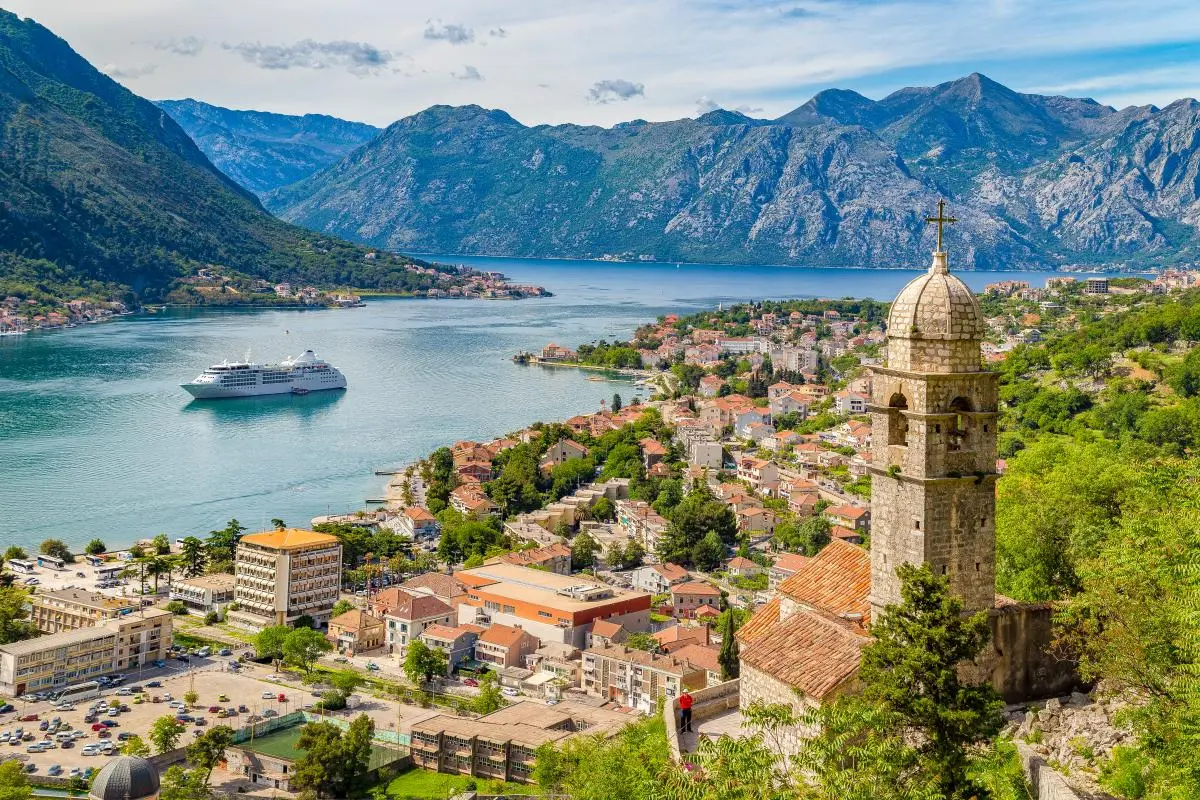
Cruise passengers have named Kotor, Montenegro, the best “hidden gem” among European ports. In a survey of 900 customers of the travel agency cruise.co.uk, the city received 22% of the votes, according to The Independent.
Second place, with 11%, went to Cádiz, Spain, on the Atlantic coast, while third place went to Tallinn. The top ten also included Rhodes, Greece; Villefranche-sur-Mer and Honfleur, France; Valletta, Malta; Olden and Flåm, Norway; and Zadar, Croatia.
Kotor is known for its mountainous landscapes, a bay sheltered from the winds, and its medieval architecture. The city and its surroundings are a UNESCO World Heritage Site. Among its main attractions are the ancient city walls, the hilltop Fortress of St. John, and the 12th-century Cathedral of St. Trifon.
Nearly half of the survey participants value nature and the environment most highly in their favorite port. One-fifth noted the authentic local atmosphere, while 13% cited convenient access to attractions. Despite their “hidden gem” status, 83% of respondents recommended these places to friends and family, and more than three-quarters say that such discoveries encourage them to book similar cruises in the future.
Tony Andrews, head of cruise.co.uk, is convinced that passengers experience the appeal of the Montenegrin port even before they set foot ashore.
“Kotor is a fantastic destination; the entrance to the bay is one of the most picturesque in Europe, and visitors can explore the historic old town just a short walk from where their ship docks,” Andrews noted.
The Downside of Popularity
At the same time, the growing tourist interest in Kotor has long been a source of concern for local residents. As far back as 2018, AFP reported that the city was seen as an alternative to the overcrowded Dubrovnik, but Kotor feared it would suffer the same fate as its Croatian neighbor, according to Daily News Egypt.
“Kotor used to be known as more authentic (than Dubrovnik), but now we’re in the same situation,” Sandra Kapetanović of the Expedito architectural group emphasized at the time. According to her, the city is turning into nothing but souvenir shops, and rising prices have driven out the library, the hair salon, the market, and the shoemaker.
According to the publication, in 2016, UNESCO even threatened to strip Kotor of its World Heritage Site status due to uncontrolled construction in the bay. Following this, the Montenegrin authorities imposed a temporary moratorium on construction.
UNESCO continues to point out that development and urbanization threaten the integrity of the region. New tourist centers, roads, and buildings directly on the coast could lead to a gradual but irreversible transformation of the coastline and the decline of traditional terraces on the hillsides, according to the UNESCO website.