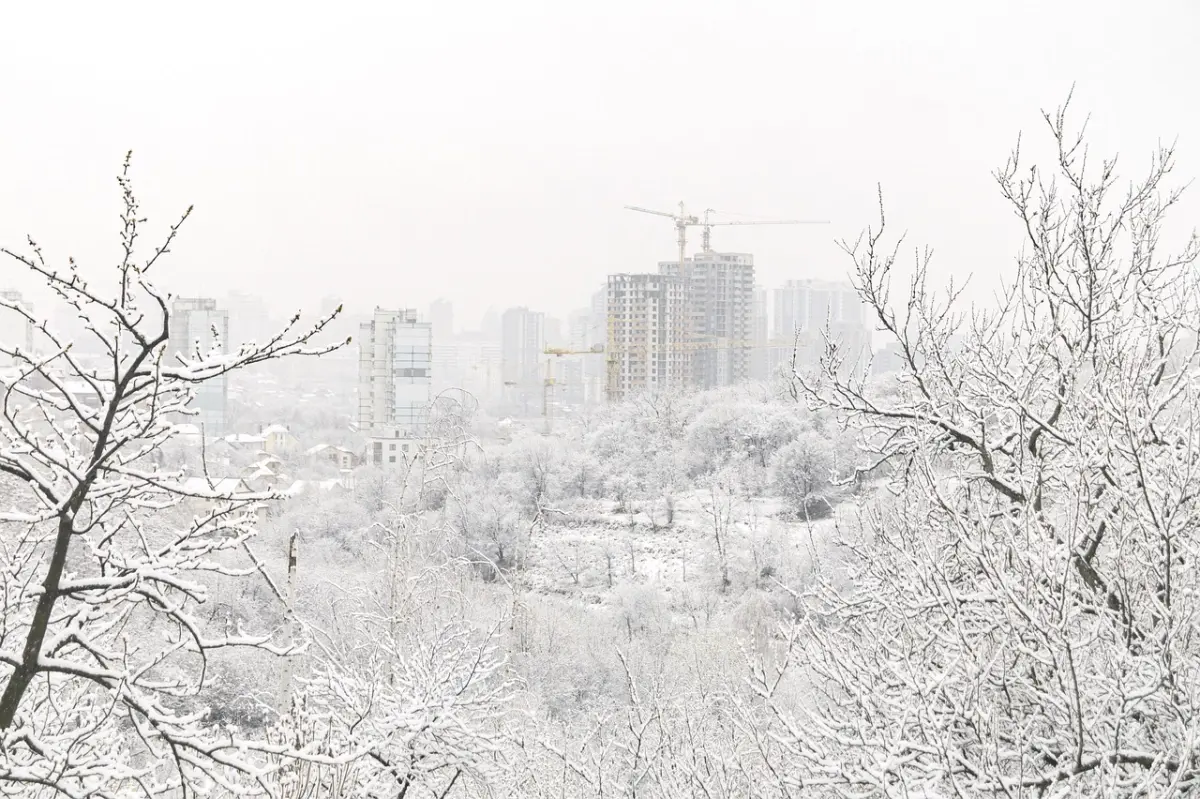
According to preliminary estimates, the winter of 2026–2027 in Ukraine may turn out to be 1–2 degrees warmer than the climate norm; however, brief incursions of Arctic air and cold spells remain possible. This was stated by Natalia Ptukha, head of the media relations department at the Ukrainian Hydrometeorological Center, according to ZAXID.NET.
The Ukrainian forecast is not an isolated assessment: it aligns with models from international meteorological services for the entire Eastern European region.
“Currently, the global hydrometeorological community is of the view that for our territory, Eastern Europe, and specifically for Ukraine—and experts at our hydrometeorological center also see this based on preliminary calculations—the winter months here may be warmer than the climatic norm. In principle, this is a good thing. According to current calculations, temperatures could be 1–2 degrees above the climatic norm,” said Ptukha.
At the same time, the meteorologist cautions against expecting a “winter without winter.” According to her, Ukraine’s geographical location allows for a wide variety of atmospheric processes, so cold spells are possible, although they will most likely be shorter and less prolonged than in the past.
The Ukrainian Hydrometeorological Center identifies circulation as the key factor for the season: during cold periods, preliminary data suggest that westerly, Atlantic air masses will predominate.
“This will contribute to temperatures being above the climatic norm during most winter months. But we’ve practically never had winters without these Arctic intrusions. They vary in intensity and duration. Recently, their duration has been decreasing, but we still need to be prepared for freezing temperatures,” emphasized the representative of the Ukrainian Hydrometeorological Center.
What the author’s model and long-term data show
A similar scenario is presented by an independent assessment from Vazira Martazinova, a senior research fellow at the Ukrainian Hydrometeorological Institute, based on her own model. According to her calculations, November and December will be warmer than normal, a stable snow cover is unlikely to form in December, and January will be variable, reports “Telegraf.”
The scientist also addressed Ukrainians’ everyday concerns about the winter amid Russian attacks on the energy sector.
“I don’t expect the severe cold that people are currently fearing. Of course, if there’s no heating, people will be cold, but that’s a different matter. This is my forecast, based on my model,” Martazinova noted.
The meteorologist also does not expect heavy snowfall. There may be days with sub-zero temperatures during the day and as low as -10 degrees at night, but, according to her forecast, these will be “short-lived.”
Both estimates are based on a consistent trend that the Ukrainian Hydrometeorological Center has been recording for several years. According to an analysis of data from the past 30 years, the average monthly temperature during the winter, especially in January and February, has risen by 2–2.5 degrees, the total duration of sub-zero temperatures over the winter has halved, and dozens of record-high temperatures are recorded every winter, according to a report by the Ukrainian Hydrometeorological Center.
Hence the experts’ conclusions: the likelihood of prolonged cold spells in Ukraine is minimal, but short-term yet significant cold snaps lasting from one to five days are quite realistic. At the same time, the center notes that predictions of a “harsh” winter, which regularly appear on social media, have no scientific basis: modern meteorology does not allow for accurate forecasting of atmospheric processes so far in advance.
The Downside of Warm Winters
Ukraine already experienced the consequences of abnormally warm weather during the winter of 2024–2025, which Ivan Khomyak, an ecologist at Zhytomyr Frank University, called the warmest in 200 years of observations. On January 29, 2025, the average daily temperature in Kyiv exceeded the norm by nearly 10 degrees; cherry blossoms bloomed in the capital, and crocuses bloomed in the Kosiv district. During the war, such weather helps prevent power outages, but it has a negative effect on nature, according to BBC News Ukraine.
Scientists attribute the greatest risk to the lack of snow, which would normally gradually saturate the soil throughout the winter and spring.
“There is little precipitation, and what there is comes in large bursts—catastrophic and short-lived downpours. And the soil, which has limited absorption capacity, cannot cope with such a sudden influx of water and allows it to seep through,” warns Khomyak.
This directly affects villages where most residents rely on groundwater aquifers. While monitoring the Teteriv River in Zhytomyr Oblast, scientists recorded a drop in water level of more than half a meter.
“Instead of having 2–3 cubic meters of water in the wells, there’s now only half a cubic meter. And the water isn’t replenishing. And if the volume of water decreases, its quality deteriorates because the concentration of all substances dissolved in the water increases,” the ecologist notes.
For farmers, both the heat and sudden frosts “on bare ground” are dangerous. Mykola Sobko, an agronomist at the Institute of Agriculture, emphasized in a comment to “Suspilne” that a warm winter promotes the growth of winter crops, but without snow in the spring, the soil will lack moisture. Positive harvest forecasts are possible if the snow lasts at least until mid-March.
Warm winters also stimulate pests, particularly the pine shoot beetle, which destroys pine forests, and force bears to wake from hibernation. Large animals, which need low temperatures in winter, are hit the hardest.
“Moose can suffer from heat stress. Especially when they’re being chased by predators and get too hot. They usually try to cool off in bodies of water. When there’s not enough water in the marshes, the animals fall prey to wolves,” says Serhiy Zhyla, a senior research scientist at the Chornobyl Nature Reserve.