
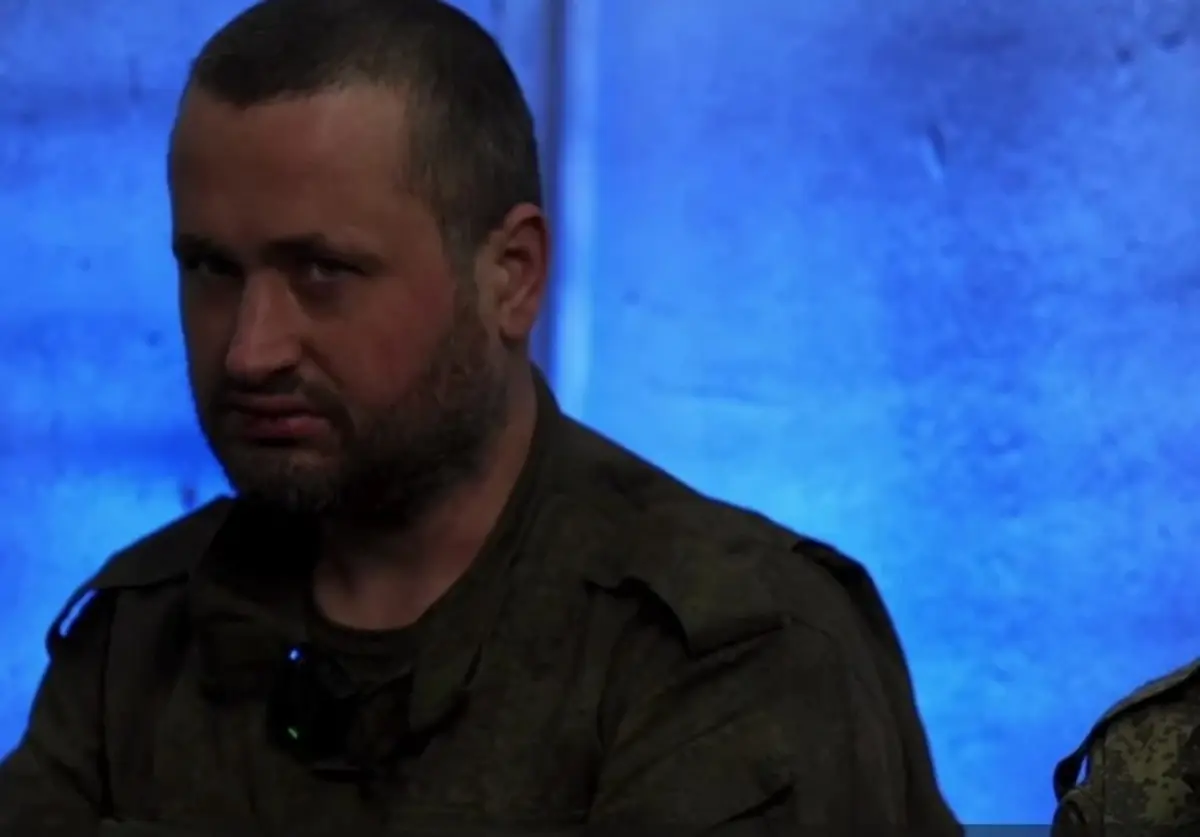
A Russian prisoner of war, captured by soldiers of the 8th Corps of the Airborne Assault Forces (DShV), apologized to Ukrainians for the war. He said that of the 2.5 million rubles promised in his contract, he received only 700,000 and no longer understands what he is fighting for, according to “ArmyInform.”
According to the occupier, he signed the contract because of his desire to serve and the promised payments: a signing bonus, a regular salary, and combat pay. Initially, he was guaranteed service in St. Petersburg, but was later sent to the front lines.
The prisoner claims that he and a comrade refused to carry out the order. Ultimately, however, both crossed the Ukrainian border and headed to their assigned positions, where they were captured by Ukrainian fighters.
“I’ve lost track of why we’re even fighting. I was just waiting for it all to end. And honestly, I wasn’t fighting for anything,” said the prisoner of war.
“Please forgive me for the fact that we started this damned war,” he said to the Ukrainians at the end of the conversation.
The Contract as the Main Motivation
The prisoner’s story fits into the broader picture of how the Kremlin is replenishing its army. Analysts interviewed by The Kyiv Independent refute Elon Musk’s claim that Russian soldiers are “children” who have no choice. Most Russians go to war voluntarily to earn money: recruits are offered bonuses for signing a contract and salaries that are several times higher than the national average, while regions provide their own additional payments. According to NATO estimates, up to 40,000 people sign contracts each month.
Kateryna Stepanenko, a researcher at the Institute for the Study of War, notes that recruitment methods vary, and alongside volunteers, there are those who are coerced or deceived into serving.
“There is a great deal of coercion. Recruitment is sometimes accompanied by abuse, manipulation, or pressure in the workplace to meet quotas. But there are also a large number of people who voluntarily sign contracts to fight in Ukraine for financial compensation. Money remains a central element of how the Kremlin sustains its forces,” Stepanenko notes.
According to her, there is a kind of social contract between Putin and society: the government does not carry out mass mobilization and pays those who fight, as long as people do not oppose the war. Max Bergmann, director of the Europe, Russia, and Eurasia Program at the Center for Strategic and International Studies (CSIS), points out that Putin’s approval rating fell the most after the announcement of a partial mobilization in the fall of 2022. At the same time, officials in Kyiv claim that the Kremlin is planning a covert “peripheral mobilization” of 300,000 people by the end of 2026 and the same number in 2027.