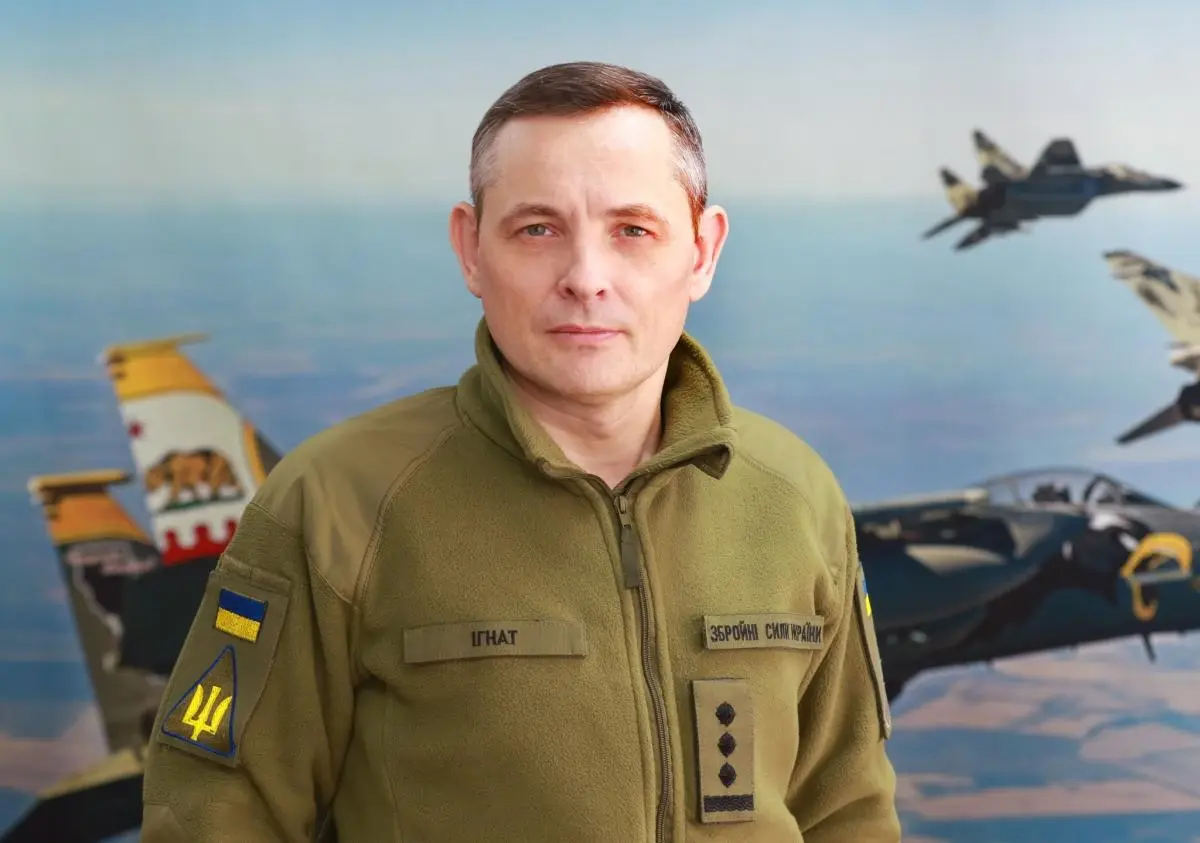
The cyberattack by Russian hackers on the “Air Raid Alert” app did not affect the operations of Ukraine’s security and defense forces. This was stated by Yuriy Ignat, press secretary of the Ukrainian Air Force (UAF), during the “Yedyni Novyny” telethon, according to NV.
Ignat made a clear distinction between military data transmission channels and the civilian service used by millions of Ukrainians.
“You’re asking whether this affected the work of the Defense Forces. Of course not. The Air Force and all components of the security and defense forces operated as usual. This app is an additional means of alerting the public. It is not an Air Force app. The Air Force has its own channels, but it provides verified, balanced information for this app so that the public can stay informed about what is happening within the country,” Ignat noted.
According to him, a team of developers and the Ministry of Digital Transformation (MDT) have been involved in restoring the service. Ignat reminded that the State Emergency Service (SES), civil defense agencies, and the Air Force also provide information about threats on social media, and the military tries to issue warnings about ballistic missiles as quickly as possible.
False Alarms and Gradual Restoration
On the evening of November 1, app users received false alerts in Russian about radiation and chemical hazards, street fighting, and the “Oreshnik” threat. Currently, the service has partially resumed operations: the map displays yellow and red danger levels, push notifications are being sent, and the display of targets has been temporarily suspended. The developers promise to strengthen security and assure users that the app does not store personal data, according to “Ukrainska Pravda.”
The Ministry of Digital Transformation advised users to rely on the government’s emergency alert system, which works even when a smartphone is in silent mode. Meanwhile, Russian authorities reported a hack of the Ministry of Emergency Situations (EMERCOM) app, whose users also received notifications about a nuclear threat.
A Provocation Rather Than a Covert Operation
Cybersecurity expert Kostyantyn Korsun doubts that Russian intelligence services are behind the incident. He believes it is more likely an accidental discovery of a vulnerability, although there is not yet enough technical data on the mechanism of the intrusion, TSN reports.
“I don’t see Moscow’s hand or the Kremlin’s hand in this, because that’s not how it works. If a vulnerability is found in an app with 11 million users, the consequences would be completely different,” Korsun is convinced.
The app was created by the Khmelnytskyi-based company Stfalcon in collaboration with Ajax Systems and the Ministry of Digital Transformation in 48 hours at the start of the full-scale invasion. As of February 2025, it had been downloaded more than 26 million times, and the number of active users exceeded 6 million, according to Stfalcon.