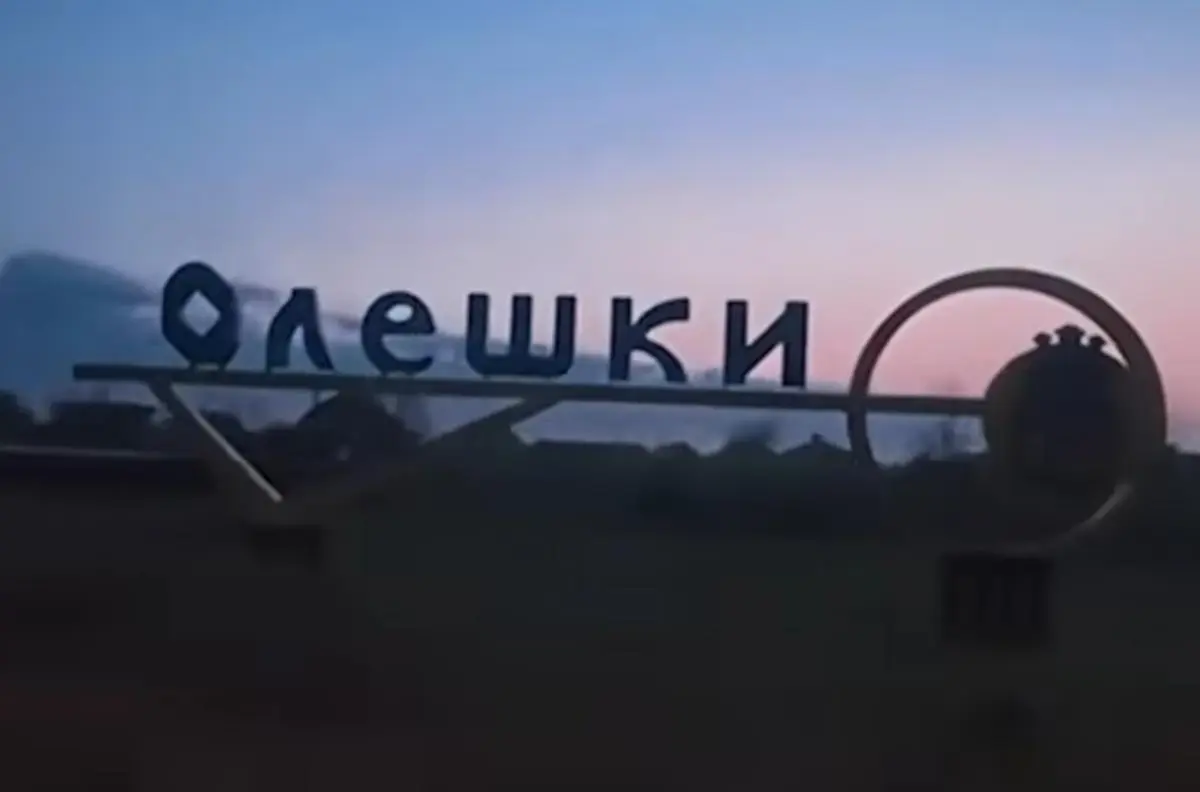
On October 31, hundreds of residents of the occupied town of Oleshky in the Kherson region returned to territory controlled by Ukraine via the border with Belarus. They were evacuated during a ceasefire called for by Pope Leo XIV, with U.S. First Lady Melania Trump acting as a mediator, according to CNN.
Ukrainian President Volodymyr Zelenskyy announced the arrival of the evacuees on Telegram and thanked Melania Trump for her assistance in the negotiations. He also extended special thanks to journalists, politicians, and public figures around the world.
“When the world pays attention, people are saved,” Zelenskyy emphasized.
Melania Trump herself wrote on X that the residents of Oleshky prove that humanity can be placed above war.
Ukrainian Ombudsman Dmytro Lubinets personally accompanied those evacuated from Oleshky. He became the first high-ranking Ukrainian official to openly visit the occupied territories and Russia since the start of the war. He described the operation as extremely complex but one that gave Ukraine unique experience in negotiating with the Russian side under Melania Trump’s coordination. Lubinec also said that on Friday in Oleshky, he spoke with Russian Human Rights Commissioner Yana Lantratova.
“We have many similar villages facing the same problems with food and medicine right now. Our plan is to keep going. But that doesn’t depend solely on Ukraine,” the ombudsman cautioned.
Without bread for over a year
According to Ukrainian authorities, food supplies in Oleshky ran out back in September, and the town was left without electricity, gas, or medicine. Evacuees reported that there had been no food deliveries since the summer. One woman hadn’t seen bread in over a year and had survived on tomatoes and cucumbers from her own garden.
Andriy Zhydenko, director of the Chernihiv Regional Hospital, along with medical staff, met people at the border. According to him, the main problem will be the consequences of prolonged starvation: nutrition will have to be restored gradually, as a sudden increase in food intake could be dangerous.
“There are people here with injuries, those who have suffered strokes, and people with limited mobility. People there suffered greatly. There is no humanity there,” Zhydenko noted.
Among those who returned is 54-year-old Larisa. She hadn’t seen her husband, a soldier, for 1,711 days and lost a third of her body weight during the occupation. Another evacuee, Oleksandr, said he never went outside and survived on whatever was left in abandoned apartments.
“It was as if I had escaped from hell,” he said.
The Route Through Crimea, Anapa, and Gomel
It is impossible to travel directly across the Dnipro River into territory controlled by Ukraine, and the access roads to the Oleshkovs’ home are mined. After two days of demining, the people were transported through occupied Crimea to Anapa, flown from there to Gomel, Belarus, and then taken by bus to the Ukrainian border.
Some residents decided to stay in Oleshky, even though the ceasefire ends on Sunday. Both sides stated that humanitarian aid had been delivered to them. Another group left for Russia: according to Lantratova, these people were placed in a temporary shelter in Simferopol.