
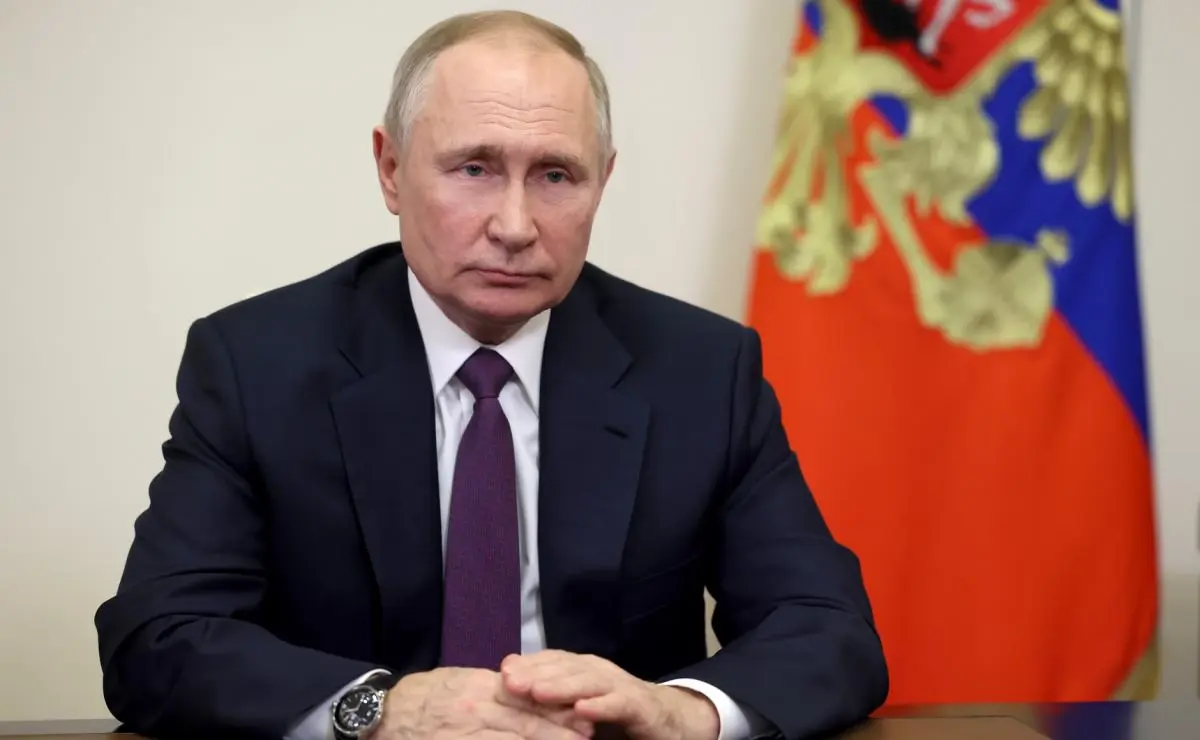
Russian dictator Vladimir Putin stated that Moscow allegedly does not seek war with Europe but is “ready” for it. He also threatened to respond to any attempts to restrict Russian shipping in the Baltic Sea, according to ZN.UA.
The statements were made on Thursday, October 29, following the “Russia–Africa” summit in Moscow. The Kremlin leader was responding to European assessments suggesting that Russia could attack NATO countries by the end of the decade.
“Many people talk about nothing but preparing for war by 2030. Is that right? No. First of all, we are ready, but we do not want any war with Europe,” Putin is quoted as saying by pro-Kremlin media.
According to Putin, Europeans have so far failed to inflict a strategic defeat on Russia, so by 2030 this is also “hardly possible.” At the same time, he resorted to outright intimidation.
“And if things go too far, there will be no winners at all. Let no one forget that,” Putin threatened.
On the same day, Russian missiles and drones killed at least 19 people in Ukraine. In Dnipro, a missile-equipped drone struck a platform at the train station where a commuter train was preparing to depart. At least 14 people were killed there.
The Baltic Sea and a Call to Helsinki and Oslo
Separately, Putin warned Europe about the Baltic Sea. He assured that Moscow supports compliance with international maritime law and drew a parallel with the crisis in the Middle East.
“Does anyone want the same situation to arise in the Baltic as in the Persian Gulf or the Strait of Hormuz? We don’t want that, but we will respond to any challenge,” Putin said.
According to him, this topic was raised during a phone call on October 27 with Finnish President Alexander Stubb and Norwegian Prime Minister Jonas Gar Støre. Putin claims that the conversation was initiated by Helsinki and Oslo, and that both leaders immediately emphasized that they did not represent the EU. This initiative drew criticism from allies, particularly Danish Prime Minister Mette Frederiksen. During the conversation, Putin stated that Moscow would not abandon its goal of seizing the entire Donbas region.
Putin himself described such contacts with individual European leaders as appropriate. “After all, there are people in Europe who do not want to inflict a strategic defeat on Russia, as some do, but who want to establish some kind of constructive dialogue,” he said.
From Kaliningrad to New Divisions
Putin has made threats against the West before. On October 1, at the Valdai Forum, he stated that Russia would use all available weapons, including nuclear ones, if it believed that Kaliningrad had been attacked or blockaded. NATO then called on Moscow to stop making nuclear threats, and NATO Secretary General Mark Rutte emphasized that the alliance’s exercises do not pose a threat to Russia, according to the BBC.
“We are not threatening anyone. We do not intend to attack anyone—neither in 2029, nor in 2030, nor in 2050. But if we face aggression, we will have to respond. Citizens of European countries must be clearly aware of this,” Putin said at the time.
Analysts at the European Council on Foreign Relations point out that, despite suffering approximately 1.2 million casualties on the front lines, Russia increased the size of its army by 234,000 troops in 2025. According to Estonian intelligence, the production of artillery ammunition in Russia has increased 17-fold since 2021. Western intelligence agencies estimate that after the war in Ukraine ends, it will take Moscow between six months and five years to rebuild its army for a larger-scale aggression, writes the ECFR.