
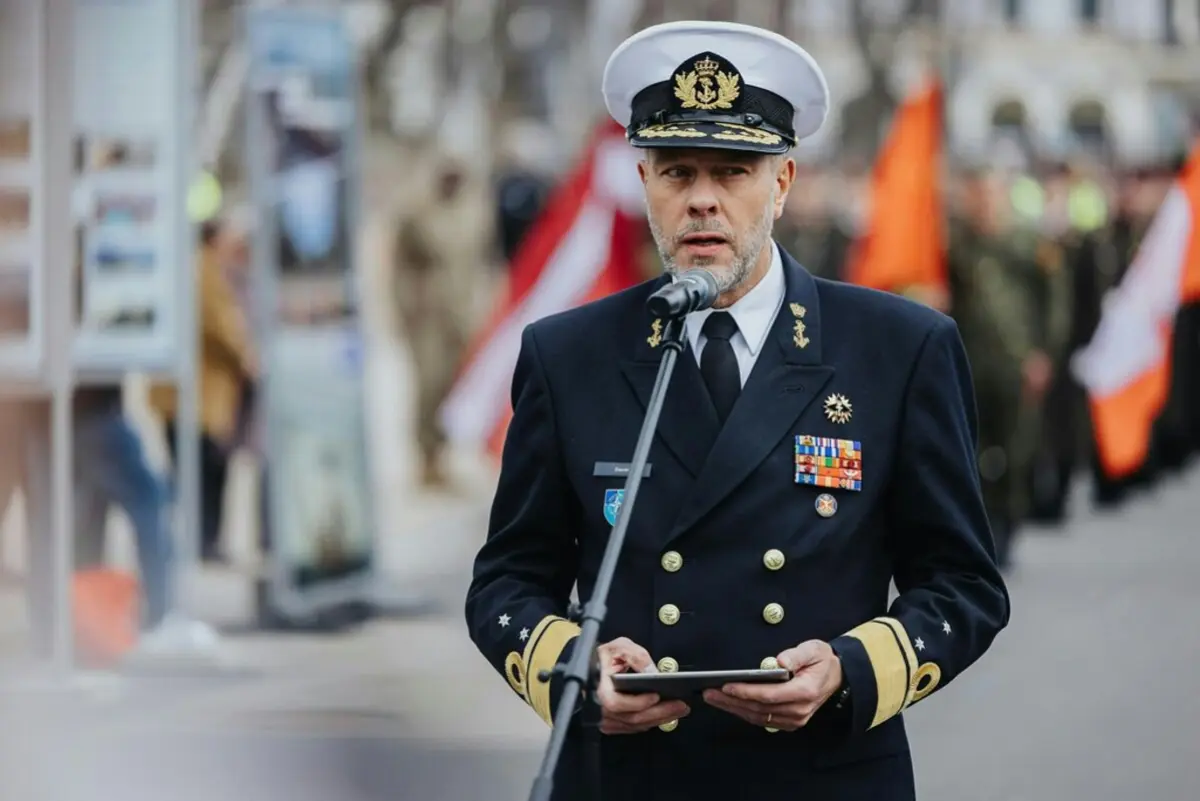
In certain areas, Europe is effectively at war with Russia, even though no one has legally declared war, and NATO and the European Union are gradually drawing lessons from the Russia-Ukraine war. This view was expressed on the sidelines of an event hosted by the Brussels office of the Kyiv Security Forum by Admiral Rob Bauer, former chairman of the NATO Military Committee, according to Ukrinform.
When asked whether Europe could be considered to have already left a state of peace but not yet entered into an armed conflict, the admiral offered a stronger formulation.
“I would even go a step further: in some areas, we are already effectively at war—for example, in cyberspace and, I believe, in the realm of disinformation. At the same time, in other areas, legally speaking, we are not at war: war has not been declared on Russia, so in that sense, there is no war,” Bauer stated.
He sees the main obstacle not among military experts, but in the circles where decisions are made regarding Kyiv’s future status.
“More and more people understand this and recognize the urgency and importance of the situation. However, at the political level, a certain degree of restraint is still evident. After all, this is not just about lessons learned, but about fundamental questions: should Ukraine become a member of NATO, should it join the EU…,” the admiral notes.
In his view, those who value the experience of the Armed Forces of Ukraine (AFU) and the ability of the Ukrainian government and society to sustain the country during hostilities understand what matters most.
“Ukraine is demonstrating the ability to rapidly create the resources and develop the capabilities needed to wage war on the necessary scale. This is precisely the level of resilience Europe is striving to achieve, while avoiding the direct consequences of war,” Bauer emphasizes.
A Latte Macchiato Instead of Alarm
Bauer believes that many Europeans still naively believe they can control the situation and do not perceive Putin as a threat. This is especially true of countries that do not border Russia and lack the experience of Poland or the Baltic states.
“The farther away you are from the war, the harder it is to grasp just how dangerous the times we’re living in are. People are living in peace: no missiles are falling on Brussels; people are strolling in the sunshine, sipping a latte macchiato. So why talk about war?” Bauer asked rhetorically.
At the same time, the admiral is not calling for the economy to be put on a war footing. According to him, Europe must ensure that critical defense needs are met in accordance with agreed-upon military plans and continue to assist Ukraine. He also acknowledged that Europeans have long mistakenly viewed Russians as “just like us.”
How the Alliance Is Learning from Ukraine
At the institutional level, NATO is already trying to accelerate this process. In February 2025, the NATO–Ukraine Joint Analysis, Training, and Education Center (JATEC) began operations in Bydgoszcz, Poland. This is the Alliance’s first center created specifically to study the military and civilian lessons of the Russian war; its staff includes Ukrainian experts, and the center is expected to reach full operational readiness in 2026, according to NATO’s Transformation Command.
“Russia learns quickly, and we need to learn even faster,” said Admiral Pierre Vandier, Supreme Commander of NATO’s Allied Forces for Transformation, during the center’s opening ceremony.
European Commissioner for Defense Andrius Kubilius previously emphasized that the Ukrainian model of drone production—in which drones are constantly being modernized by teams of engineers and operators—is particularly valuable for Europe. According to his estimates, Lithuania alone would need about 3 million drones per year in the event of a Russian attack, and the Ukrainians advise not to manufacture them in advance but to maintain a stockpile of components, he said in an interview with Chatham House.