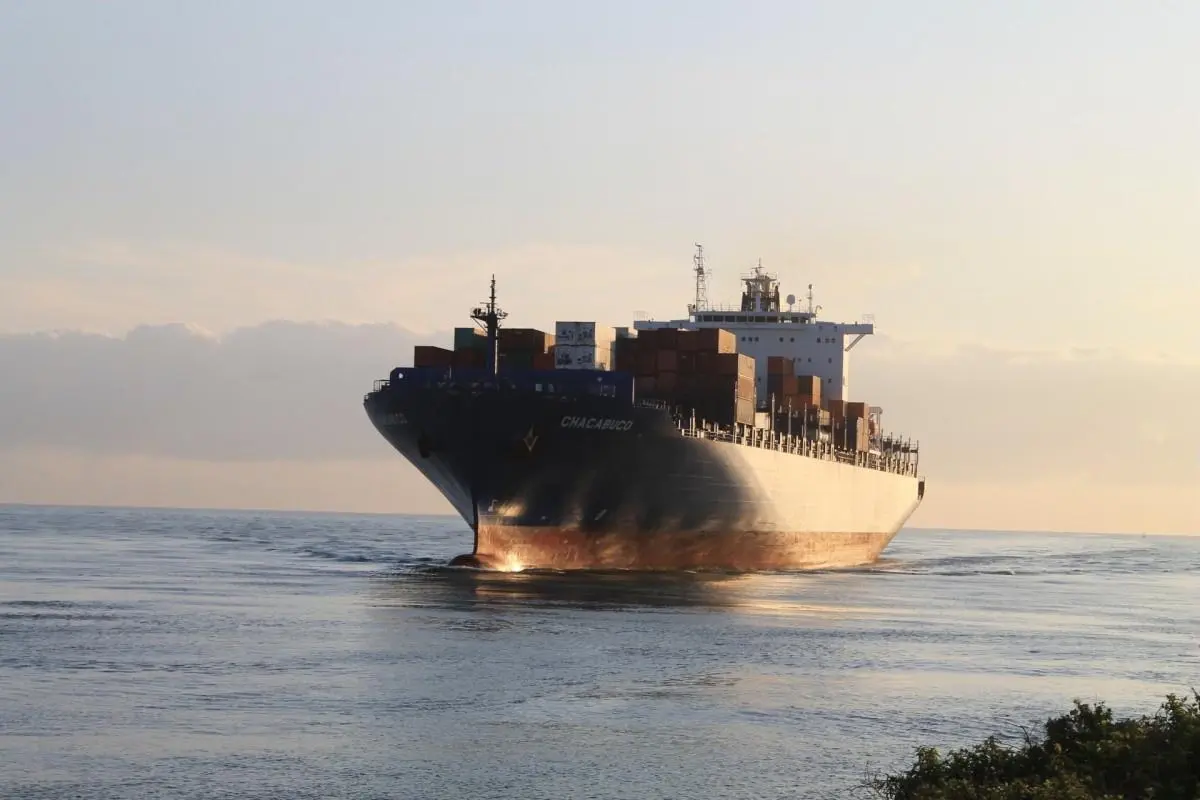
In October 2026, Russian ports on the Black and Azov Seas did not handle a single container. Following a series of attacks by Ukrainian drones, shipping companies stopped using routes to the southern terminals of the Russian Federation, UNITED24 Media reports, citing The Moscow Times.
Container operations also effectively came to a halt in Novorossiysk, which handled approximately 1.1 million TEU (in twenty-foot equivalent units) in 2025. After attacks on ships intensified over the summer, the remaining operators abandoned this route by October. Alexei Gagarinov, CEO of Sea-Shipping, confirmed that the last carriers had left Novorossiysk, forcing importers to seek alternative routes.
Total container traffic at Russian seaports rose by 5% in October compared to last year, according to data from Gazprombank’s Center for Economic Forecasting. In the first ten months of 2026, Russian ports handled 4.57 million TEU. This is 4.5% more than last year and only 60,000 TEU less than the 2021 record.
From Turkey to St. Petersburg via Gibraltar
Cargo that previously passed through southern ports was rerouted to the Baltic and the Far East. In October, container throughput at Baltic ports exceeded 200,000 TEU for the first time since December 2021, while Far East volumes approached the 2024 record.
Logistics have become significantly longer and more expensive. Cargo from Turkey, which previously reached Novorossiysk in three to five days, now travels via the Mediterranean Sea, the Strait of Gibraltar, the English Channel, and the North Sea to St. Petersburg. Delivery takes two to three weeks, and the cost of transporting a single container has tripled or even sextupled.
The additional volume is also straining the transportation infrastructure. While St. Petersburg has spare terminal capacity, limited rail connections could create bottlenecks. In the Far East in early October, containers were waiting up to two weeks to be loaded onto railcars. Logistics experts warn that as volumes increase, delays and costs will only rise.
How Carriers Left Novorossiysk
In late August, MSC, the world’s largest container shipping line, stopped accepting bookings to and from Novorossiysk after a drone struck its vessel, the MSC Ulsan III, on August 25 as it was leaving the port bound for Turkey. Earlier, following an attack by two drones, the container ship Yanina, owned by Fesco—a subsidiary of Rosatom—sank. After that, Fesco and the Turkish operator Kalyon suspended all voyages in the Black Sea. On August 21, a drone struck the RMS Team, a vessel owned by the Turkish company Akkon Lines, which was en route to Novorossiysk: a fire broke out on board, and one sailor went missing, according to The Maritime Executive.
The attacks on Russia’s southern ports began after Russian strikes on ships in Ukrainian Black Sea ports. Attempts to halt the attacks on commercial shipping have so far been unsuccessful: according to the publication, Ukraine has proposed a bilateral ceasefire at sea, but Russia insists that it is targeting only ships carrying military cargo.