
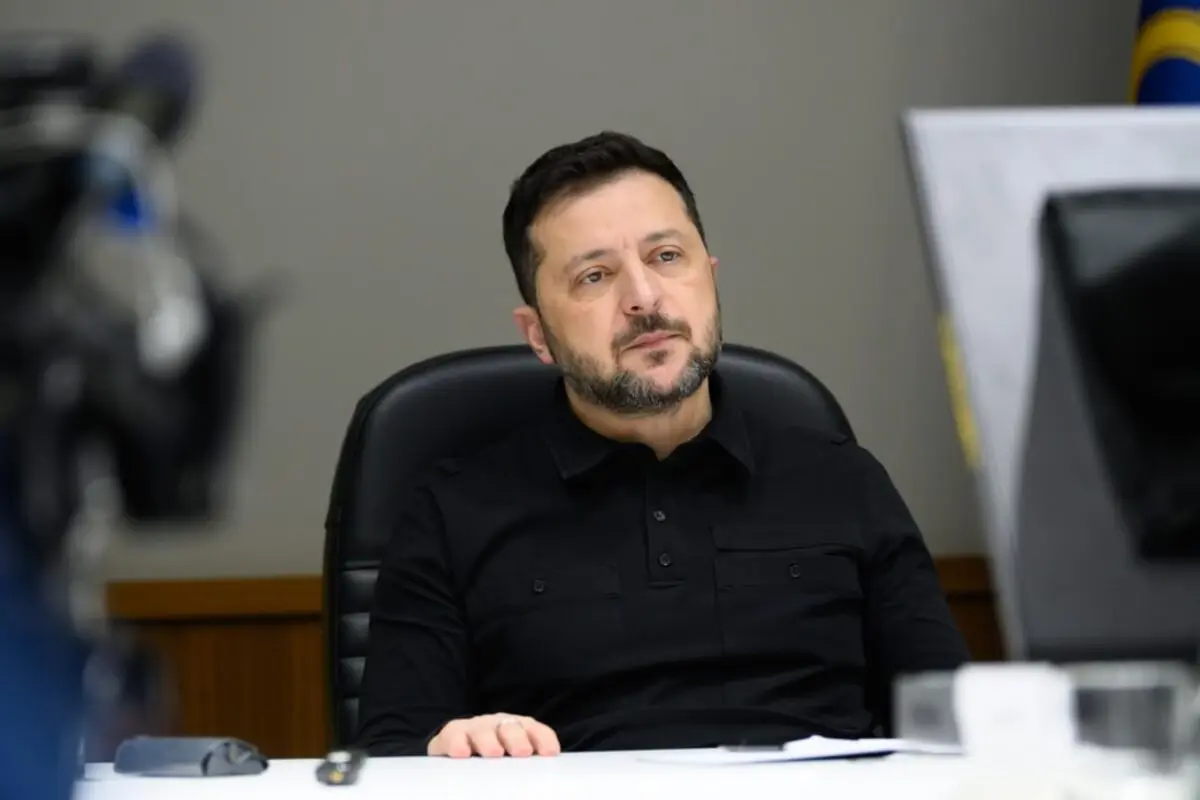
The Defense Forces struck the arch and a section of the road deck of the Crimean Bridge—which collapsed into the water on November 17—with “Palyanitsa” cruise missiles. The railway section was struck by “Ruta” drones, R-360 “Neptune” cruise missiles, and FP-5 “Flamingo” missiles. President Volodymyr Zelenskyy disclosed details of the strike, according to Defense Express.
The attack marked the seventh phase of an operation that had been planned and coordinated over several weeks by the Security Service of Ukraine (SBU) and the General Staff of the Armed Forces of Ukraine (AFU). In previous phases, air defense systems, radars, electronic warfare equipment, and other targets on the approaches to the bridge were destroyed. Dovbush, “Vendetta,” Da Vinci, “Sichen,” MICH 2000, An-197, and FP-1 drones were also used for this purpose.
A guided strike by the “Flamingo” was separately confirmed: communication with the missile remained stable until the very last seconds. The “Palyanytsia,” developed by the Luch Design Bureau, has a range of up to 650 km and a 100-kg warhead. The “Flamingo” warhead weighs approximately 1,000 kg.
Robert Brovdi (“Madyar”), commander of the Unmanned Systems Forces, described the operation as a joint effort by long-range units of the Naval Forces (Navy), the Missile Forces and Artillery, the 7th Center of the 414th “Madyar’s Birds” Brigade, and the 1st Center of the Security Service of Ukraine (SBU). “The sacred bridge is tired. It’s time for rubber boats,” Brovdi wrote. Zelenskyy did not specify how many drones and missiles were launched or how many hit their targets, according to Euronews.
The head of state presented the operation as a response to Russian attacks on Ukrainian infrastructure, specifically on bridges in Kyiv, Zaporizhzhia, Dnipro, and the Odesa region.
“We have repeatedly offered Russia steps toward de-escalation—and every proposal has been met with a resounding refusal,” Zelenskyy emphasized.
Repairs to Take a Year or Longer
The Ministry of Transport of the Russian Federation (RF) reported that road and rail traffic across the bridge had been halted and stated that, according to preliminary data, there were no casualties. Kremlin spokesperson Dmitry Peskov assured that the bridge will be rebuilt and will be “even better than before,” according to The Kyiv Independent.
Military aviation expert Andriy Kharuk doubts that repairs will be completed quickly. According to him, the collapsed structure weighs about 6,000 metric tons and took several months to assemble on the shore near Kerch, so there is no temporary replacement for it.
“I believe that restoring this section will take not just months, but a year or even longer,” Haruk notes.
Aviation expert Anatoliy Khrapchynskyi foresees even more serious consequences for the occupiers’ logistics.
“From a military standpoint, the occupying forces are losing full operational access to Crimea. Road traffic has been cut off by the collapse of an entire section directly in front of the arch,” Khrapchynskyy asserts. According to his assessment, the ferry crossing is no longer operational, and the railway section will require load restrictions and extensive technical inspections.