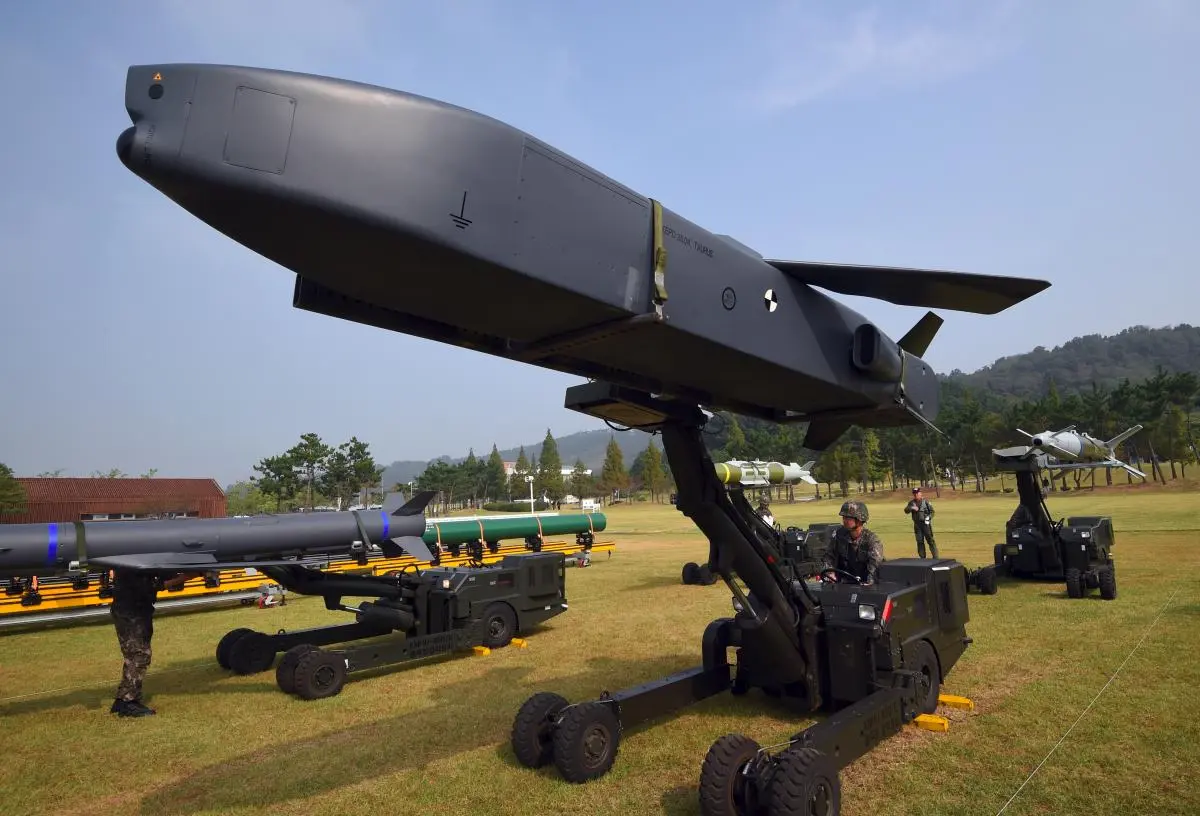
Western Tomahawk and Taurus cruise missiles would allow Ukraine to strike critical military infrastructure that Russia maintains far from the front lines. Analysts at the Institute for the Study of War (ISW) have reached this conclusion, according to Defense Romania.
According to the ISW’s assessment, even a relatively small number of Western missiles would allow Kyiv to launch systematic strikes against key targets on Russian territory. Among the possible targets, analysts cite drone manufacturing plants in the “Alabuga” special economic zone in Tatarstan and the “Engels-2” airfield in the Saratov region. Strategic bombers take off from there to launch cruise missiles at Ukraine.
On November 5, President Volodymyr Zelenskyy once again appealed to Germany to provide Taurus missiles. These missiles could strengthen Ukraine’s campaign of strikes against Russian “Iskander” and “Zircon” launchers.
Ukraine has its own missiles, but not enough
Ukraine is already striking Russian rear areas with long-range drones and domestically produced missiles. According to estimates by “Ukrainska Pravda,” as of the summer of 2026, “Neptune” missiles had been used at least 31 times and had struck 26 Russian targets. Recently, a “Neptune” missile was used to attack the “Proton-Elektrotex” plant, where components for the “Iskander-M” are manufactured.
The Flamingo (FP-5) missile from Fire Point has a claimed range of up to 3,000 km and a warhead weighing approximately 1,150 kg. At the same time, the General Staff of the Armed Forces of Ukraine (AFU) describes it as an experimental weapon that requires further development, particularly in terms of accuracy and production capacity.
The Decision on the Tomahawk Is Up to Trump
In late October 2025, the Pentagon concluded that transferring Tomahawks to Ukraine would not deplete U.S. stockpiles; however, the final decision rests with President Donald Trump. The ISW emphasizes that such missiles would serve as a response to Russia’s regular strikes with X-series missiles, “Kalibrs,” “Kinzhals,” and “Iskanders,” and would reduce Moscow’s advantage, the ISW notes.
The Tomahawk has a range of 1,600 to 2,500 km, although experts suggest that for Ukraine, this range could be limited to 1,700 km. Justin Bronk, a senior research fellow at the British Royal United Services Institute (RUSI), compares the American missile to weapons Kyiv already possesses, according to The Kyiv Independent.
“The Tomahawk has a significantly more powerful and effective warhead than Ukrainian long-range UAVs, much higher accuracy in the terminal phase than the domestically produced Flamingo cruise missiles, and a significantly greater range than the Anglo-French Storm Shadow or SCALP,” Bronk emphasizes.
Emil Kastehelmi, an analyst at the Finnish Black Bird Group, believes that massive strikes with such missiles would force Moscow to disperse its military assets and reorganize its air defense system.
“This would be a real headache for the Russians. Machine guns used for air defense are ineffective against missiles—to counter the threat posed by Tomahawks, anti-aircraft missiles are specifically needed,” Kastelhelmi asserts.
At the same time, Bronk warns that Tomahawks are not a “magic bullet”: they can be intercepted, just like any other cruise missiles. Kastehelmi adds that the key issue remains the number of missiles Ukraine will receive and the ability to replenish its stockpiles.