
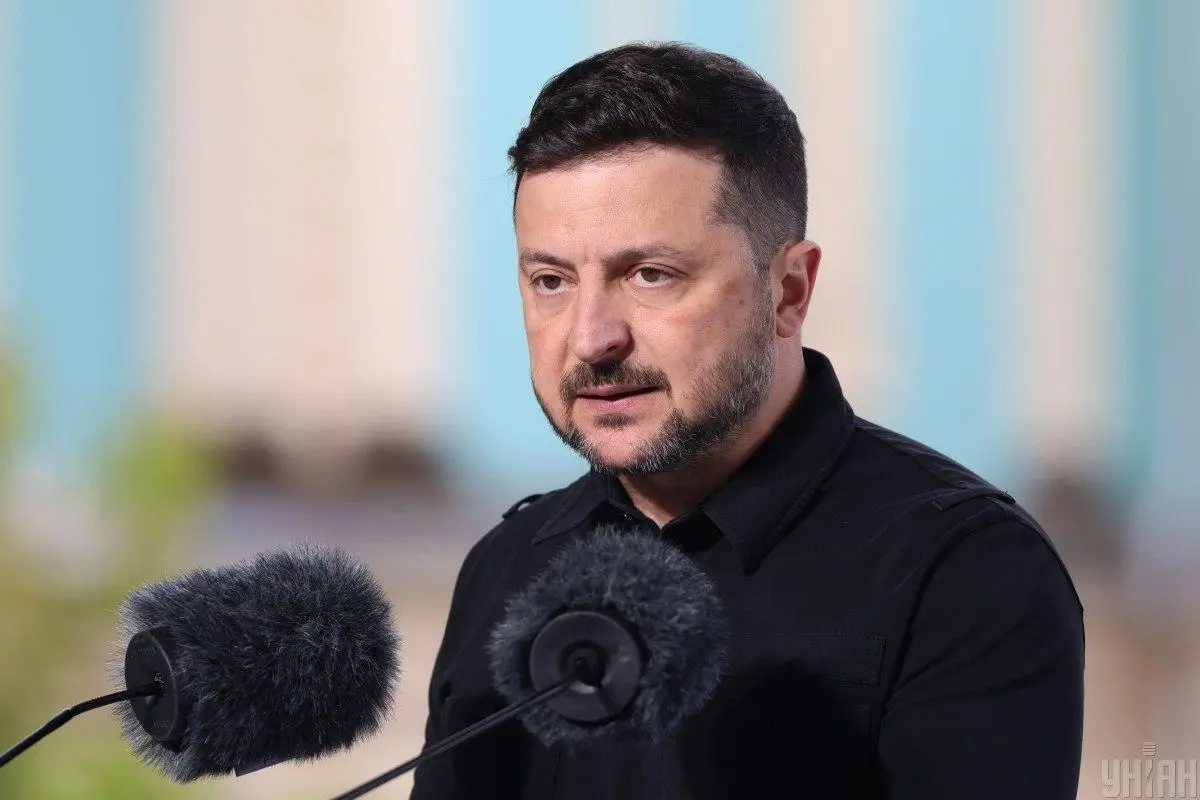
Ukrainian President Volodymyr Zelenskyy refused to comply with calls from the Donald Trump administration to halt strikes on Russian oil refineries. Kyiv’s response to Moscow’s attacks “must be painful,” he said in an interview with correspondent Trey Ingst, according to Fox News.
Zelenskyy acknowledged that he had discussed this issue repeatedly with Trump and his team. The U.S. president considers Ukrainian strikes to be one of the reasons for high fuel prices in the United States. Kyiv, according to Zelenskyy, has set a condition: Ukraine will not target Russian oil refineries if Russia stops striking Ukrainian power plants and power grids. Meanwhile, Russian attacks on the energy sector continue almost daily and are causing power outages on the eve of winter.
“That is precisely why we must respond. But our response must be painful for the Russian military. If we do not respond in the energy sector, they will continue,” Zelenskyy emphasized.
The president suggested that Kyiv might refrain from new strikes if the U.S. provides Ukraine with more Patriot interceptor missiles. When asked if this was an attempt to pressure Trump, he replied that he sees no problem in telling partners the truth. Zelenskyy also recalled Trump’s October agreement to import millions of metric tons of Russian diesel fuel into the U.S.: “America cannot help Russia. The president cannot help Putin,” he noted. Ahead of the trilateral talks in Abu Dhabi, Zelenskyy called on Trump to initiate an energy truce there.
“We’ll agree if they agree”
Earlier, at the Warsaw Security Forum, Zelenskyy stated that after Trump announced the energy truce, Russia attacked a power plant in Kharkiv, a gas production facility, and a gas station. He also questioned the economic logic of the diesel deal: Russia can export 300,000–500,000 metric tons per month out of a global consumption of 120 million metric tons, so this will not affect prices. Zelenskyy proposed that Washington instead conclude a “diesel deal” with Ukraine, since Kyiv has the power to influence whether Russian refineries operate and whether tankers set sail, according to the Office of the President.
Trump-Putin Agreement Under Threat
Ukraine has ceased to observe the ceasefire announced by Trump on October 11, as Moscow had ignored it from the start. In just one Sunday in October, Russia was attacked by over a thousand Ukrainian drones, and an oil terminal caught fire in St. Petersburg. In September, Russian diesel exports fell by more than 75%, to 141,000 barrels per day, compared with 608,000 a year earlier. Under the agreement with Trump, the Kremlin was supposed to supply 75,000 barrels per day in October and 124,000 in November. Matt Smith, director of commodity market research at Kpler, believes it is unlikely that Russia will be able to return the stated volumes to the market without an energy truce. Meanwhile, the average price of diesel in the U.S. has reached $6.32 per gallon, according to CNBC.
Ukrainian attacks have already forced Russia to ban diesel fuel exports for the first time in history; the ban has been in effect since July 8. At the end of June, fuel shortages were reported in 92% of Russian regions, and two-thirds of them imposed restrictions on sales, according to the International Energy Agency.