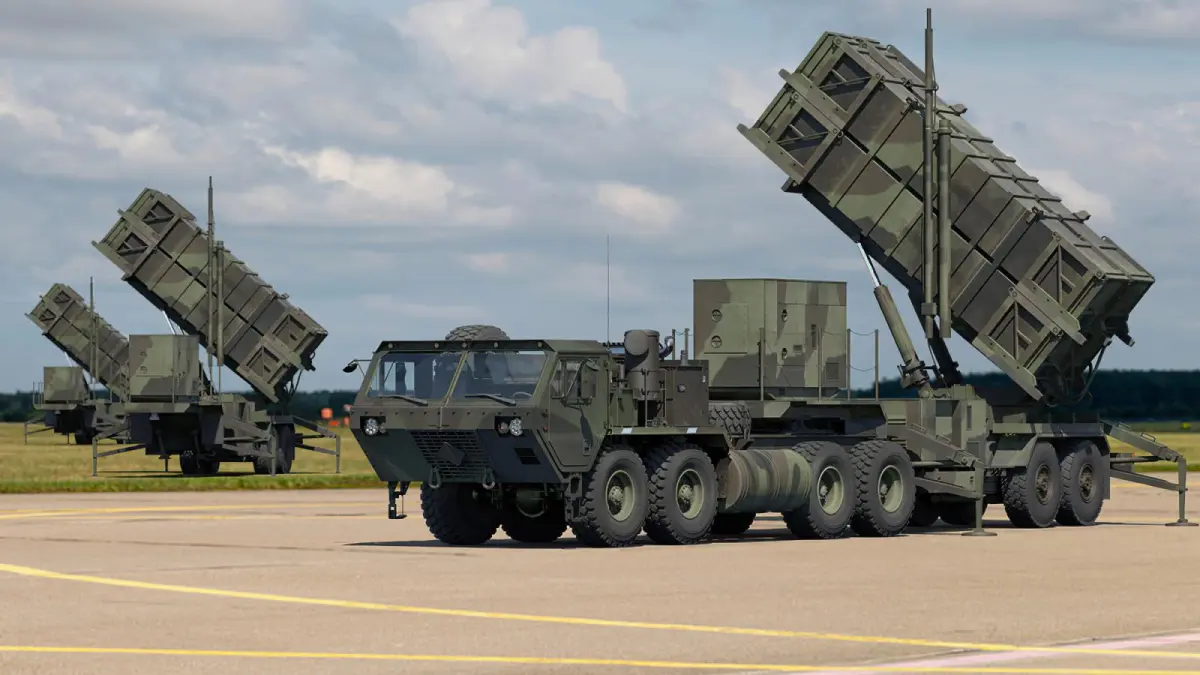
Production of PAC-3 MSE interceptor missiles for Patriot systems is being held up by a shortage of a special heat-resistant fabric that is manufactured exclusively in France. Only one such material has been certified for these missiles, and the manufacturer’s limited production capacity is holding up the entire supply chain, according to Defense Romania.
The material in question is Raycarb C2B carbonized fabric, which ArianeGroup produces at its plant in Le Ayane near Bordeaux from Czech-made viscose fibers. Next, the American company Park Aerospace in Kansas impregnates it with resin; L3Harris uses the composite in the solid-fuel motor; and Lockheed Martin assembles the interceptor. The material withstands temperatures of thousands of degrees and protects the motor nozzle.
The bottleneck arose as the Pentagon aims to produce about 2,000 PAC-3 MSEs per year by the end of 2030—nearly three times the current rate. The missiles are needed to replenish U.S. stockpiles depleted in the Middle East, as well as to supply NATO allies and Ukraine.
It is difficult for the U.S. side to influence the European supplier. Park Aerospace CEO Brian Shore acknowledges that his company has no leverage over its partners.
“It’s a French company. You can’t rush them. They’ll just turn their backs on you,” Shore said.
New production capacity will be available in a few years
Park Aerospace has paid a $5 million advance for a new ArianeGroup production line in France, which is scheduled to begin operations in 2028. The companies have also signed a preliminary agreement to build the Raycarb C2B plant in the U.S. with a $25 million advance payment, but it is not expected to be completed before 2030.
“The biggest problem is that no one wants to wait 3.5 years,” Shor emphasized.
Switching to a different material will require qualification and certification, which can take years: any change to the PAC-3 MSE engine is tested before it can be used in combat.
Earlier this year, a high-ranking Pentagon official urgently met with representatives from Park Aerospace and demanded an increase in fabric deliveries, but it turned out the company could do nothing about it: ArianeGroup had immediately warned of limited supply, according to The Wall Street Journal.
Inventories are dwindling faster than production is increasing
According to Lockheed Martin, manufacturing a single Patriot missile takes over a year and costs $3–4 million. Ukraine and U.S. forces in the Middle East, according to available information, have used as many missiles in the past year alone as the production target for 2030. To address the shortage, the company is offering a cheaper variant, the PAC-3 ACE, which, according to Tim Cagill, president of the Missiles and Fire Control Systems division, is about two-thirds as effective at roughly half the price, PBS reports.