
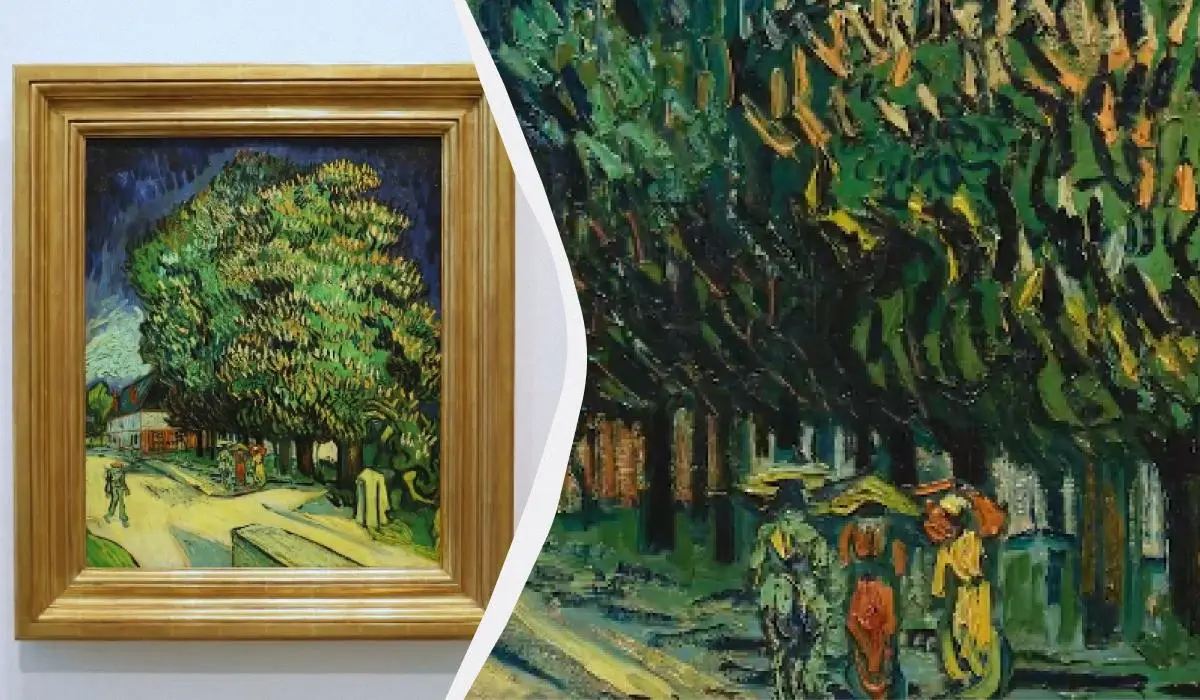
Vincent van Gogh's painting "Châtaigniers en fleurs" (Chestnut Trees in Bloom) sold for a record $190.4 million at a Sotheby's auction in New York on November 18. The auction took place after a dispute over the painting was resolved: descendants of the previous owners claimed it had been sold under duress during the Nazi era, Telex reports, citing the BBC.
The 1890 oil painting, which had been estimated at $180 million, was offered as part of the Blaquier-Arrieta collection. The sale significantly surpassed the Dutch artist’s previous auction record, set in 2022 at $117.2 million.
Van Gogh painted “Chestnut Trees in Bloom” during the last two months of his life. According to Sotheby’s, it is one of the most important works from that period still in private hands.
A few hours before the auction, the auction house announced an agreement between the Blaquier-Arrieta family and the heirs of the Fischer family.
“Given the painting’s complex history during the Nazi era, as well as the suffering endured by the Fisher family during the Holocaust, the two families have reached a mutually acceptable decision, and the work will be sold in accordance with their agreement,” Sotheby’s stated.
From Thomas Mann’s publisher to an Argentine collection
After the artist’s death, the painting was inherited by his brother Theo. In 1909, the painting was purchased by Samuel Fischer, founder of the S. Fischer publishing house. After his death in 1934, it passed to his family, and in 1936, according to Sotheby’s, it came into the possession of Henriette and Marcel Kapferer. The work subsequently changed hands four more times and has belonged to the Blaquier family since 1975.
Samuel and Hedwig Fischer were a German-Jewish couple, and among the authors published by their company were Thomas Mann and Hermann Hesse. The family sold the painting through an Amsterdam gallery in 1936, when Nazi persecution destroyed their publishing business. The final price exceeded the estimate by more than $10 million, and Sotheby’s did not disclose the terms of the agreement between the families, citing confidentiality, according to NPR.
“We Thought You Were Dead”
Christopher Marinello, a lawyer specializing in the recovery of lost and stolen works of art and founder of Art Recovery International, highlights the distinction between forced sales and direct confiscations by the Nazis.
“They’re a little harder to prove, but they certainly carry the same weight,” Marinello emphasizes.
According to him, the art market is reluctant to acknowledge its past. The lawyer recalls a client who, after World War II, had to travel to Switzerland to buy back his own painting, as well as dealers who told the rightful owners, “We thought you were dead.”
“They wanted cases related to the Holocaust to simply disappear,” Marinello is convinced.