
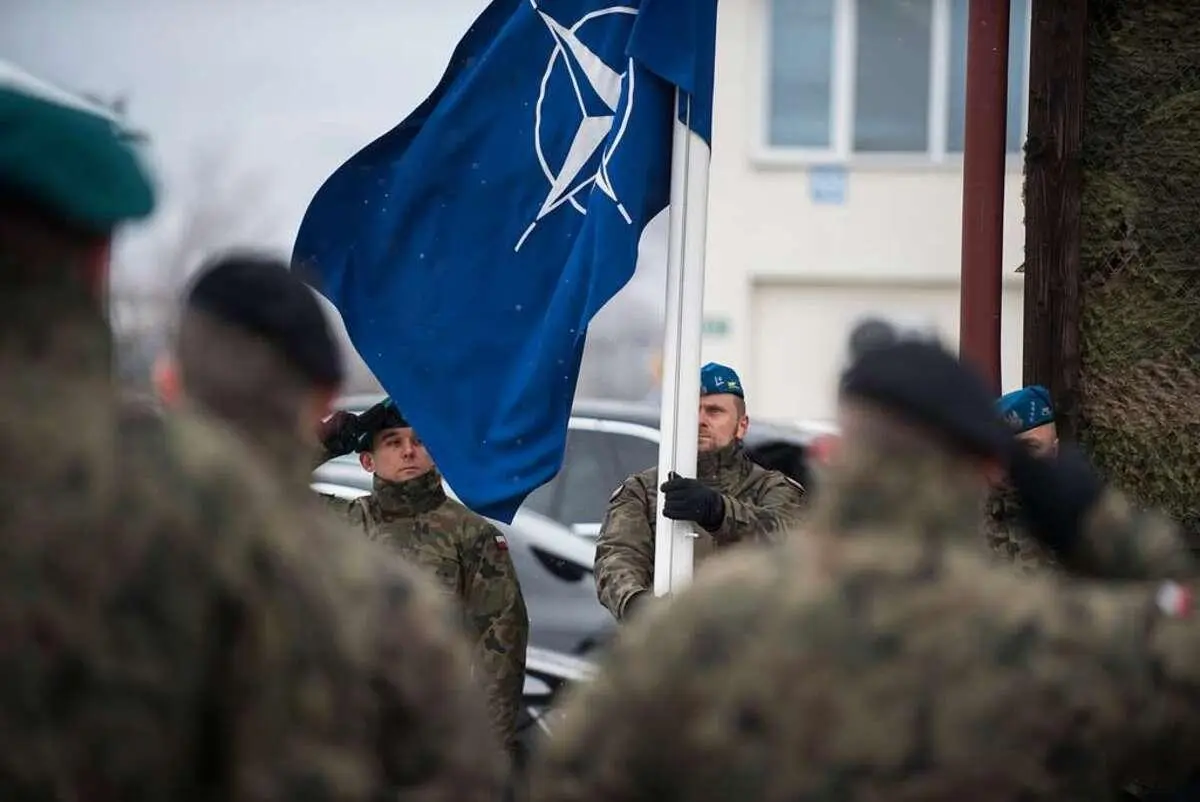
NATO is revising its defense strategy against potential Russian aggression and is incorporating the development of capabilities to deliver precision strikes deep into Russian territory, all the way to Moscow. Ukraine’s experience serves as an example of this, according to Libertatea.
This shift in approach was discussed in June 2026 at the first NATO Symposium on Deep Strikes, organized by General Aleksus Grinkevich, Supreme Commander of the Alliance’s Joint Forces. Instead of traditional defense along physical frontiers, military leaders propose actively preventing an attack.
Grinkevich outlined his “theory of victory” in a speech in Warsaw. According to him, Alliance forces will first halt the initial wave of the attack and then neutralize the enemy’s subsequent actions. If the offensive continues, “we will destroy the combat system mobilized against us,” striking both the advancing troops and “absolutely everything that supports, supplies, or controls this force,” the general stated. The strategy, however, rules out nuclear escalation.
This refers to targets located more than 160 kilometers from the front lines: bases, weapons depots, industrial infrastructure, and critical resources deep within Russia. The U.S. is modernizing its arsenal of Tomahawk and ATACMS missiles, while Europeans are building up their stockpiles of Storm Shadow, SCALP, and Taurus missiles. However, some of the 48 new European missile projects will not be operational for several years, warns Fabian Hoffmann, a researcher at the Norwegian Institute for Defense Studies.
Lessons from the War in Ukraine
Ukrainian forces have already struck remote strategic targets in Russia, including rocket fuel plants and data centers, using their own Flamingo cruise missiles and Western systems. Alona Getmanchuk, Ukraine’s ambassador to NATO, compared the limitations of relying solely on air defense to medicine.
“Air defense is like a painkiller: it can alleviate the symptoms, but you have to strike at the source of the pain,” the diplomat emphasized.
Polish General Ireneusz Nowak recalled that without precision-strike capabilities at the start of the war, Ukraine was forced to engage in trench warfare similar to that of World War I. “We must view deep-strike precision strikes as a means of deterrence,” he asserted.
Generals Are Ready, Politicians Hesitate
Despite the military’s support, doubts remain as to whether there will be enough political will for an offensive response to a possible invasion. “There is a disconnect between military planning, which includes offensive components, and politicians, who view defense solely as a barrier,” notes Nico Lange, former chief of staff at the German Ministry of Defense. NATO planners want deep strikes to be an automatic response to an attack and are insisting on building up stockpiles of such missiles.
At the same time, the defense ministers of France, Germany, Italy, Poland, Sweden, and the United Kingdom agreed to transform the European Long-range Strike Approach (ELSA) initiative into separate implementation groups. Among the areas of focus are ground-based strike systems with ranges of 300–500, 500–2,000, and over 2,000 kilometers, as well as low-cost weapons with a range of 500 kilometers or more based on single-use drones, according to the British government.