
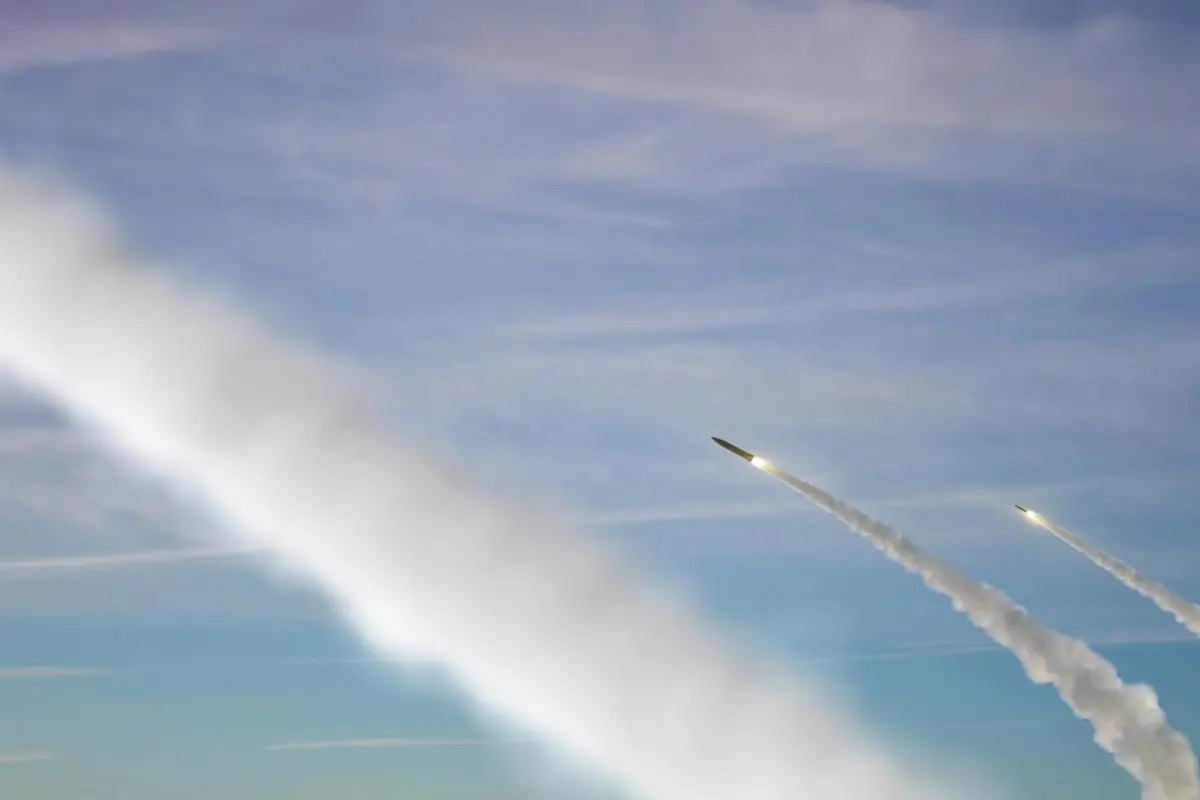
Western defense companies are developing launchers for missiles and drones concealed inside standard 20-foot shipping containers. They are modeling their designs after Ukraine’s “Spiderweb” operation, during which drones hidden in trucks struck Russian aircraft at airfields. The Norwegian company Kongsberg has already conducted a test launch of the Naval Strike Missile from such a container, according to Forces News.
The test took place in the fall of 2026 in Norway. The missile was launched from the NSM Mission Module, which can hold up to four missiles. The test evaluated safety, loading and maintenance conditions, as well as the structure’s ability to withstand pressure and shock waves during launch. The container can be installed on ships or trucks, or placed directly on the ground, without any modifications, Kongsberg notes.
The company believes that this solution will be particularly useful for countries with long coastlines and vast distances. Ståle Mortensen, Kongsberg’s Vice President of Business Development and Strategy for the Missiles and Aerospace Division, attributes the new product to the military’s demand for force mobility across large regions.
“The containerized solution can be pre-positioned and discreetly deployed to support operations wherever the need arises. At the same time, it allows capabilities to be distributed across larger areas, providing greater operational flexibility and more deployment options,” Mortenson emphasized.
Missiles in Standby Mode
The German company Rheinmetall also has its own Containerized Missile Launcher (CML) system. It is capable of launching cruise missiles, drones, loitering munitions, anti-tank missiles, and short-range air defense missiles vertically and at any angle. Depending on the type of munition, the range is approximately 10 to 900 km, and the payload capacity reaches 28 metric tons.
The CML has an autonomous power supply and satellite communications. It also features a “sleeper agent” mode: the container can be secretly left in place and activated remotely for a surprise strike. The advantage of such systems lies in their stealth: approximately 25 million standard containers are transported around the world every minute.
The “Spiderweb” Lesson
During Operation “Spiderweb” on June 1, 2025, the Security Service of Ukraine (SBU) simultaneously attacked four Russian airfields: Belaya, Dyagilevo, Olenya, and Ivanovo. The drones were secretly smuggled into Russia, hidden inside wooden structures on trucks, and their hatches were remotely opened near the targets. According to available data, 41 aircraft were struck, and the damage was estimated at $7 billion, writes Business Insider.
Karl Rosander, co-founder and CEO of the Swedish startup Nordic Air Defense, described the attack at the time as a stark reminder of a new phase of the war. “One in which drones can be covertly deployed and will lie in wait unnoticed behind enemy lines to strike,” Rosander warned. According to him, it is only a matter of time before Russia and other hostile states adopt this tactic.