
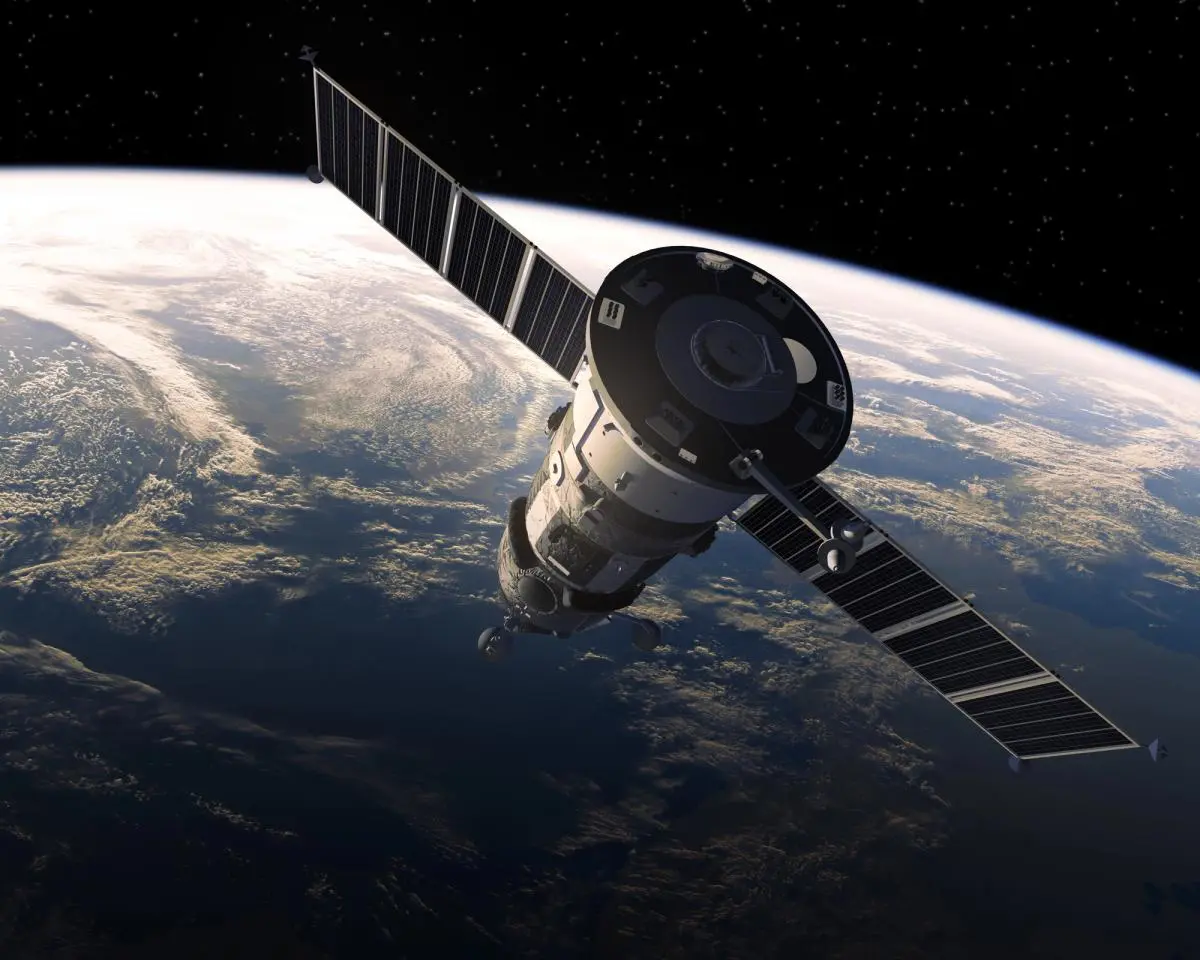
On October 30, the Russian satellite “Rassvet-3” burned up in the dense layers of the atmosphere No. 17 (NORAD ID 100083) from the “Rassvet” constellation, which Bureau 1440 is deploying as a counterpart to Starlink, burned up in the dense layers of the atmosphere. The spacecraft was launched into low Earth orbit by a Soyuz-2.1B rocket on July 19, along with 15 other satellites. For more than three months, it apparently never fired its thrusters, so atmospheric drag gradually lowered its orbit to a critical altitude, according to Defense Express.
This is the second such loss in the constellation. On June 6, satellite No. 4 from the first batch, launched on March 23, fell out of orbit; it, too, had never performed an orbital maneuver. Satellite No. 23 from the second batch was also at risk for a long time, but on October 20, at an altitude of 220 km, the Russians managed to begin raising its altitude. It is now at an altitude of about 300 km and continues to climb.
Of the 30 “Rassvet-3” satellites remaining in orbit, 26 have already reached an altitude of 500 km, and one more will soon ascend to that altitude. Although the planned altitude is 800 km, this altitude is being used to spread out the satellites before a synchronized ascent, so reaching this altitude should not be considered a failure. The satellites are already operating in test mode: “Bureau 1440” is testing terminals in remote regions of Russia, and there have also been reports of such terminals on Russian drones that attacked Ukraine.
Replacing the Lost Starlink
The Institute for the Study of War (ISW) believes that Russia is rushing these launches to compensate for the loss of access to Starlink over Ukraine, which was blocked on February 1. As early as August, the 12 satellites in the first batch, according to analysts, provided Russian troops with two communication windows over Ukraine totaling up to one and a half hours per day. Sergey “Flash” Beskrestnov, an advisor to the Minister of Defense, estimated that Russia would need at least 200–300 satellites for round-the-clock coverage. Progress is being hampered by a reliance on expensive and scarce “Soyuz-2.1B” rockets: since 2022, they have been launched only 6–8 times, according to the ISW.
A Schedule They Can’t Keep Up With
According to Bureau 1440’s “roadmap,” there were supposed to be 156 satellites in orbit by the end of 2026, 292 by 2027, and 900 by 2035. Partial service to users is scheduled for 2027. However, as of October 21, the third launch had still not been announced, and throughout all of 2025, Russia carried out only 17 orbital launches of all types. The total budget for the project through 2030 is 431.8 billion rubles (about $5 billion), according to KeepTrack.