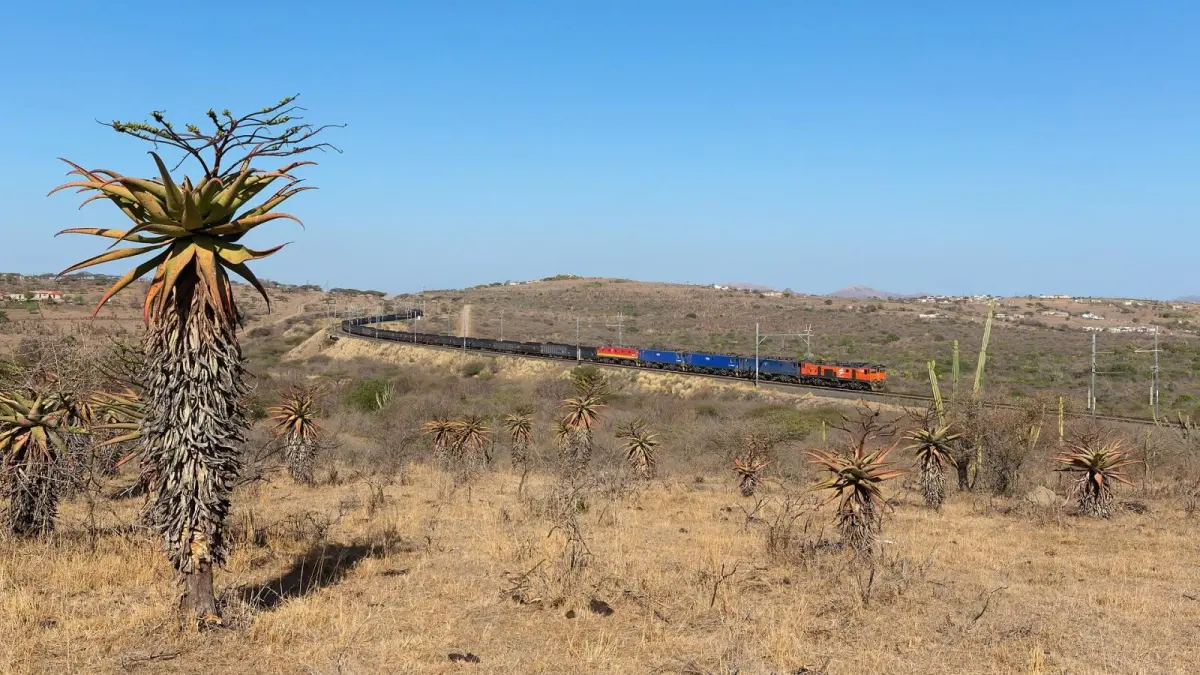
The South African state-owned company Transnet set a world record by putting the longest freight train in history into service: the 7.6-kilometer-long train consisted of 696 cars. It departed on October 18 from Saldanha Bay on South Africa’s west coast bound for one of the iron ore quarries in the interior of the country, according to RMF24.
To get such a train moving, electric and diesel locomotives were distributed along its entire length. This ensured sufficient traction and stability. The journey lasted two days, and the train covered 860 km.
The cars were empty during the record-breaking run. According to the publication, this allowed for safe testing and a detailed analysis of the behavior of the exceptionally long train. The main goal of the operation was not only to set the record but also to explore new possibilities for transporting bulk cargo over long distances.
The previous record was held by Australia: in 2001, a 7.24-km-long train there transported iron ore from a mine to a port in Western Australia. South Africa and Australia remain world leaders in terms of the length of freight trains.
A Line Accustomed to Records
The 861-km Sishen–Saldanha route, which connects the mines of the Northern Cape Province to a deep-water port, will celebrate its 50th anniversary in 2026. Back on August 26, 1989, a record-breaking train operated here by Transnet’s predecessor, Spoornet: 660 loaded cars, approximately 7.2 km long and weighing a total of nearly 70,000 metric tons. It was pulled by 16 locomotives and covered the entire route in just under 27 hours, according to a Transnet report.
Currently, a standard ore train on this route consists of 348 cars and carries about 34,800 metric tons of ore per trip. In the 2025/26 fiscal year, iron ore shipments rose to 52.76 million metric tons, while manganese shipments reached a record 5.78 million metric tons. Sibute Mdala, general manager of the iron ore division, emphasizes that the route’s significance for the country’s economy extends far beyond its purely transportation functions.
“The Ore Corridor is much more than an 861-kilometer railroad. It is a strategic national asset,” Mdala noted.
Since 2019, a manganese train consisting of 375 cars and stretching nearly 4 km—the longest of any train operating on a regular schedule—has been running daily along the same route. Richard Wallich, then acting chief operating officer of Transnet, explained that the company opted for longer trains rather than investing billions in new infrastructure. According to his estimates, this decision was expected to generate about one million metric tons of manganese per year and approximately 375 million rand in revenue, Moneyweb reports.