
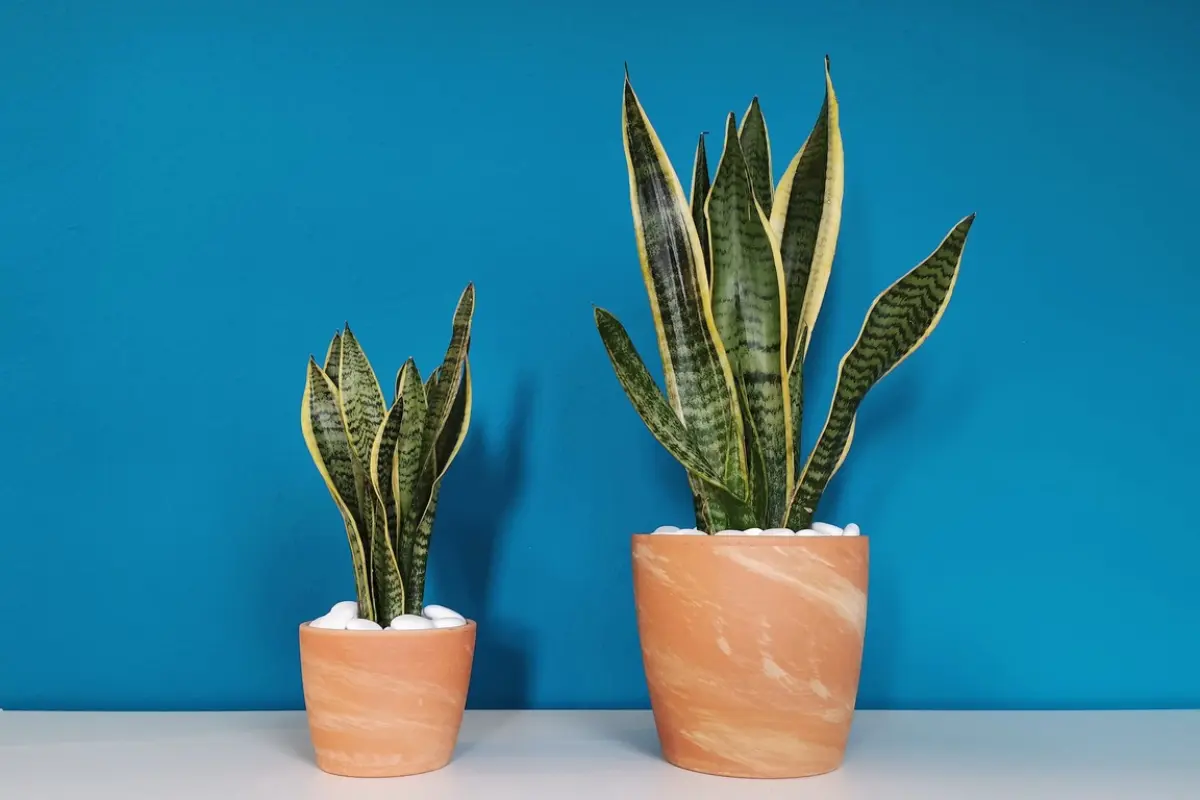
A weakened sansevieria, also known as “mother-in-law’s tongue,” can benefit from a 15-minute root soak in a red onion solution prepared before repotting. Red onions contain quercetin and other compounds with antioxidant properties, which is why this home remedy is used to care for depleted plants, according to Deccoria.
To prepare the solution, finely chop a quarter of a red onion, pour 500 ml of warm water over it, cover, and let it sit for an hour. Then strain the liquid and add another 500 ml of room-temperature water.
Carefully clean the plant’s roots of any old soil and check for rotten areas. After that, soak them in the solution for about 15 minutes, then pat them dry with a paper towel.
It is recommended to repot the sansevieria in a pot with drainage holes, using potting soil mixed with perlite. Place the plant in a bright spot out of direct sunlight and do not water it for a few days, especially if you removed any rotten roots.
Banana and Coffee Instead of Fertilizer
Once the sansevieria has settled into its new pot, you can feed it a mixture of potassium-rich banana peels and a teaspoon of coffee. Pour 500 ml of warm water over the ingredients, let it steep for an hour, strain it, and dilute it with another 500 ml of water.
Don’t overwater: the soil shouldn’t be too wet, and the leaves and base of the plant shouldn’t remain damp for too long, or mold may develop. Don’t expect new leaves to appear right away, as a neglected plant needs time to recover.
The main enemy is excess water
Houseplant experts cite root rot—caused by overwatering—as the most common reason for the death of sansevieria, according to Homes & Gardens.
“If you water a sansevieria so much that the potting mix remains wet (the space between the individual particles is filled with water rather than air), the roots can start to suffocate and die. Once the roots die, fungal organisms take hold, causing them to rot,” notes Justin Hancock, a horticulturist at Costa Farms.
Signs of the problem include soft black or brown roots, yellowed leaves, and an unpleasant odor coming from the soil. Experts advise watering the plant only when the top 2.5–5 cm of the potting mix has completely dried out, and in winter, allow the soil to dry to about half the depth of the pot. It’s best to choose porous pots made of terracotta or unglazed ceramic and well-drained soil.