
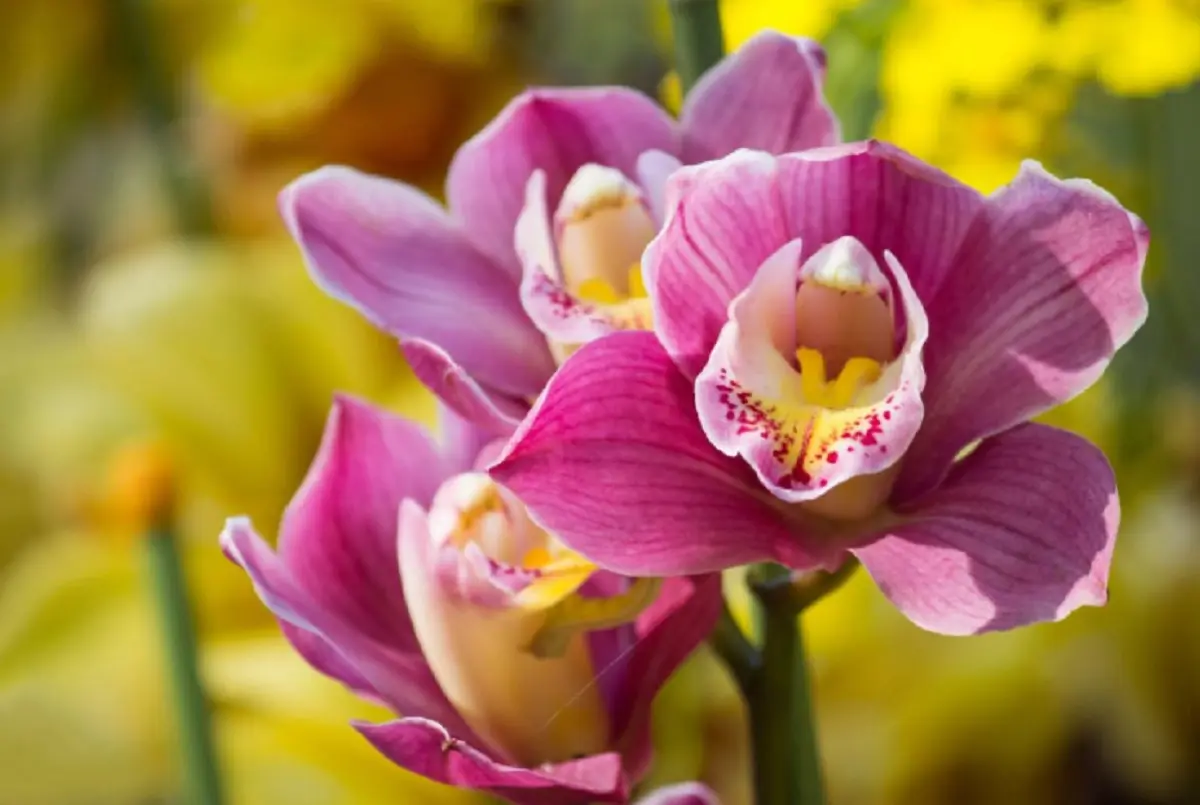
A few drops of lemon juice diluted with water can speed up the appearance of new buds on a houseplant orchid in the fall. It is recommended to use this solution no more than once every two weeks: lemon contains minerals and vitamins and has antibacterial properties that improve the condition of the leaves, stems, and roots, according to Eska.
Do not use undiluted juice. Its acidity can alter the pH of the potting mix and damage the roots, so only a weak solution should be used. Also, avoid combining multiple homemade fertilizers at the same time and do not repot the plant unnecessarily.
In the fall, orchids react to reduced natural light, dry air from radiators, and more significant fluctuations between day and night temperatures. Typical signs of stress include leaves losing their firmness, buds falling off, and new flowers appearing more slowly.
The main mistake of the season is overwatering. Water evaporates more slowly than in summer, so the roots rot easily. Water only when the potting mix is almost dry and the roots in a transparent pot have turned silvery. After that, let the water drain freely. Do not place the pot on top of a hot radiator, near a cold, drafty window, or in a dark corner.
Fertilizing and Cold Nights: Advice from Kew Botanists
Professional gardeners rely on different methods. Bala Kompalli, who has been working with orchids for 20 years at the Royal Botanic Gardens’ tropical nursery, identified two key factors for the cold months, as she explained to Kew.
“From October through March, if you feed the orchid with a fertilizer specifically designed for blooming, or tomato fertilizer in a weaker concentration, that should help it bloom again. Another factor that helps a typical orchid bloom is a drop in temperature: for example, if an orchid is growing in a consistently warm environment around 24°C and you then lower the temperature to 14°C, that 10-degree difference can trigger flowering,” notes Compalli.
For the second half of the year, the expert recommends using mixtures high in phosphorus and potassium, such as NPK 10:30:20, or tomato fertilizer once every two weeks. In winter, when the plant isn’t actively growing, watering should be reduced. In a room with central heating, the pot can be placed on a tray filled with wet pebbles or live sphagnum moss. To prevent root rot, remove the affected areas and treat the cuts with cinnamon powder; be sure to thoroughly disinfect the pruning shears afterward.
Potassium, Magnesium, and Stability: The American Approach
The American Orchid Society recommends using a fertilizer with a low nitrogen content—specifically nitrate, not urea—and a high potassium content, such as 10-5-20, during the cold season. For orchids that bloom in winter and spring, it is recommended to apply several doses of a bloom stimulant with a 10-50-10 formula in October and November. For Phalaenopsis, the most popular houseplant orchids, some gardeners also use Epsom salt (magnesium sulfate) to prevent the lower leaves from turning yellow. Once buds appear, temperature and humidity must be kept at a stable level; otherwise, the buds may fall off, according to the American Orchid Society.
Experts at the New York Botanical Garden follow the “feed weakly, weekly” rule: a balanced 20-20-20 fertilizer at one-quarter of the recommended concentration with every other watering, and once a month, the growing medium is rinsed to remove salt buildup. In the fall, lowering the nighttime temperature to 13–16 °C for several weeks promotes Phalaenopsis blooming, and it is recommended to maintain humidity at no less than 65%. Water the orchid in the morning, and carefully wipe water droplets from the leaves and stems to prevent rot, advises the New York Botanical Garden.