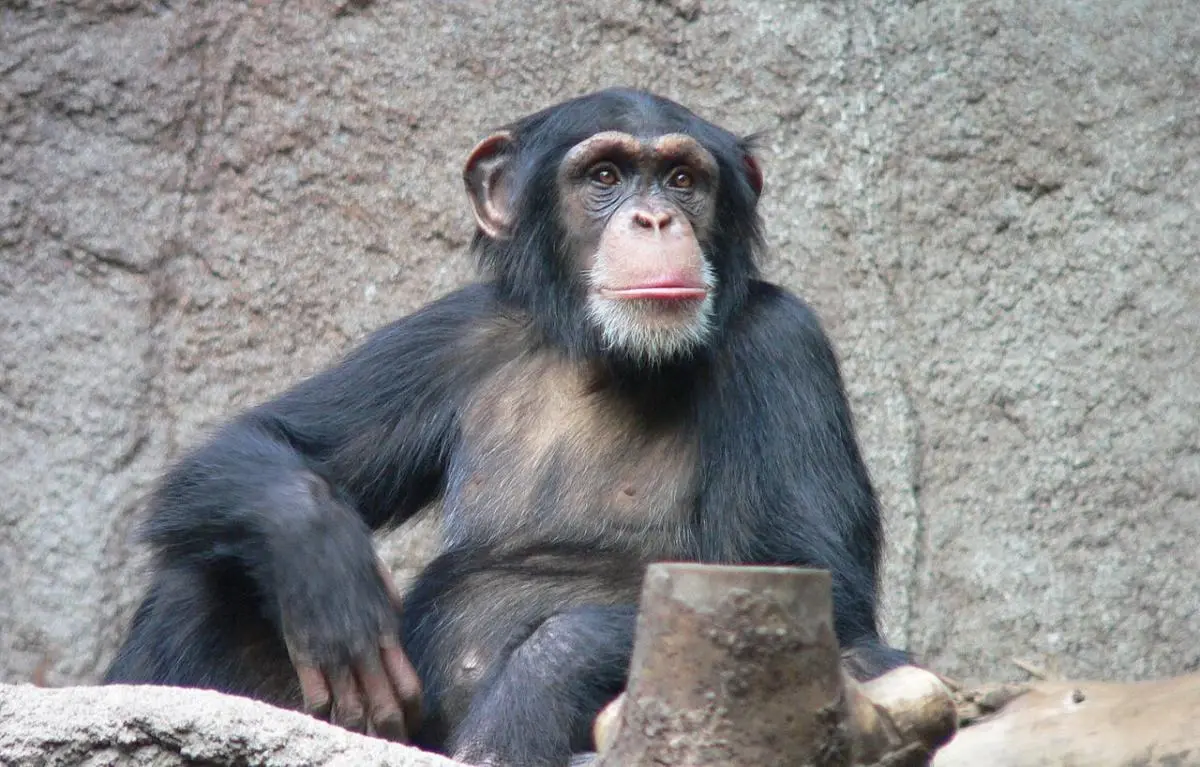
Chimpanzees from the second group at the Chimfunshi sanctuary in Zambia began wearing blades of grass in their ears and letting them hang down the back of their heads, repeating a “trend” started more than ten years ago by a female named Julie. The groups have never had direct contact with one another, as reported by researchers from Utrecht and Durham Universities in the journal *Behavior*, according to Futura-Sciences.
In the new group, the habit was likely started by a male named Juma. Five of the eight chimpanzees tucked blades of grass into their ears, while six let them dangle from the back of their bodies. The researchers found no practical explanation, such as a desire to relieve itching.
The first observations date back to the 2010s. At that time, Julie began inserting blades of grass into her ear, and other members of her group began to imitate her. The habit spread to several animals and persisted even after the female’s death. Scientists viewed it as an example of a socially transmitted tradition.
Chimfunshi is one of the oldest and largest chimpanzee sanctuaries in the world. More than 130 chimpanzees live here in five enclosures covering 60 square kilometers of pristine forest on the banks of the Upper Kafue River, according to Mongabay.
Are the Caretakers to Blame?
Researchers found that both groups are cared for by the same keepers. They reported that they sometimes clean the chimpanzees’ ears with a blade of grass or a match, sometimes in full view of the animals. The theory that the chimpanzees copied humans is plausible but unproven. Much more convincing evidence points to social learning within the groups themselves.
Edwin van Leuven, a researcher at Utrecht University, emphasizes that the most interesting thing is not why the animals chose this particular behavior, but that they most likely adopted it by observing one another.
Fashion as a Social Signal
According to the authors, such habits are easier to observe in captivity, since chimpanzees there have more free time. Wild animals are forced to focus on foraging, monitoring their surroundings, and avoiding predators. Imitation can also serve a social function: showing attention or affection toward another individual and strengthening a sense of belonging to the group, as is often the case with humans.
Jake Brooker of Durham University believes that the study demonstrates chimpanzees’ ability to copy seemingly nonsensical actions from one another. Scientists believe that such observations can contribute to the discussion on the cultural evolution of animals, particularly regarding what distinguishes human culture from that of other species.