
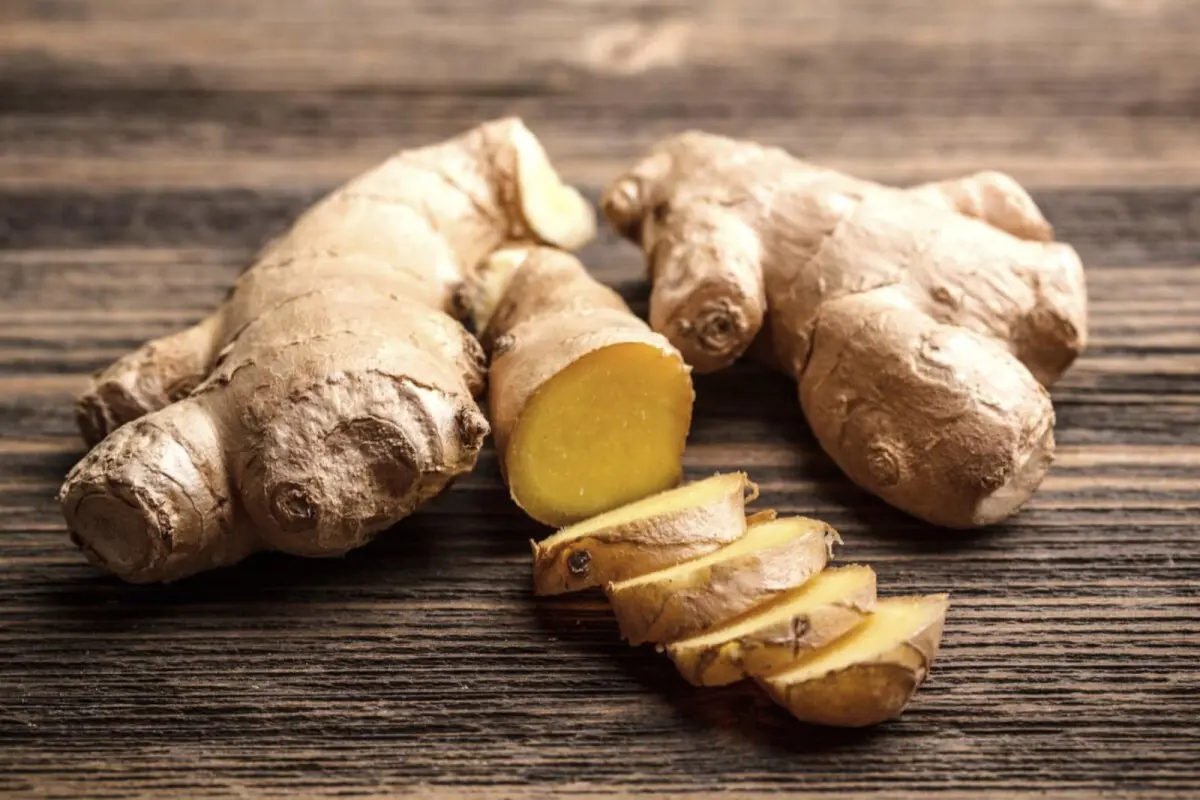
You can grow ginger at home from a single healthy rhizome and end up with not only an ornamental houseplant but also a steady supply of fresh, chemical-free spice, according to Hovege.hu.
It’s best to buy organic or untreated ginger for planting. Regular store-bought rhizomes are often treated with substances that inhibit sprouting. If there’s no other option, soak the root in room-temperature water for 12–24 hours: this washes away most of the preservatives and awakens the buds.
After soaking, cut the rhizome into pieces, each with one or two healthy buds. Let the cut ends dry for 2–3 days to prevent them from rotting in the soil.
Width is more important than depth
Ginger roots grow horizontally, so you’ll need a pot at least 30–40 centimeters in diameter and 20–30 centimeters deep. The plant cannot tolerate standing water, so drainage holes are essential.
Loose soil works best: mix two parts all-purpose potting soil with one part sand or perlite, and add a little compost. Plant the rhizome pieces with the buds facing upward at a depth of 2–5 centimeters, lightly moisten the soil, and place the pot in a warm, draft-free spot with a temperature of 20–25 °C.
Germination can take two to five weeks. In the summer, the plant can be taken outside into partial shade, but in the fall, it must be brought back indoors, as ginger cannot tolerate frost. The soil should be kept slightly moist at all times, but water should not pool in the pot.
When to Harvest
Fully mature rhizomes form in about 8–10 months, while younger ones—which are lighter in color and milder in flavor—can be harvested after just 5–6 months. There’s no need to dig up the entire plant: simply gently lift the soil and cut off a small piece; the rest will continue to grow.
ABC Radio Perth gardening expert Sabrina Han advises having much more patience if the ginger is growing in open ground, according to ABC.
“You need to let the rhizomes grow, and that takes at least two years. In fact, you shouldn’t harvest until the third year,” Han emphasizes.
According to her, the plant needs to develop a sufficiently large root system so that a portion can be cut without killing the entire plant. The expert advises harvesting ginger in late summer. “Don’t harvest in the fall or winter, because the rhizome can rot,” Han warns.
Vegetative propagation via rhizomes is the only natural means of reproduction for ginger: Zingiber officinale is not known to occur in the wild, and humans have been propagating it this way for millennia. In cultivation, the plant blooms very rarely, according to the University of Oxford.