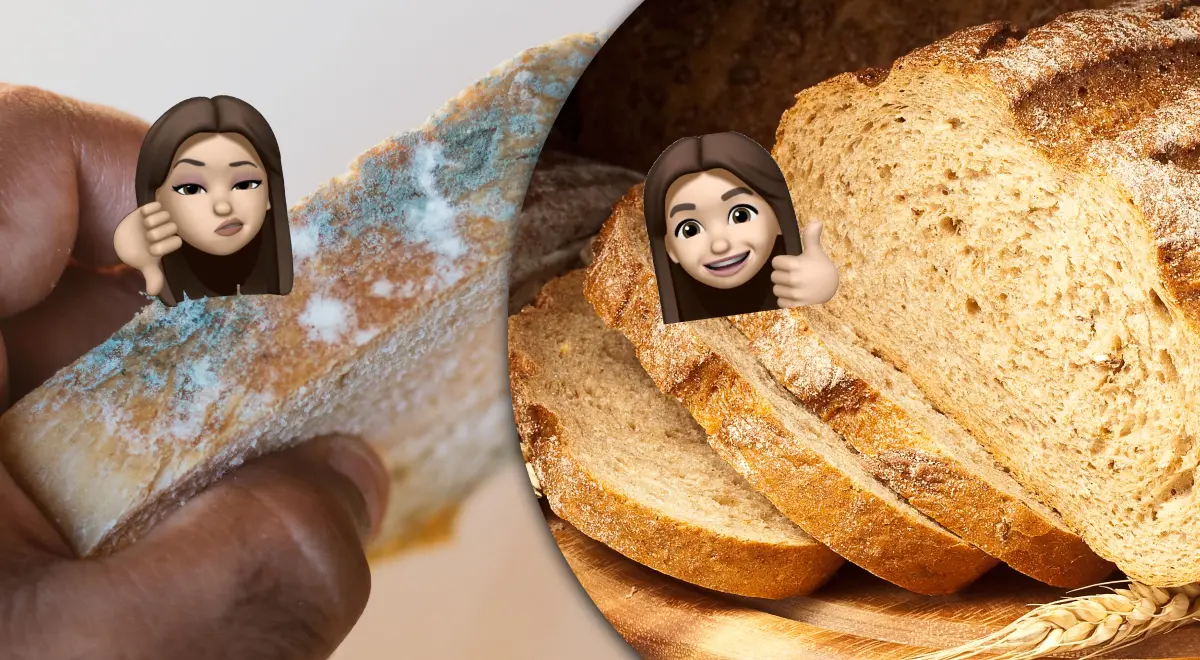
Half an apple in a bread box can prevent bread from drying out: the fruit gradually releases moisture, and the air inside the container becomes less dry. However, this home remedy cannot prevent the bread from going stale and requires caution, according to the Polish publication Haps.
Cut the apple in half and place one half in the bread box so that it doesn’t touch the loaf. Apple peels can be used instead of a half apple. They should be checked regularly and discarded before they start to spoil, as excess moisture promotes mold growth.
The material of the bread box is also important. Wooden models allow air to circulate, but bread can dry out faster in them. Porous ceramic helps regulate humidity, while metal and plastic containers should have ventilation holes. It’s recommended to store bread at room temperature, away from radiators, ovens, and sunny windowsills. You shouldn’t put warm bread in the bread box.
It’s better to buy a whole loaf rather than pre-sliced bread and cut slices just before eating. Store the remaining bread with the cut side down so it loses moisture more slowly. Stale bread with no signs of spoilage can be briefly warmed in the oven or toaster, but a moldy loaf must be thrown out entirely: the mold may have spread inside as well.
Cold Only Makes the Loaf Stale
The common practice of storing bread in the refrigerator to keep it fresh longer actually has the opposite effect, according to experts at Good Housekeeping’s test kitchen.
“Bread actually goes stale faster in the refrigerator because low temperatures accelerate changes in the structure of the starch, which make the loaf hard and dry. In other words, the refrigerator doesn’t preserve bread the way it does vegetables or leftovers; it just makes it go stale faster,” emphasizes Kate Merker, Good Housekeeping’s food editor.
Experts recommend keeping bread that you plan to eat within a few days on the counter, in a pantry, or in a bread box. The freezer is suitable for long-term storage: first, slice the loaf, freeze it, and then take out the slices as needed. According to recipe editor Susan Chung, this bread is best suited for toast.
Staling is a multifactorial process: in the crumb, gluten dehydration, starch retrogradation, and water redistribution occur. As the water content decreases, hydrogen bonds form between the starch polymers, and the crumb hardens, according to Argentine scientists in a study published on ScienceDirect.