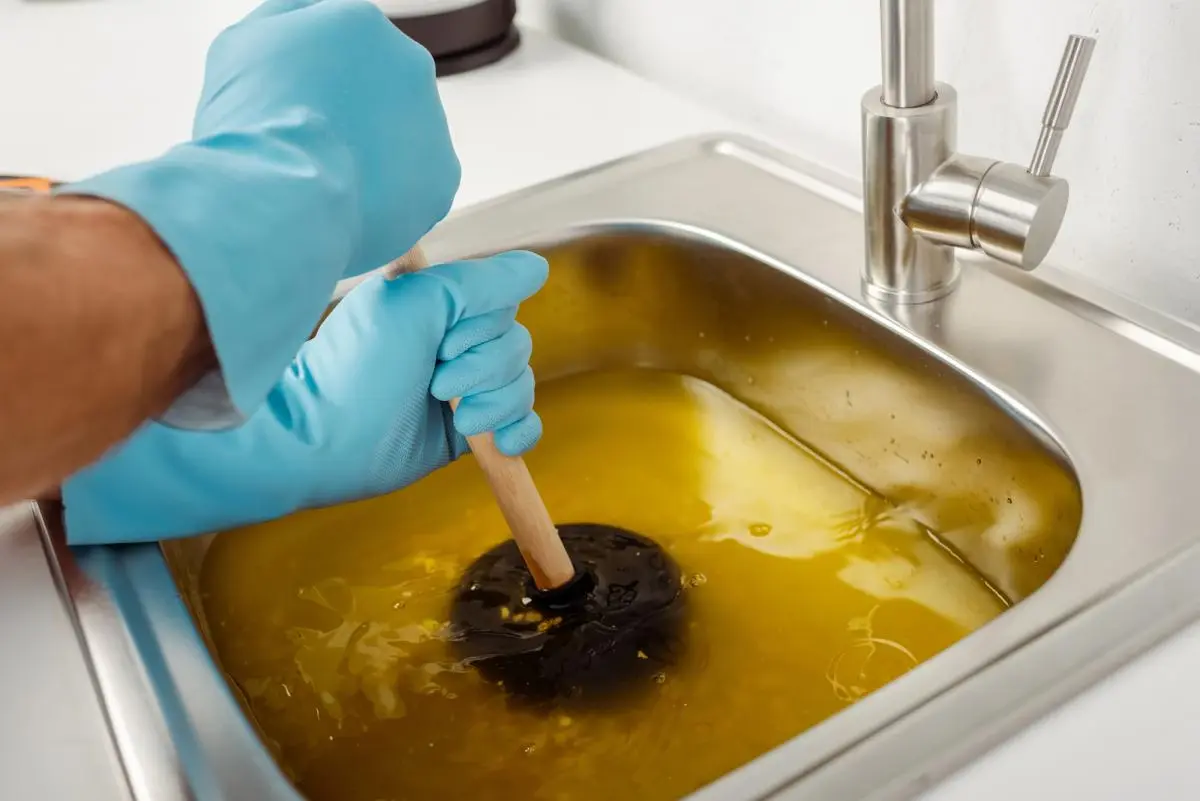
Half a glass of table salt and about a liter of hot water can help when the water in the sink starts draining more slowly, but only if the grease buildup is recent. Dish soap is more effective at breaking down grease, and if the drain is completely clogged, you’ll need to clean the trap, according to Wprost.
First, remove any food scraps from the drain strainer and scoop out any standing water from the sink. Then, pour salt into the drain and slowly pour in hot—but not boiling—water. After a few minutes, you can check to see if the water is draining more freely. You shouldn’t use boiling water if the sink or pipe manufacturer doesn’t allow it, especially when plastic components are involved.
Temperature plays the key role in this method: warm water liquefies some of the fresh grease and helps wash it away. Salt itself does not break down grease or hair, and once dissolved, it does not scratch the inside of the pipes. If the problem is specifically grease, it’s better to rinse the drain with hot water and a few drops of dish soap: the surfactants disperse the grease in the water.
The popular mixture of vinegar and baking soda foams vigorously due to the release of carbon dioxide, but this does not mean that it dissolves grease or hair. If the water won’t drain at all, home remedies usually don’t help: in that case, you’ll need a plunger or to unclog the P-trap, where food scraps and grease most often accumulate.
Chemicals in the pipes can cause burns
Plumber Richard from the American publication *This Old House* advises first removing the clog mechanically and only then resorting to harsh chemicals. This involves cleaning the trap, using a plumbing snake, a manual auger, or a plunger, according to *This Old House*.
Store-bought drain cleaners often contain sodium hydroxide, which is a base. They can damage old cast-iron and steel pipes, as well as septic tanks, and are ineffective against clogs caused by inorganic objects such as jewelry, small toys, or dental floss. If the clog persists, the chemicals remain in the pipe and can splash out when the drain is unclogged, causing serious burns. Therefore, the expert insists: you must warn the plumber if such a product has already been poured down the drain.
As a preventive measure, Richard recommends not pouring grease down the sink after frying, but instead collecting it in a container and disposing of it with the trash, wiping grease from pans with a paper towel before washing them, and installing a strainer over the drain. For regular pipe maintenance, he most strongly recommends enzyme-based cleaners: beneficial bacteria gradually break down grease, soap scum, and hair, and these products are safe for the pipes.