
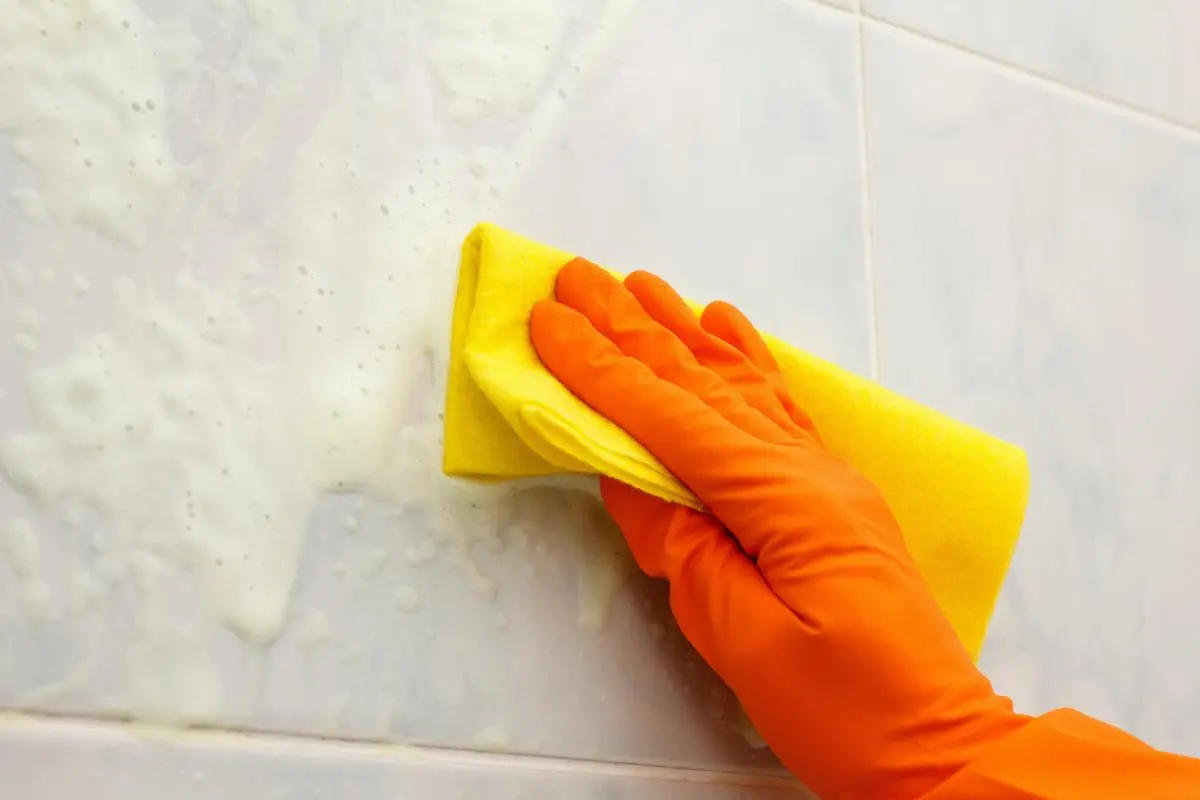
Yellowed, gray, or even blackened grout lines between bathroom tiles can usually be cleaned with common household products without having to replace them. These stains most often appear due to constant moisture and mold. Warm water, dish soap, and a soft brush will help tackle light stains, according to PRO TV.
Apply the solution to the grout lines, let it sit for a few minutes, and then gently scrub with a soft-bristled brush or a special grout brush. Finally, rinse the surface thoroughly and wipe it dry with a clean cloth.
If the stains persist, use a specialized cleaner selected based on the type of tile and grout. Test it first on an inconspicuous area to ensure it does not discolor the surface. It’s best to avoid abrasive sponges and excessive scrubbing, especially if the grout lines are old or already crumbling: this can easily damage the material, and dirt will eventually penetrate it even faster.
Black Spots: When It’s Mold
Black spots around the bathtub, in the shower stall, or in the corners indicate the presence of mold. You’ll need a mold remover suitable for the specific type of grout and surface. While working, ventilate the room, wear gloves, avoid inhaling fumes, and follow the exposure time indicated on the label.
Under no circumstances should bleach be mixed with vinegar, ammonia, or other cleaning agents, as this can produce toxic gas. If the stains reappear quickly, mold is spreading, or the grout lines have cracked and are coming loose, a single cleaning won’t be enough: you’ll need to find the source of moisture, and the damaged areas may need to be repaired or replaced.
Cleaning experts recommend diluting 3/4 of a glass of chlorine bleach in a gallon (about 3.8 liters) of water to bleach the seams. Apply the mixture with a stiff brush in small sections while wearing rubber gloves, taking care not to splash the liquid, and after a few minutes, scrub it in and rinse it off. A gentler alternative is a paste made from baking soda and hydrogen peroxide, although it’s less effective and may require more effort, according to Good Housekeeping.
Less moisture means less cleaning
To keep the seams clean longer, wipe water off the shower walls and corners after every shower, open the window, and ventilate the bathroom thoroughly. It’s best to turn on the exhaust fan while you’re showering and let it run for a while afterward. Without proper ventilation and fixing any leaks, no cleaning method will solve the problem completely.
Experts also recommend cleaning the grout weekly or as needed, without waiting for the buildup to turn black. A window-scraper will help remove water from the tiles after a shower, and you can reduce humidity by opening the door.