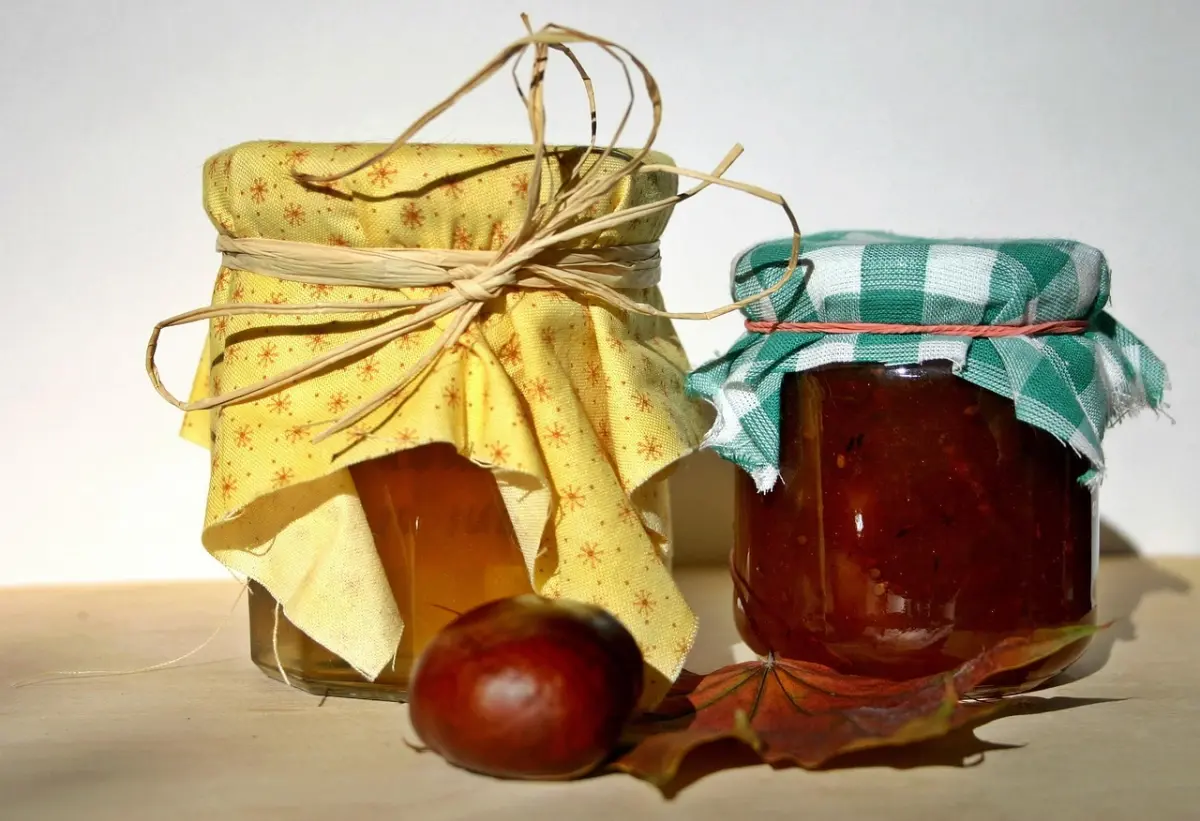
It is not necessary to turn hot, sealed jars of jam upside down if the jars and lids have been properly sterilized beforehand. This is the opinion of Anja Schwengel-Exner, an expert at the Bavarian Consumer Protection Center, who spoke on Bavarian Radio, according to Kertvár.
The custom of turning jars upside down—and sometimes even wrapping them in a blanket—is explained by the fact that the hot mixture comes into contact with the lid and the neck of the jar, killing bacteria and mold spores there. As the contents cool, a vacuum forms, sealing the jar. The procedure itself is harmless but does not replace clean, sterilized containers.
Bavarian experts advise focusing on three things. Jars should be boiled in water for 10 minutes or kept in an oven at 135 degrees for 15 minutes, and the lids should be boiled separately. The jars should be filled and sealed immediately, and the fruit should not only be brought to a boil but also boiled vigorously for several minutes.
Americans recommend a water bath
In the U.S., university experts in home canning do not explicitly recommend turning the jars upside down. While this is how they are usually sealed, the seal is weaker and less durable than after heat treatment. One of the well-known jar manufacturers also warns that cooling jars should not be turned upside down or moved. Instead, they recommend immersing sealed jars in boiling water for the time specified in the recipe.
Julie Garden-Robinson, a nutrition specialist at North Dakota State University, describes the potential consequences of skipping this step. She was contacted by a woman whose jars of raspberry jam had popped open on their own in the pantry, splattering the sticky mixture all over the walls. As it turned out, she had been following an old recipe that called for turning the jars upside down, even though the U.S. Department of Agriculture has for many years recommended a water bath—usually lasting five minutes—for jams, according to NDSU Extension.
The expert explains what happens in a jar that hasn’t been heated sufficiently.
“If microorganisms aren’t killed by a high enough temperature for the required amount of time, some of them can produce gas inside a sealed container. Some organisms can produce so much gas that they blow the lids off the jars,” Garden-Robinson emphasizes.
According to her, processing in a water bath also prevents mold from forming until the jar is opened and ensures a tight seal.
How to Check a Jar
After cooling, press down on the center of the lid: if it doesn’t spring back, the jar is sealed tightly. If the lid dents and springs back, place that jar in the refrigerator and open it first. It’s recommended to periodically inspect the jars in the pantry, and if you notice mold or a fermented or alcoholic odor, discard the entire contents.