
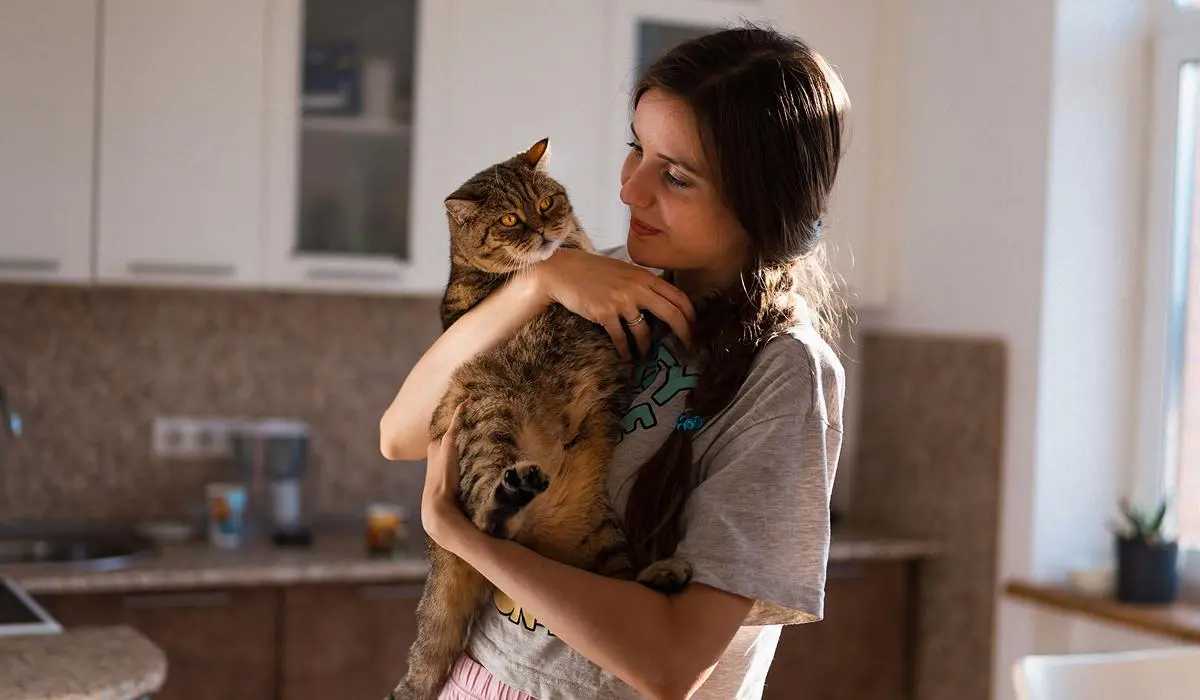
People who prefer cats to dogs often have fewer friends but deeper relationships. They are also more likely to choose city life, tend to be introverts, demonstrate higher intelligence and openness to new experiences, yet are at the same time more prone to anxiety, according to YourTango.
The publication cites a 2016 Facebook study. According to the study, “cat people” have, on average, 26 fewer friends than dog lovers and are more likely to be single. At the same time, they are invited to events significantly more often. Dog owners tend to live in rural areas or suburbs, while cat owners mostly live in cities.
According to other studies, cat owners are more likely to be introverts, score higher on intelligence tests on average, and are less prone to conformism. A 2024 study showed that cat owners tend to be more neurotic, while dog owners are more likely to be organized people who plan everything.
What Large-Scale Surveys Have Shown
One of the most well-known studies on this topic was conducted by Sam Gosling, a psychologist at the University of Texas at Austin. His team surveyed 4,565 volunteers and assessed their traits using the “Big Five” model. Dog lovers turned out to be 15% more extroverted, 13% more agreeable, and 11% more conscientious. “Cat people” were about 12% more neurotic and 11% more open to new experiences. A British study by the University of Bristol also found that among households with cats, 47% had at least one family member with a college degree, compared to 38% of households with dogs, according to ABC News.
Gosling cautions that these are only general trends: many cat owners are more extroverted than dog owners, and vice versa. The researcher is reluctant to label one group as “better” than the other.
“The study did not show that one group is better than the other,” Gosling emphasized.
A Difference That’s Barely Noticeable
Psychologist Susan Krauss Whitbourne points out the limitations of Gosling’s study. Only 57% of participants identified themselves as “cat people” or “dog people” at all. Due to the large sample size, even minute differences proved statistically significant: the average scores across all groups differed by no more than 0.2 points on a five-point scale. For example, on the neuroticism scale, dog lovers scored about 2.9 points, while cat lovers scored about 3.1. Additionally, the researchers did not take participants’ income or education into account, according to Psychology Today.
According to Witborn, a person’s personality can change depending on the animal they live with. For example, walking a dog forces people to interact with strangers.
“This study is a vivid lesson in how important it is to check the facts behind the hype,” the psychologist noted.