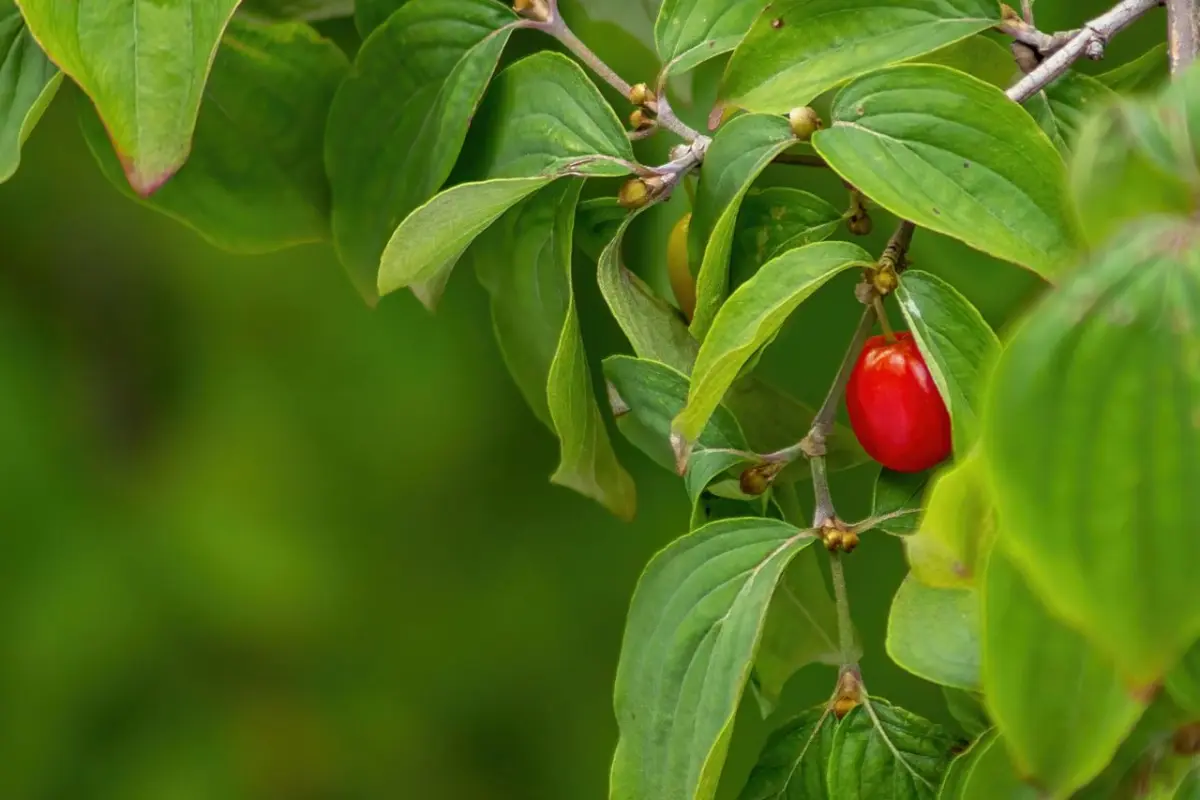
Cornelian cherry (Cornus mas)—a small red berry that was traditionally harvested for winter use—is increasingly attracting the attention of researchers. Scientists are studying how the berries affect blood sugar and lipid levels. Some clinical trials have shown positive results, but there is no basis for considering cornelian cherry a medicine, according to Blikk.
According to the publication, the research results cannot be generalized: in different studies, cornelian cherry was used in various forms and dosages. Therefore, a glass of homemade juice will not produce the same effect as was observed in the laboratory. The main benefit of cornelian cherry, like other similar berries, is that it adds variety to the diet and provides the body with plant-based nutrients.
The fruits are rich in vitamin C and antioxidants. Polyphenols, particularly anthocyanins, give the berries their bright red color and may protect cells. However, laboratory data do not prove that cornelian cherry prevents specific diseases. In folk medicine, it has been used to treat stomach disorders, particularly diarrhea, because the tannins have an astringent effect. In case of serious health problems, the publication advises consulting a doctor.
How to Consume Cornelian Cherries and Who Should Exercise Caution
It’s best to choose fresh berries that are fully ripe: they are softer and less tart. If the taste seems too sharp, cornelian cherries can be added to oatmeal, yogurt, or sweeter fruits. It’s also used in fruit sauces and dressings, not just for jams and compotes. You can freeze the berries in small portions for the colder months.
When processing them, keep an eye on the amount of sugar: too much sugar significantly reduces the product’s nutritional value, even if the ingredients are homemade. People prone to heartburn or stomach problems are advised to start with small portions and monitor their body’s reaction. There’s no need to force yourself to eat cornelian cherry just because it’s considered healthy.
From Neolithic Settlements to Monastery Gardens
The common cornel is a small deciduous tree native to Central and Southern Europe, as well as Southwest Asia. It grows up to twelve meters tall and can live for up to two hundred years. In late winter, even before the leaves appear, the tree is covered with small yellow flowers. The fruit, an elongated drupe, becomes sweet and resembles a plum only after it is fully ripe. Despite its English name, “Cornelian cherry,” the cornel is not related to the cherry, according to the University of Oxford.
Cornel seeds have been found among Neolithic food remains in northern Greece. In Eastern Europe and Western Asia, the fruits are still eaten fresh and are also used to make jams, pickles, syrups, and alcoholic beverages. A Serbian proverb, “as healthy as a cornel,” attests to the berry’s health benefits. In Eastern Europe, numerous varieties have been bred with large, often pear-shaped fruits, ranging in color from white to dark red.
In Great Britain, the cornel is grown as an ornamental plant, prized for its very early flowering. It was first cultivated in the Middle Ages in monasteries, and by the end of the 16th century, the tree was already found in the collections of English connoisseurs of exotic plants.
“There are quite a few dogwood trees in the gardens of those who love rare and exquisite plants, and I, too, have one or two such trees growing in my garden,” wrote herbalist John Gerard in 1597.
The dogwood is also well known from ancient literature. Ovid, in *Metamorphoses*, mentions it among the foods people ate before the advent of agriculture, and in *The Odyssey*, Odysseus’s companions—whom the sorceress Circe had turned into pigs—are fed its berries. According to Pausanias, the Trojan Horse was made from dogwood wood, and a red dye was extracted from the tree’s bark, which was used to dye fezzes.