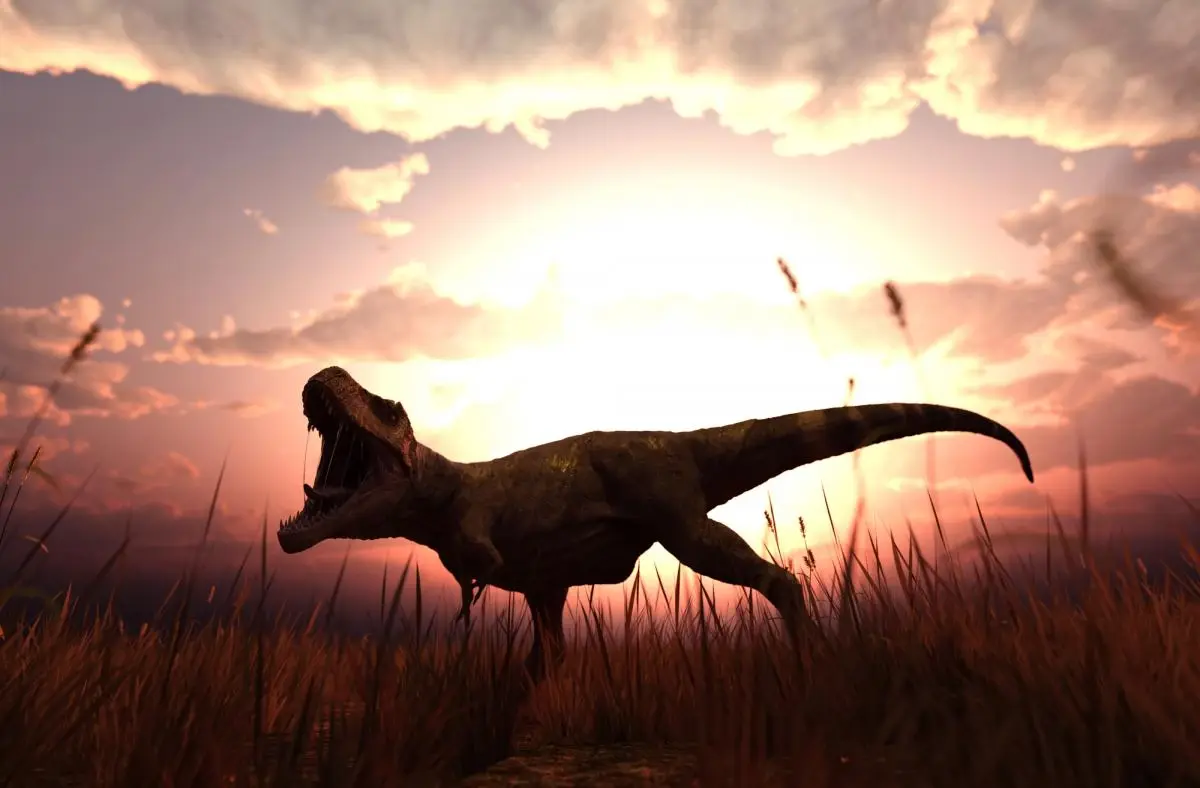
The Nanotyrannus skeleton, nicknamed Jody, was sold at a Sotheby’s auction in New York for $47.3 million, nearly five times the upper limit of the previous estimate of $6–9 million. This is the second most expensive dinosaur fossil ever sold at auction. The record is held by the Tyrannosaurus rex named Gus, which sold for $50.1 million in July 2026, according to Futura-Sciences.
The auction on October 27 lasted about 12 minutes. Six bidders competed for the lot: some placed bids by phone, others online. The winner wished to remain anonymous, and it is still unknown whether the skeleton will be displayed in a museum.
Jodi Pearson discovered the remains on her own ranch in 2019. Her land is located in the Hell Creek Formation near the town of Jordan, Montana, and the discovery was named in her honor. The skeleton consists of about 191 bone elements and is approximately 70% complete. When assembled, it is 6 meters long and 2.9 meters tall. Scientists are aware of only three relatively complete Nanotyrannus skeletons.
Not a T. rex Juvenile
For decades, paleontologists have debated whether Nanotyrannus is a separate genus or simply juvenile T. rex specimens. The debate was settled by a study by Lindsay Zanno and James Napoli, published in *Nature* on October 30, 2025. Analysis of the famous “Dueling Dinosaurs” specimen showed that the animal was an adult, and it differed from Tyrannosaurus rex in the proportions of its forelimbs, the shape and number of its teeth, and the structure of its skull.
Back in 2023, Jody was exhibited at the Frieze Masters art fair in London as a juvenile Tyrannosaurus. The skeleton was unearthed by commercial paleontologist Clayton Phipps, who had previously discovered the “Dueling Dinosaurs” 13 km from this site. Megan Jacobs, a paleontologist at the University of Portsmouth, reminded listeners on BBC Radio 4 that Nanotyrannus had long been considered a sort of “teenager” version of T. rex, according to the BBC.
“But it’s much smaller and much more graceful. So it’s very streamlined, slender, [with] blade-like teeth for cutting meat,” Jacobs noted.
The first skull of this predator was discovered in 1942 in the Hell Creek Formation by an expedition from the Cleveland Museum of Natural History. It was not described as a separate genus, Nanotyrannus lancensis, until 1988, according to the Cleveland Museum of Natural History.
Millions Instead of a Museum Display Case
The sale has reignited the debate over private ownership of fossils. The Society of Vertebrate Paleontology insists that scientifically valuable specimens should be preserved in public museums and universities, as collectors may restrict researchers’ access.
“We’ve only just discovered that Nanotyrannus actually exists, and now one of the finest skeletons is about to be sold to the highest bidder—and it’s terrifying to think that it might disappear into a collector’s storage facility, instead of being displayed in a museum, where it would amaze and inspire children, families, and the general public,” emphasized Steve Brusatte, a paleontologist at the University of Edinburgh.
Jacobs, on the other hand, points out that excavating such specimens requires a great deal of time, effort, and money. “I don’t blame the people involved for wanting to sell it for such a large sum. Although it’s a frightening prospect, in reality, many of them have ultimately ended up on public display,” the researcher said.