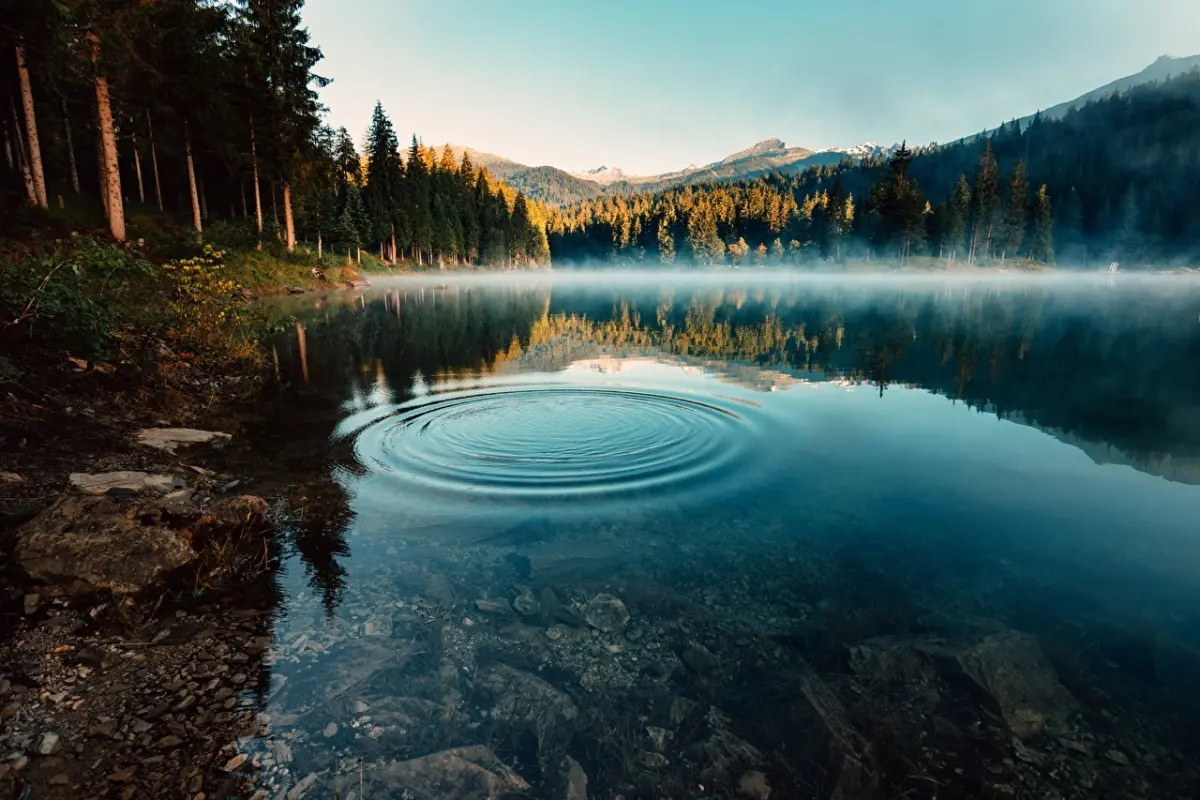
Lake Rotomairewenua (Blue Lake) on New Zealand’s South Island is considered the cleanest natural freshwater body in the world, yet visitors are prohibited from even touching its water. There are two reasons for this: the lake is sacred to the local Māori tribe, and even a single drop could introduce dangerous microalgae into it, according to kerteszkedj.hu.
The lake is located at an altitude of 1,200 meters amid mountains and beech forests. It gained fame following measurements taken in 2011: researchers from New Zealand’s National Institute of Water and Atmospheric Research (NIWA) recorded horizontal underwater visibility ranging from 70 to 80 meters. This is almost equal to the visibility of distilled water in a laboratory. The previous record, 63 meters, was also held by the Te-Waikoropupu springs in New Zealand.
NIWA researcher Rob Davis-Collie noted at the time that even if there is clearer water somewhere else in the world, it is only slightly so. The lake owes its clarity to a natural filter: it is fed by the glacial Lake Rotopogueroa (Lake Constance), whose water seeps through the debris of an ancient landslide. The temperature here remains between 5 and 8 degrees all year round.
A Sacred Place Threatened by “Lake Snow”
For the Ngāti Apa ki te Ra To tribe, the lake holds the status of tapu, meaning it is sacred. It was once used for funeral rites for deceased men, while Lake Rotopogueroa, located upstream, was associated with the spirits of deceased women. The Māori name means “Lake of Peaceful Lands,” and it has been the official name since 2014.
The Department of Conservation (DOC) asks tourists not to swim in the lake, wash their hands or dishes in it, collect water from it, or submerge cameras underwater. There is also a practical reason: the microscopic algae Lindavia has appeared in other lakes within Nelson Lakes National Park. It secretes a slimy, flaky substance known as “lake snow.” The algae can enter a new body of water even with a single drop on wet shoes, a bottle, or a swimsuit, and it is impossible to eradicate. Equipment-cleaning stations have been set up along the trails.
Scientists insist that the only way to protect the lake is to prevent the algae from entering it. “We absolutely do not want ‘lake snow’ to get into Blue Lake. This would alter the community of organisms living in Blue Lake and also affect the water’s remarkable quality and clarity,” emphasizes Suzy Wood, a freshwater researcher at the Kotron Institute, as reported by 1News.
After photos of “the world’s cleanest lake” went viral on social media, the number of visitors has increased significantly. In the summer, the DOC brings in shelter rangers to explain the rules to tourists. There is no road to the lake: most people hike from Lake Rotoroa through the Sabine Valley, and the round-trip hike takes at least four days with overnight stays in shelters.