
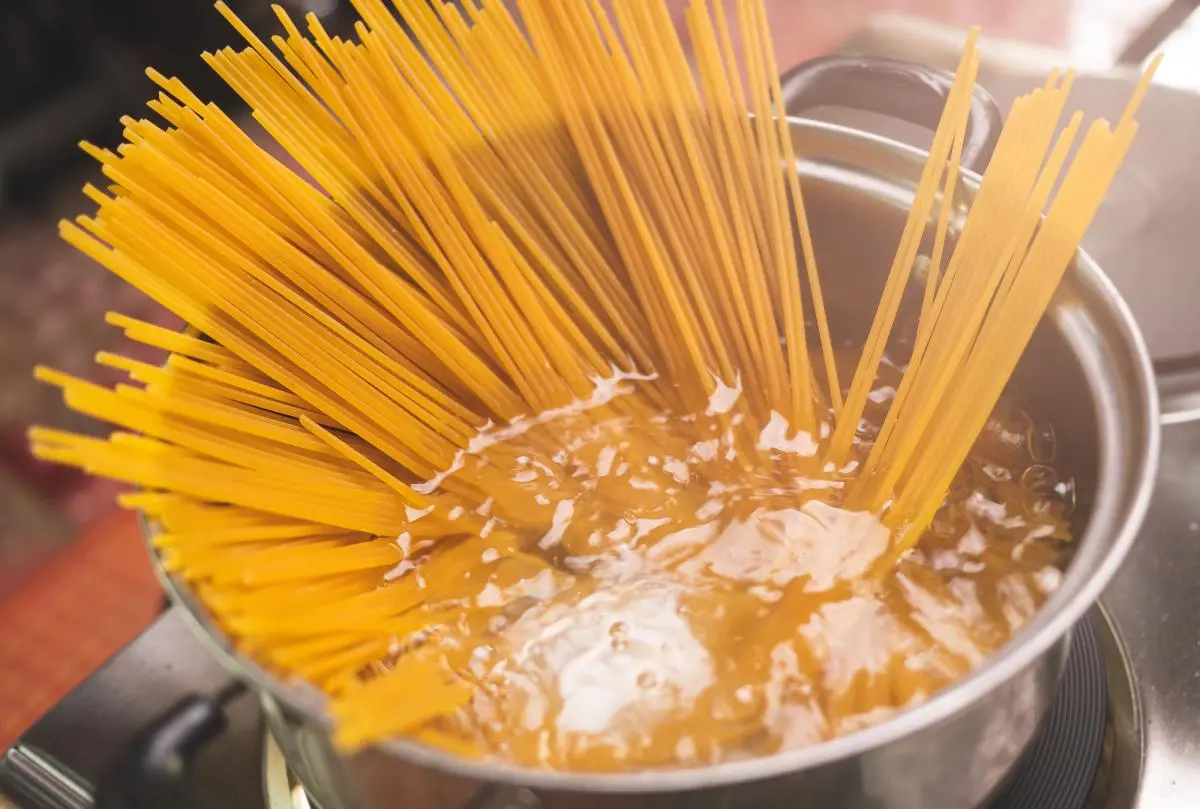
Pasta should only be added to boiling water, should not be rinsed after cooking, and should be removed from the heat about a minute earlier than the manufacturer recommends. These recommendations were provided by Spanish chefs and culinary instructors, according to 20minutos.
Experts at the Madrid restaurant Trebbiano emphasize that the result depends largely on the water temperature at the start of cooking.
“One of the most common mistakes is adding pasta when the water isn’t boiling properly yet. Cooking pasta in water at 70 or 75 degrees isn’t the same as cooking it at a constant boil, around 90 degrees. The result changes significantly,” the Trebbiano team notes.
Bea Garaysabal, a board member of the Madrid Academy of Gastronomy, explains why you shouldn’t rinse cooked pasta and why you shouldn’t add fat to the water.
“Pasta contains starch—a whitish substance with sticky properties. It’s necessary for the pasta to partially absorb the sauce and for the sauce to ‘stick’ to it, imparting flavor to every bite,” Garaysabal emphasizes. Rinsing washes away the starch, and fat in the water causes the sauce to run off the pasta.
Viktor Asenjo, owner of the Marmalé restaurant, is convinced that adding olive oil, bay leaves, or oregano to the cooking water adds nothing to the dish.
The Minute That Makes All the Difference
Cooking time depends on the type of pasta. Dry pasta is cooked in boiling water according to its shape, while fresh and stuffed pasta requires more care, as it cooks faster. At Asenjo’s restaurant, the thick cannelloni tubes are cooked for about 15 minutes until al dente, while fresh pasta for soup is cooked for 5–8 minutes, after which it finishes cooking for another 2–3 minutes directly in the dish.
Garaysabal advises finishing cooking one minute earlier than the manufacturer’s instructions, or at least tasting the pasta at that point. “For me, that’s the perfect spot 90% of the time,” she notes.
You can easily check if dried pasta is done by breaking it in half: if a thin white line is still visible in the center, it’s time to remove it and finish cooking it in a pan with the sauce. Fresh pasta usually floats to the surface when it’s almost done, but at Trebbiano, they still recommend tasting it.
The time on the package is just a guideline
This is the opinion of R. K. Schroeder, an American chef and instructor at Fox Valley Technical College. He warns that adding oil to the water does not prevent the pasta from sticking together and actually prevents the sauce from clinging to the pasta. “The instructions on the package are helpful and usually give a rough idea. However, the best way to tell if the pasta is done is to taste it,” Schroeder advises, according to The News & Observer.
Cooking time affects more than just texture. Australian and Italian scientists have found that spaghetti cooked al dente, rather than until fully cooked, is digested more slowly: in laboratory conditions, the starch in it was digested to a lesser extent. According to the researchers, standard dry spaghetti is cooked for 8–14 minutes depending on its thickness and protein content, as stated in a study published in the journal Foods.